Comparative Study of 0.5% Bupivacaine, 0.5% Ropivacaine, and 0.75% Ropivacaine With Fentanyl as a Continuous Intraoperative Epidural Infusion on Post-operative Analgesia
Shashaank Pandey, Sharmila Borkar, Jovita M Monteiro, Sherin Mathew, Divya Vernekar, Ombretta Barreto, Pillai Arun Gopinathan, Vivek G Pillai, A. Vijeth Kishan, Isaac Lalbiekthang Joute

TL;DR
This study compares three epidural infusions for pain relief after surgery, finding that 0.75% ropivacaine with fentanyl provides the longest-lasting pain relief.
Contribution
The study introduces a novel comparison of three specific local anesthetic concentrations with fentanyl for continuous epidural analgesia during surgery.
Findings
0.75% ropivacaine with fentanyl provided the longest motor and sensory blockade duration (328.8 and 406 minutes).
The same group required first rescue analgesia after 258.6 minutes, significantly longer than the other groups.
Abstract
Introduction Persistent postoperative pain leads to impaired patient recovery and delays in discharge of patients. The aim was to compare the efficacy of 0.5% bupivacaine to two varying concentrations of ropivacaine, specifically 0.5% and 0.75%, along with fentanyl as a continuous epidural infusion in providing adequate pain relief for patients subjected to infraumbilical surgeries. Materials and methods A prospective randomized comparative study was carried out on 150 patients and was divided into three groups, namely group B, group R, and group RP. Group B indicates (0.5% bupivacaine), group R means (0.5% ropivacaine), and finally, group RP means (0.75% ropivacaine); the three groups had 50 patients each. Group B was administered an epidural infusion of bupivacaine at a concentration of 0.5%, group R was given 0.5% ropivacaine, and group RP was treated with 0.75% ropivacaine; all…
Genes, proteins, chemicals, diseases, species, mutations and cell lines named across the full text — each resolved to its canonical identifier and authoritative record.
Click any figure to enlarge with its caption.
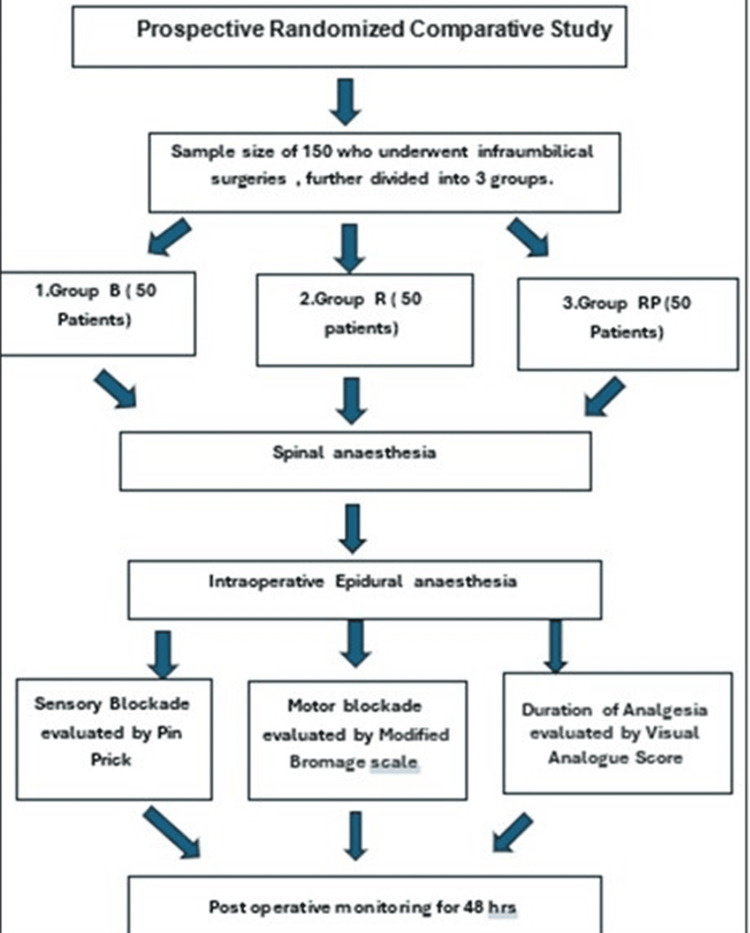 Figure 1
 Figure 2
 Figure 3
 Figure 4
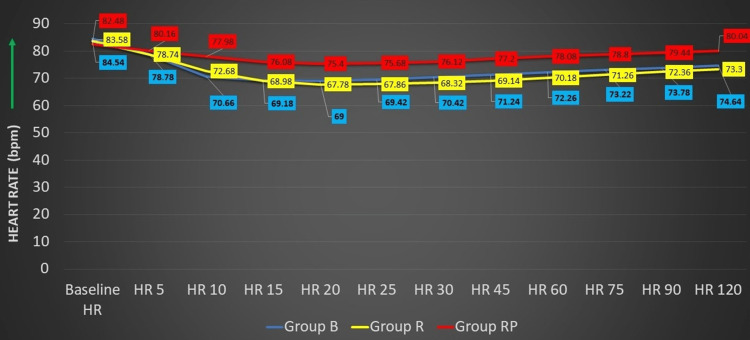 Figure 5
Peer Reviews
No public reviews on file for this paper yet. If you reviewed it on a platform where reviews are public (OpenReview, ICLR, NeurIPS, ICML), you can paste yours below so the community can read it here.
Videos
No videos yet. Explain this paper in a talk, walkthrough, or lecture? Add one.
Taxonomy
TopicsAnesthesia and Pain Management · Spine and Intervertebral Disc Pathology · Pain Management and Opioid Use