A multicentral prospective cohort trial of a pharmacist-led nutritional intervention on serum potassium levels in outpatients with chronic kidney disease: The MieYaku-Chronic Kidney Disease project
Yuki Asai, Asami Muramatsu, Tatsuya Kobayashi, Ikuhiro Takasaki, Toshiki Murasaka, Ai Izukawa, Kahori Miyada, Takahiro Okazaki, Tatsuki Yanagawa, Yasuharu Abe, Yasushi Takai, Takuya Iwamoto, Chadia Beaini, Amir Hossein Behnoush, Amir Hossein Behnoush

TL;DR
A pharmacist-led program helped reduce potassium levels in CKD patients by guiding them on dietary restrictions.
Contribution
This study shows that community pharmacists can effectively support CKD patients in managing potassium intake.
Findings
Serum potassium levels significantly decreased after the intervention.
Patients showed improved knowledge and awareness of potassium restriction.
The program was feasible and had no negative impact on kidney function markers.
Abstract
Although dietary potassium restriction is an acceptable approach to hyperkalemia prevention, it may be insufficient for outpatients with chronic kidney disease (CKD). Most outpatients with CKD use community pharmacies owing to the free access scheme in Japan. The MieYaku-CKD project included a community pharmacist-led nutritional intervention for dietary potassium restriction, with the goal of determining its efficacy for patients’ awareness of potassium restriction and serum potassium levels in outpatients with CKD. This was a five-community pharmacy multicenter prospective cohort study with an open-label, before-and-after comparison design. Eligible patients (n = 25) with an estimated glomerular filtration rate (eGFR) < 45 mL/min/1.73 m2 received nutritional guidance from community pharmacists. The primary outcome was a change in serum potassium levels at 12 weeks post-intervention.…
Genes, proteins, chemicals, diseases, species, mutations and cell lines named across the full text — each resolved to its canonical identifier and authoritative record.
Click any figure to enlarge with its caption.
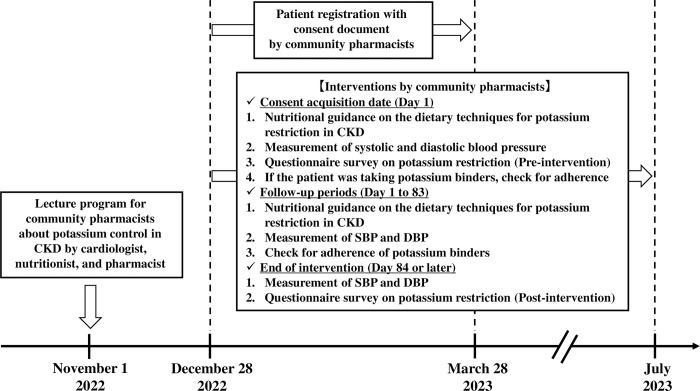 Figure 1
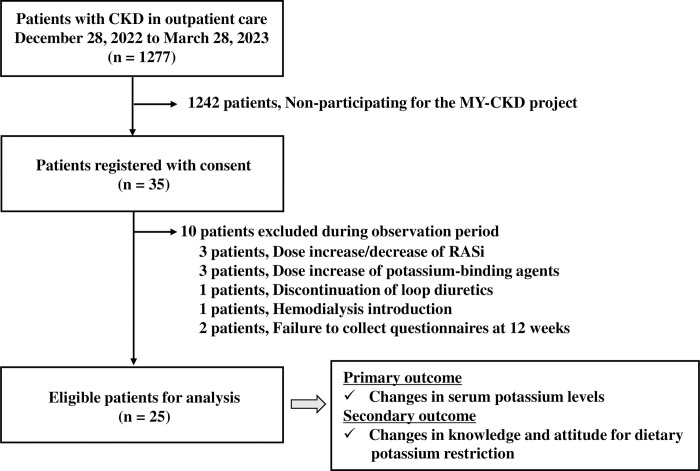 Figure 2
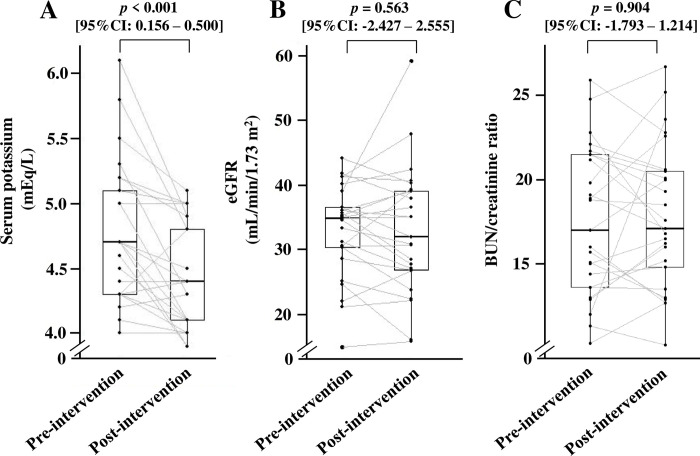 Figure 3
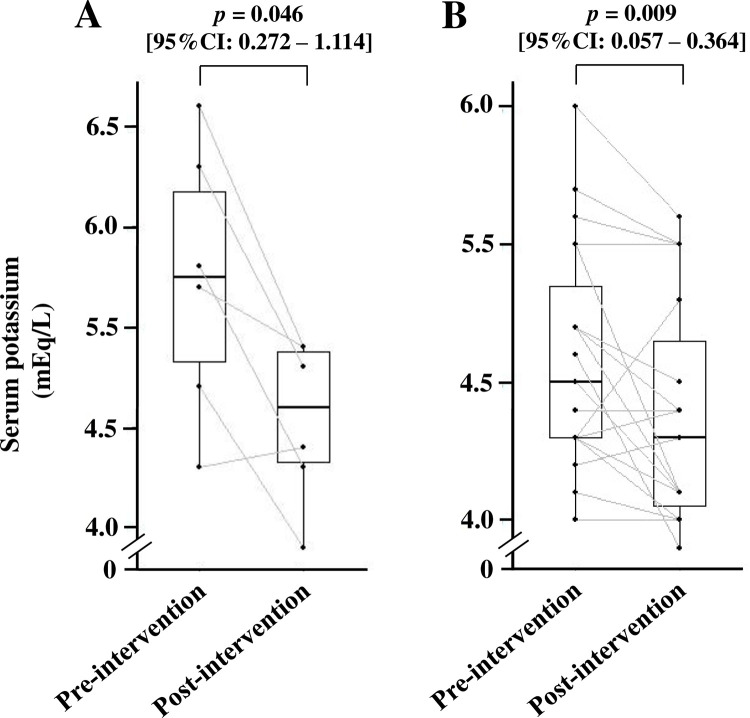 Figure 4
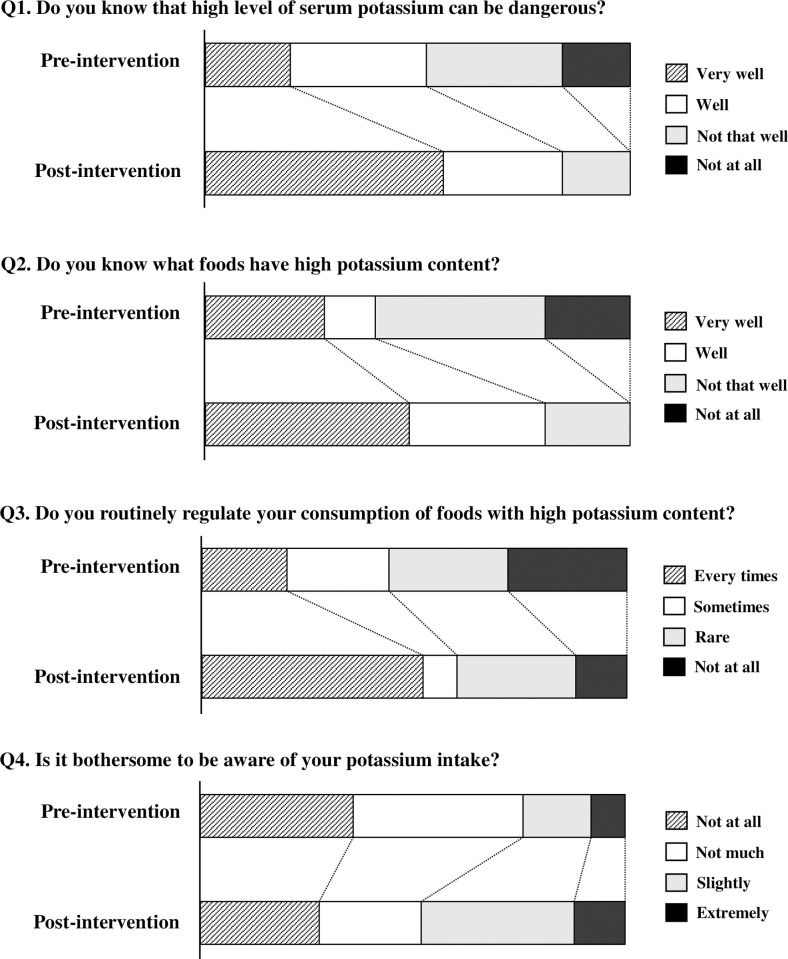 Figure 5
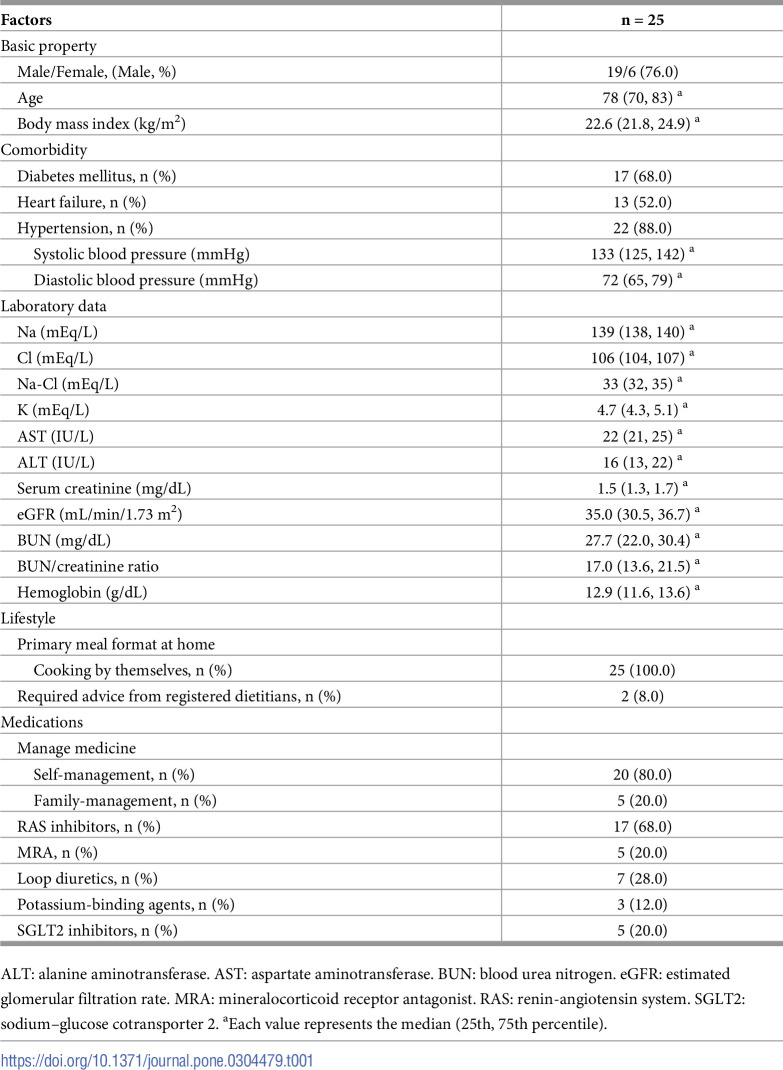 Figure 6
Peer Reviews
No public reviews on file for this paper yet. If you reviewed it on a platform where reviews are public (OpenReview, ICLR, NeurIPS, ICML), you can paste yours below so the community can read it here.
Videos
No videos yet. Explain this paper in a talk, walkthrough, or lecture? Add one.
Taxonomy
TopicsPotassium and Related Disorders · Electrolyte and hormonal disorders · Pharmaceutical Practices and Patient Outcomes