Analysis of urinary tobacco-specific nitrosamine 4- (methylnitrosamino)1-(3-pyridyl)-1- butanol (NNAL) and HPV infection in American women: National health and nutrition examination survey
Daiwen Liang, Qi Zhang, Wenyu Li, Youkun Lin

TL;DR
This study found that higher levels of a tobacco-related chemical in urine are linked to increased risk of both high- and low-risk HPV infections in American women.
Contribution
The study is the first to show a positive association between urinary NNAL levels and HPV infection in a nationally representative sample of women.
Findings
The highest quartile of NNAL was associated with a higher risk of low-risk HPV infection compared to the lowest quartile.
The highest quartile of NNAL was associated with a higher risk of high-risk HPV infection compared to the lowest quartile.
The associations varied by subgroup, with interactions observed in marital status, BMI, and smoking status.
Abstract
Tobacco-specific nitrosamines (TSNAs) are a group of toxic substances specific to tobacco. 4-(methylnitrosamino)-1-(3-pyridyl)-1-butanol (NNAL) is a tobacco-specific nitrosamine measurable in urine with a much longer half-life than cotinine. We aimed to examine the association between urinary tobacco-specific NNAL and HPV infection among American women. We used cross-sectional data from the National Health and Nutrition Examination Survey (NHANES) between 2007 and 2014 to collect details on their urinary NNAL, HPV infection status, and other essential variables. The association between dietary urinary NNAL and HPV infection status was analyzed by using a weighted multivariate logistic regression model, and stratified subgroup analysis. In total, 5197 participants aged 18–59 years were identified, with overall prevalence of high-risk and low-risk HPV infection of 22.0% and 19.1%,…
Genes, proteins, chemicals, diseases, species, mutations and cell lines named across the full text — each resolved to its canonical identifier and authoritative record.
Click any figure to enlarge with its caption.
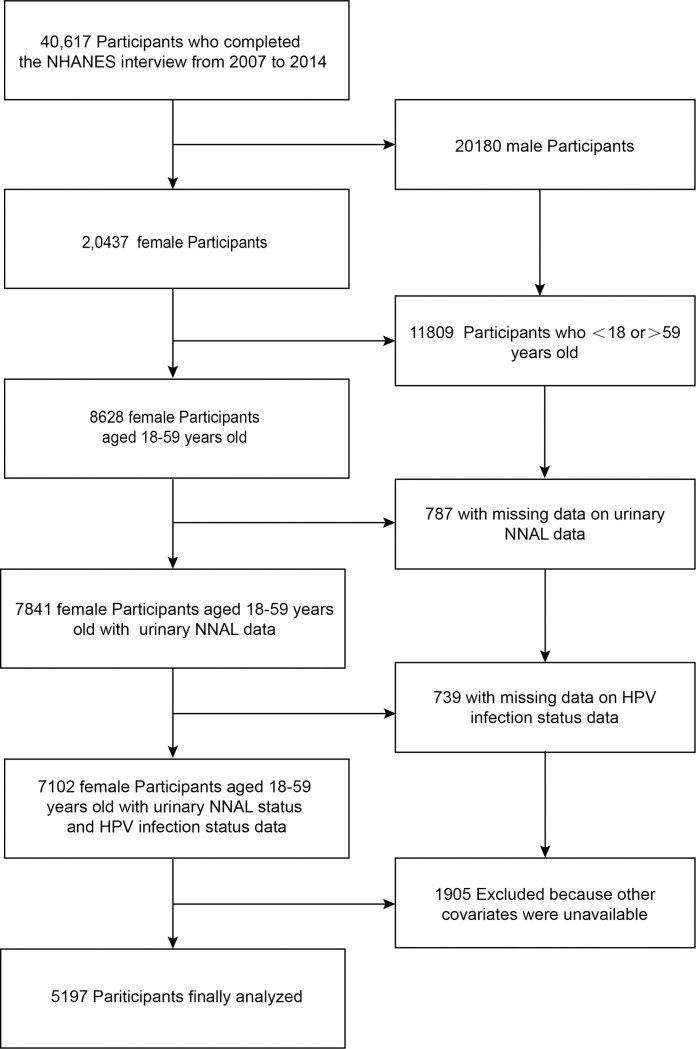 Figure 1
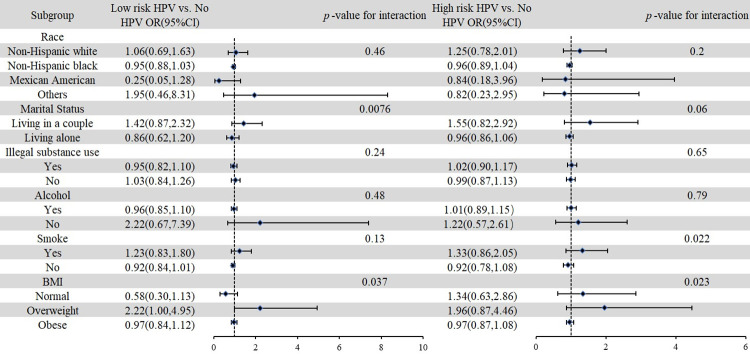 Figure 2
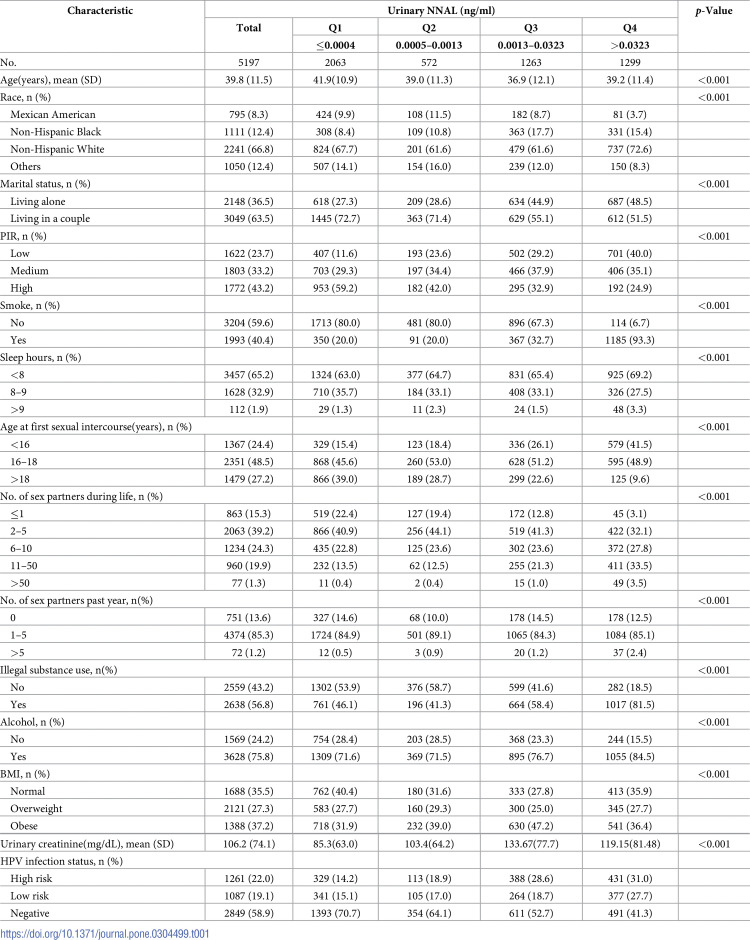 Figure 3
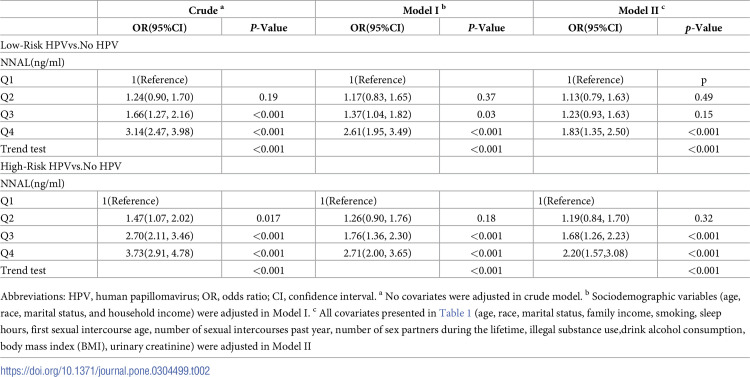 Figure 4
Peer Reviews
No public reviews on file for this paper yet. If you reviewed it on a platform where reviews are public (OpenReview, ICLR, NeurIPS, ICML), you can paste yours below so the community can read it here.
Videos
No videos yet. Explain this paper in a talk, walkthrough, or lecture? Add one.
Taxonomy
TopicsGenomics, phytochemicals, and oxidative stress · Phytoestrogen effects and research