Live-cell single-molecule fluorescence microscopy for protruding organelles reveals regulatory mechanisms of MYO7A-driven cargo transport in stereocilia of inner ear hair cells
Takushi Miyoshi, Harshad Vishwasrao, Inna Belyantseva, Mrudhula Sajeevadathan, Yasuko Ishibashi, Samuel Adadey, Narinobu Harada, Hari Shroff, Thomas Friedman

TL;DR
This paper introduces a new live-cell microscopy method to study how MYO7A proteins transport cargo in stereocilia of inner ear hair cells.
Contribution
A novel live-cell single-molecule fluorescence microscopy method using diSPIM to study organelle protrusions in hair cells.
Findings
MYO7A traffics as a dimer in stereocilia.
MYO7A movement is restricted by interactions with the plasma membrane and F-actin.
The methodology enables detailed analysis of cargo transport in protruding organelles.
Abstract
Stereocilia are unidirectional F-actin-based cylindrical protrusions on the apical surface of inner ear hair cells and function as biological mechanosensors of sound and acceleration. Development of functional stereocilia requires motor activities of unconventional myosins to transport proteins necessary for elongating the F-actin cores and to assemble the mechanoelectrical transduction (MET) channel complex. However, how each myosin localizes in stereocilia using the energy from ATP hydrolysis is only partially understood. In this study, we develop a methodology for live-cell single-molecule fluorescence microscopy of organelles protruding from the apical surface using a dual-view light-sheet microscope, diSPIM. We demonstrate that MYO7A, a component of the MET machinery, traffics as a dimer in stereocilia. Movements of MYO7A are restricted when scaffolded by the plasma membrane and…
Genes, proteins, chemicals, diseases, species, mutations and cell lines named across the full text — each resolved to its canonical identifier and authoritative record.
Click any figure to enlarge with its caption.
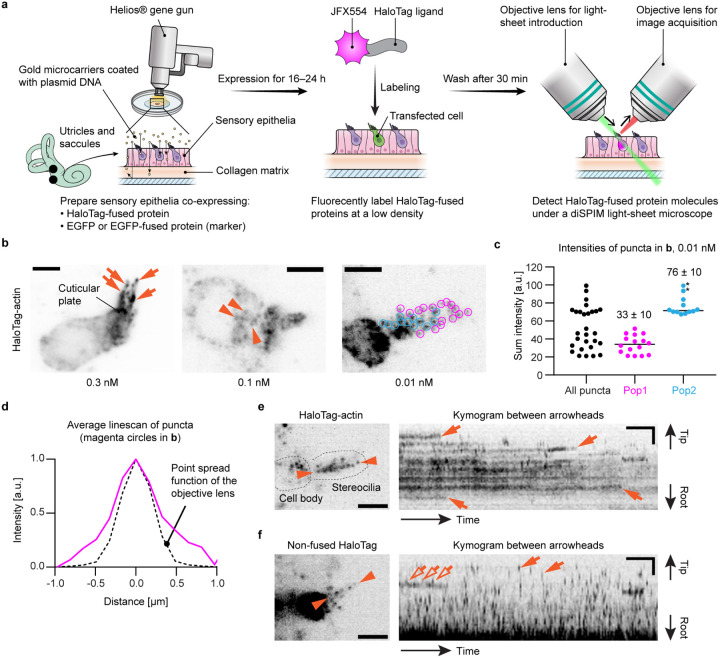 Figure 1
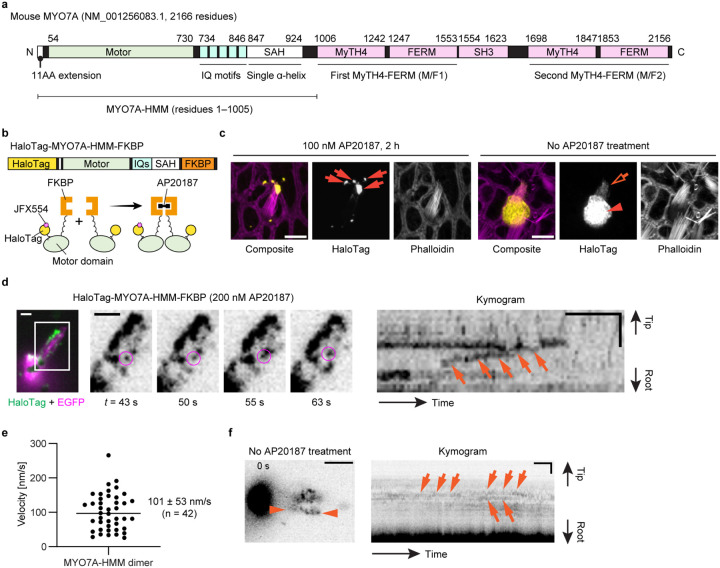 Figure 2
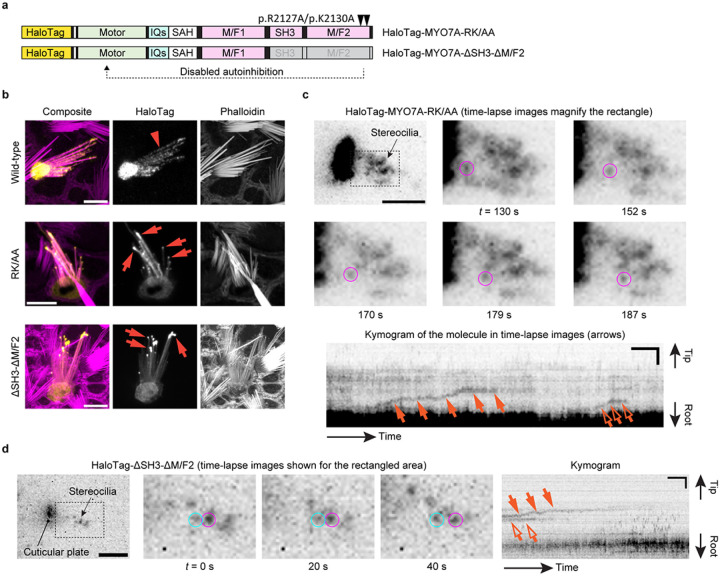 Figure 3
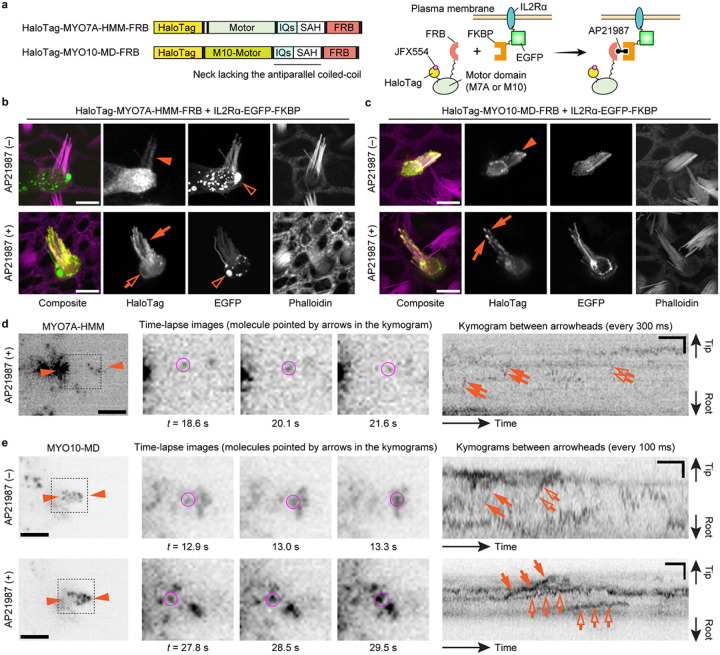 Figure 4
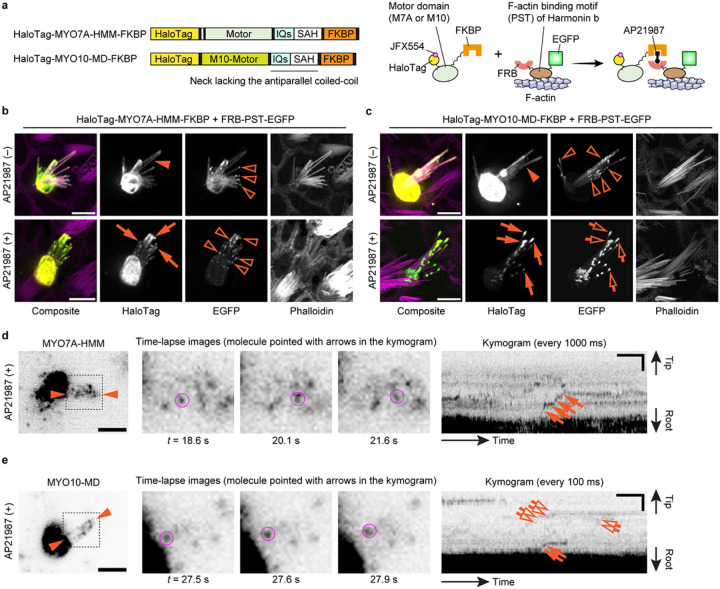 Figure 5
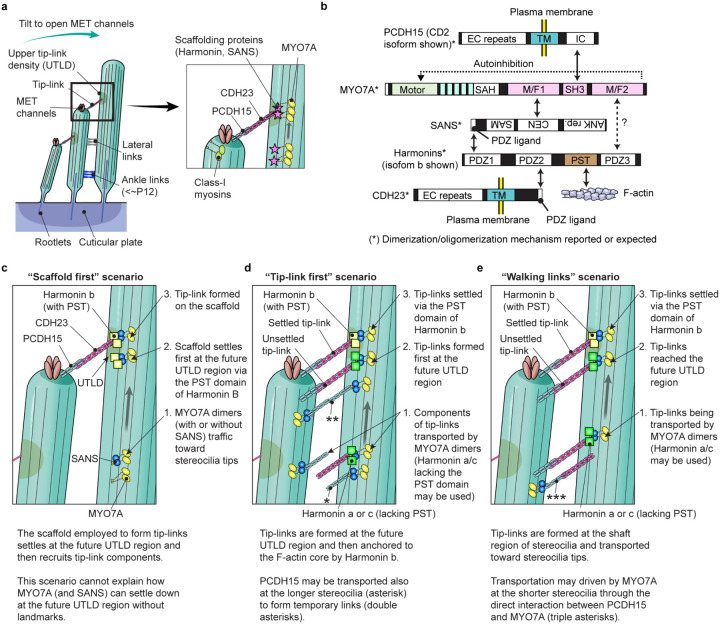 Figure 6
Peer Reviews
No public reviews on file for this paper yet. If you reviewed it on a platform where reviews are public (OpenReview, ICLR, NeurIPS, ICML), you can paste yours below so the community can read it here.
Videos
No videos yet. Explain this paper in a talk, walkthrough, or lecture? Add one.
Taxonomy
TopicsHearing, Cochlea, Tinnitus, Genetics · Congenital heart defects research · RNA Research and Splicing