Unique among high passes: Phylogenetic inferences from DNA barcoding of the butterfly fauna of Ladakh Trans-Himalaya, India
Mohd Ali, Rushati Dey, Moumita Das, Vikas Kumar, Kailash Chandra, Virendra Prasad Uniyal, Sandeep Kumar Gupta

TL;DR
This study uses DNA barcoding to analyze the genetic diversity of butterflies in the cold-desert region of Ladakh, India, revealing insights into their phylogeny and conservation.
Contribution
The study creates a DNA barcode reference library for 23 butterfly species in Ladakh, including novel barcodes for six species.
Findings
Interspecific divergence in two mountain butterfly genera was below the 3% threshold, challenging standard DNA barcoding assumptions.
Most species showed minimal divergence when global barcodes were added, but a few showed a two-fold increase.
Bayesian clustering mostly aligned with morphological classifications, with exceptions in taxonomically complex genera.
Abstract
The butterfly assemblage of Ladakh Trans-Himalaya demands a thorough analysis of their population genetic structure owing to their typical biogeographic affinity and their adaptability to extreme cold-desert climates. No such effort has been taken till date, and in this backdrop, we created a barcode reference library of 60 specimens representing 23 species. Barcodes were generated from freshly collected leg samples using the Sanger sequencing method, followed by phylogenetic clade analyses and divergence calculation. Our data represents 22% of Ladakh’s Rhopaloceran fauna with the novel barcode submission for six species, including one Schedule II species, Paralasa mani. Contrary to the 3% threshold rule, the interspecific divergence between two species pairs of typical mountain genus Hyponephele and Karanasa was found to be 2.3% and 2.2%, respectively. The addition of conspecific…
Genes, proteins, chemicals, diseases, species, mutations and cell lines named across the full text — each resolved to its canonical identifier and authoritative record.
Click any figure to enlarge with its caption.
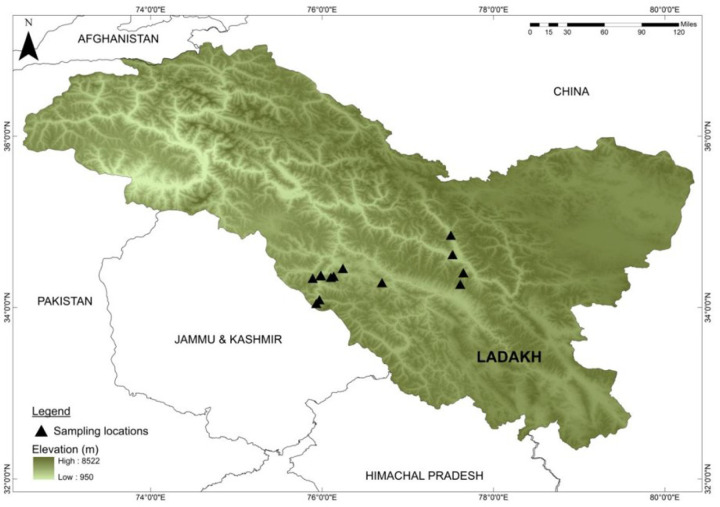 Figure 1
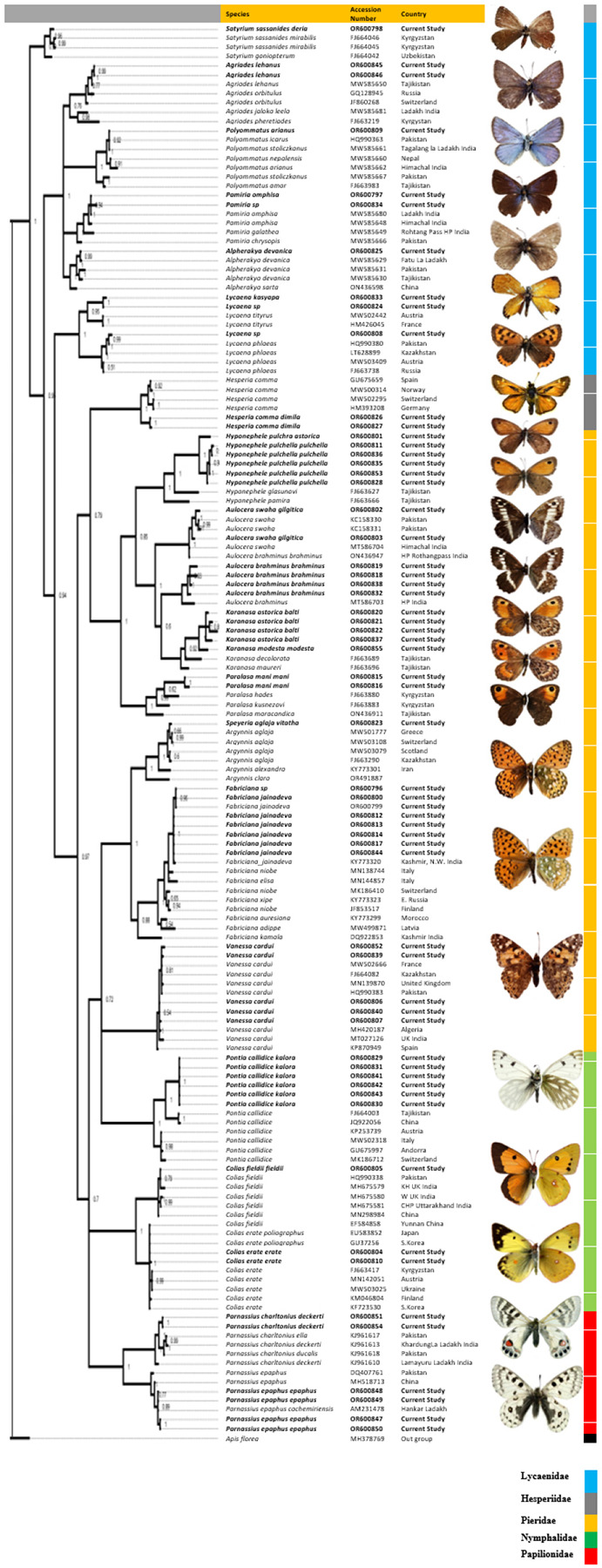 Figure 2
Peer Reviews
No public reviews on file for this paper yet. If you reviewed it on a platform where reviews are public (OpenReview, ICLR, NeurIPS, ICML), you can paste yours below so the community can read it here.
Videos
No videos yet. Explain this paper in a talk, walkthrough, or lecture? Add one.
Taxonomy
TopicsLepidoptera: Biology and Taxonomy · Plant and animal studies · Species Distribution and Climate Change