Structural basis of Δ9-THC analog activity at the Cannabinoid 1 receptor
David Gloriam, Thor Thorsen, Yashraj Kulkarni, David Sykes, Andreas Bøggild, Taner Drace, Pattarin Hompluem, Christos Iliopoulos-Tsoutsouvas, Spyros Nikas, Henrik Daver, Alexandros Makriyannis, Poul Nissen, Michael Gajhede, Dmitry Veprintsev, Thomas Boesen, Jette Kastrup

TL;DR
This study reveals how THC and its analogs interact with the CB1 receptor, providing insights into their effects and potential for drug development.
Contribution
The paper presents the cryo-EM structure of HU210 bound to CB1 and uses simulations to explain ligand interactions at the molecular level.
Findings
The cryo-EM structure of HU210 bound to CB1 and Gi1 was determined.
Molecular simulations revealed spatiotemporal interactions of THC and analogs with CB1.
Pharmacological profiling showed differences in ligand efficacy, bias, and binding kinetics.
Abstract
Δ9-tetrahydrocannabinol (THC) is the principal psychoactive compound derived from the cannabis plant Cannabis sativa and approved for emetic conditions, appetite stimulation and sleep apnea relief. THC’s psychoactive actions are mediated primarily by the cannabinoid receptor CB1. Here, we determine the cryo-EM structure of HU210, a THC analog and widely used tool compound, bound to CB1 and its primary transducer, Gi1. We leverage this structure for docking and 1,000 ns molecular dynamics simulations of THC and 10 structural analogs delineating their spatiotemporal interactions at the molecular level. Furthermore, we pharmacologically profile their recruitment of Gi and β-arrestins and reversibility of binding from an active complex. By combining detailed CB1 structural information with molecular models and signaling data we uncover the differential spatiotemporal interactions these…
Genes, proteins, chemicals, diseases, species, mutations and cell lines named across the full text — each resolved to its canonical identifier and authoritative record.
Click any figure to enlarge with its caption.
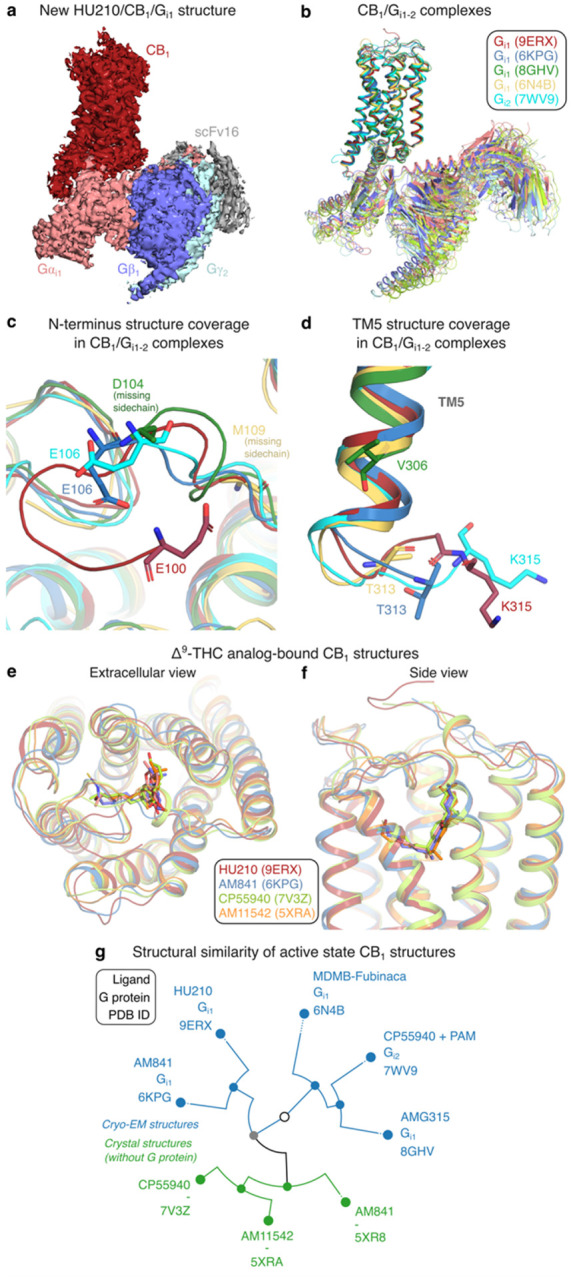 Figure 1
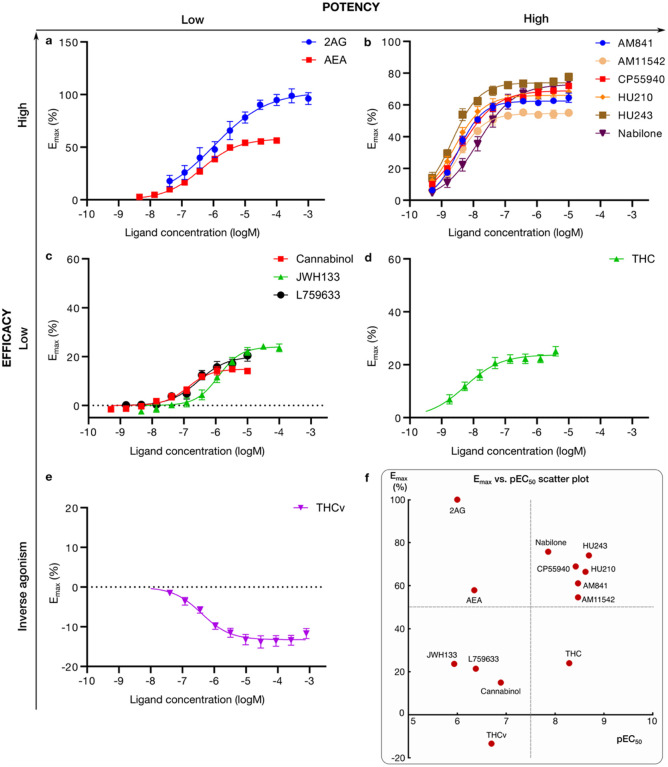 Figure 2
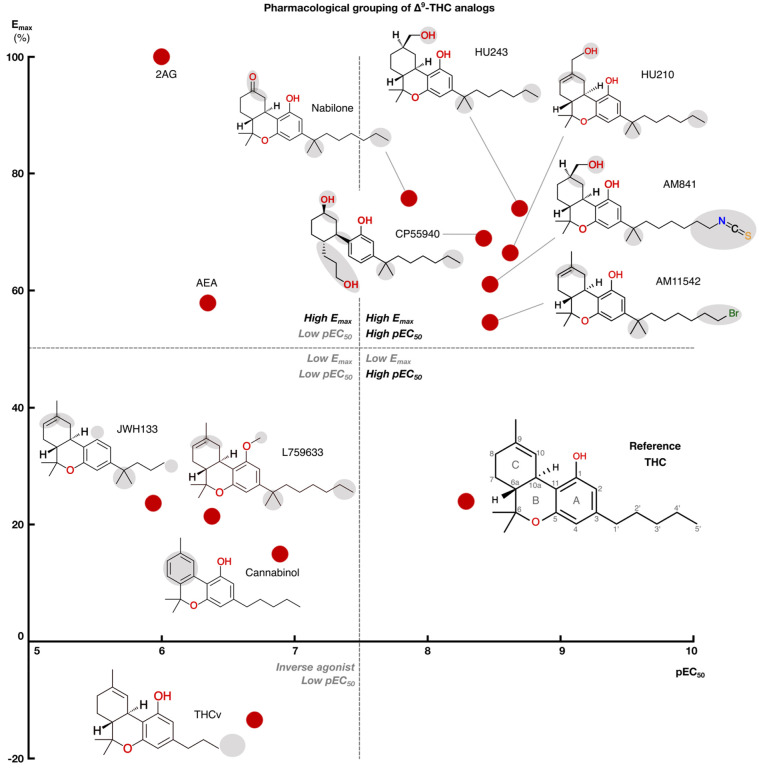 Figure 3
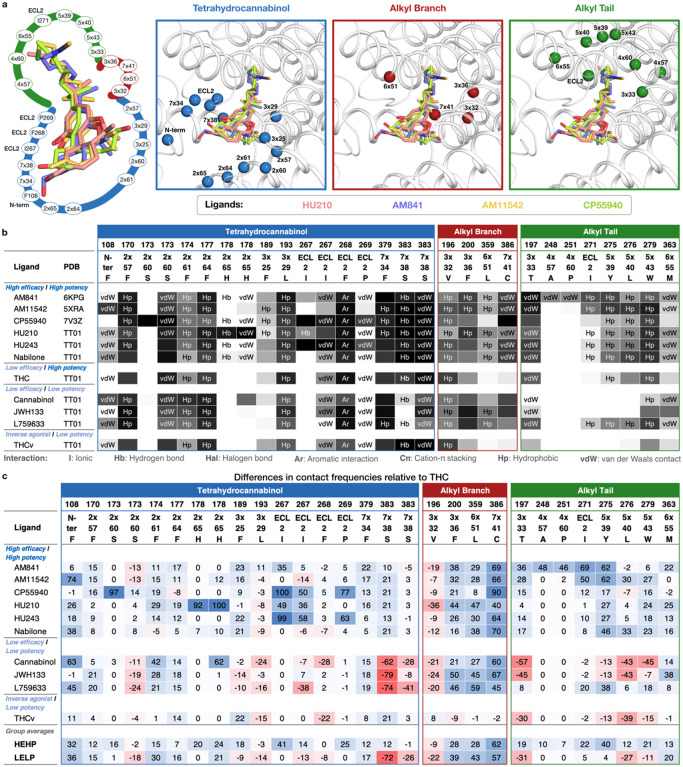 Figure 4
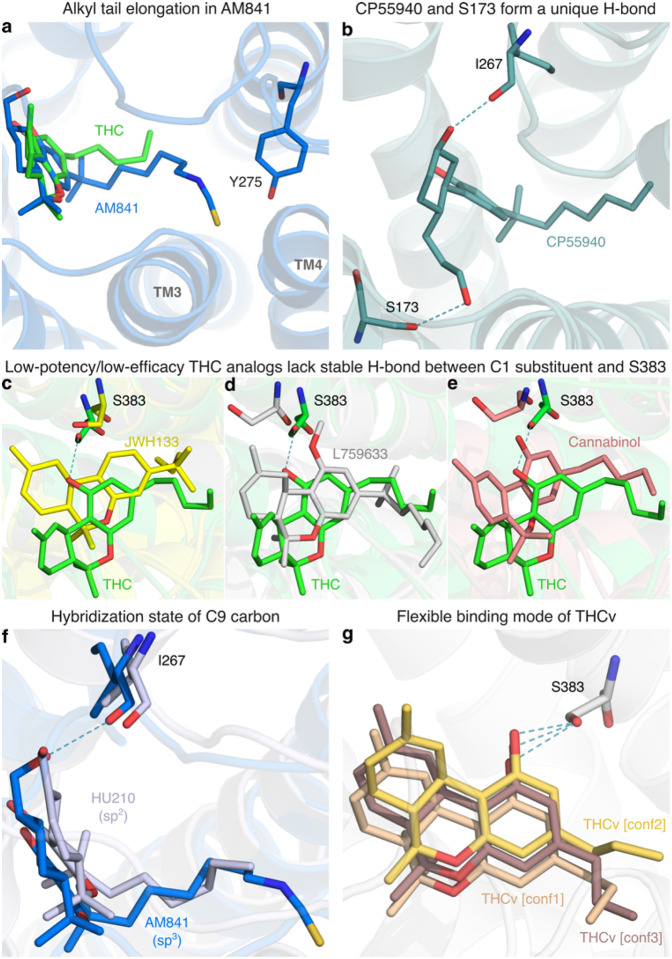 Figure 5
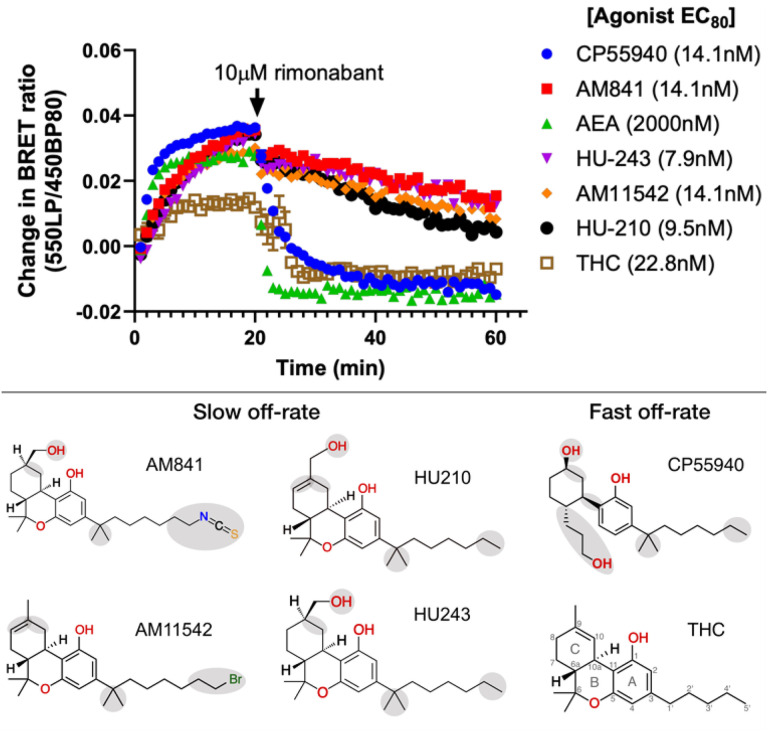 Figure 6
Peer Reviews
No public reviews on file for this paper yet. If you reviewed it on a platform where reviews are public (OpenReview, ICLR, NeurIPS, ICML), you can paste yours below so the community can read it here.
Videos
No videos yet. Explain this paper in a talk, walkthrough, or lecture? Add one.
Taxonomy
TopicsCannabis and Cannabinoid Research · Neuroscience and Neuropharmacology Research · Pharmacological Receptor Mechanisms and Effects