Analysis of alpha-synuclein harvested from intracranial instruments used in deep brain stimulation surgery for Parkinson’s disease
zachary sorrentino, Joshua Riklan, Grace Lloyd, Brandon Lucke-Wold, David Mampre, Stephan Quintin, Rasheedat Zakare-Fagbamila, Megan Still, Vyshak Chandra, Kelly Foote, Benoit Giasson, Justin Hilliard

TL;DR
Researchers developed a method to collect and analyze alpha-synuclein from brain tissue during deep brain stimulation surgery, revealing higher levels of misfolded alpha-synuclein in Parkinson’s disease patients.
Contribution
A novel method to isolate and analyze alpha-synuclein directly from living PD patients during DBS surgery.
Findings
Alpha-synuclein was robustly detected in purified tissue from DBS surgical instruments.
Truncated alpha-synuclein (1–125 αSyn) was significantly higher in Parkinson’s disease compared to essential tremor patients.
Purified tissue primarily contained axons and capillaries, as observed via light microscopy.
Abstract
Alpha-synuclein (αSyn) forms pathologic aggregates in Parkinson’s disease (PD) and is implicated in mechanisms underlying neurodegeneration. While pathologic αSyn has been extensively studied, there is currently no method to evaluate αSyn within the brains of living patients. Patients with PD are often treated with deep brain stimulation (DBS) surgery in which surgical instruments are in direct contact with neuronal tissue; herein, we describe a method by which tissue is purified from DBS surgical instruments in PD and essential tremor (ET) patients and demonstrate that αSyn is robustly detected. 24 patients undergoing DBS surgery for PD (17 patients) or ET (7 patients) were enrolled; from patient samples, 81.2 ± 44.8 μg protein (n=15) is able to be purified, with immunoblot assays specific for αSyn reactive in all tested samples. Light microscopy revealed axons and capillaries as the…
Genes, proteins, chemicals, diseases, species, mutations and cell lines named across the full text — each resolved to its canonical identifier and authoritative record.
Click any figure to enlarge with its caption.
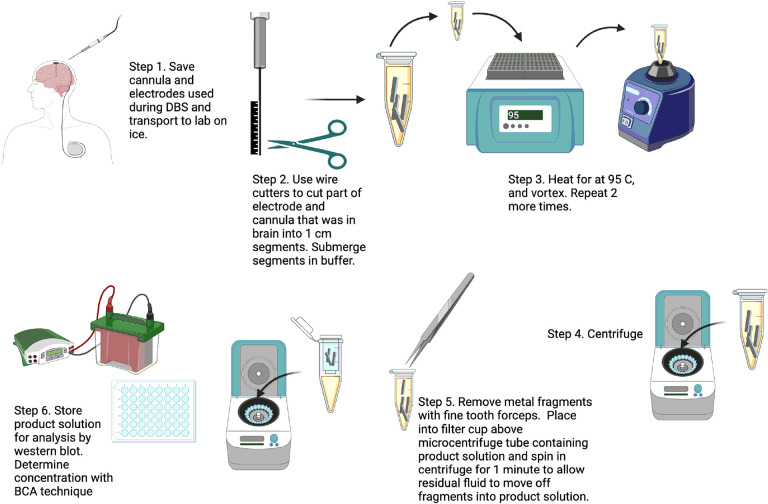 Figure 1
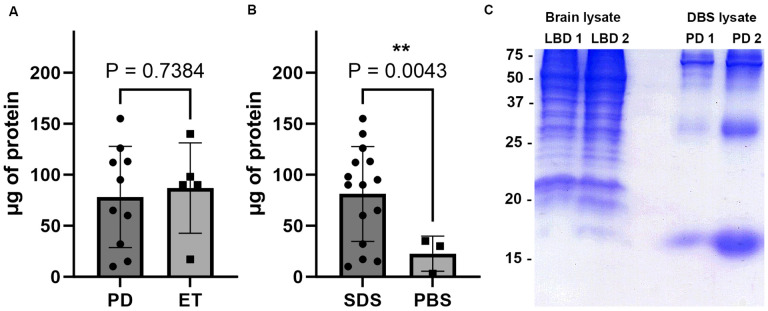 Figure 2
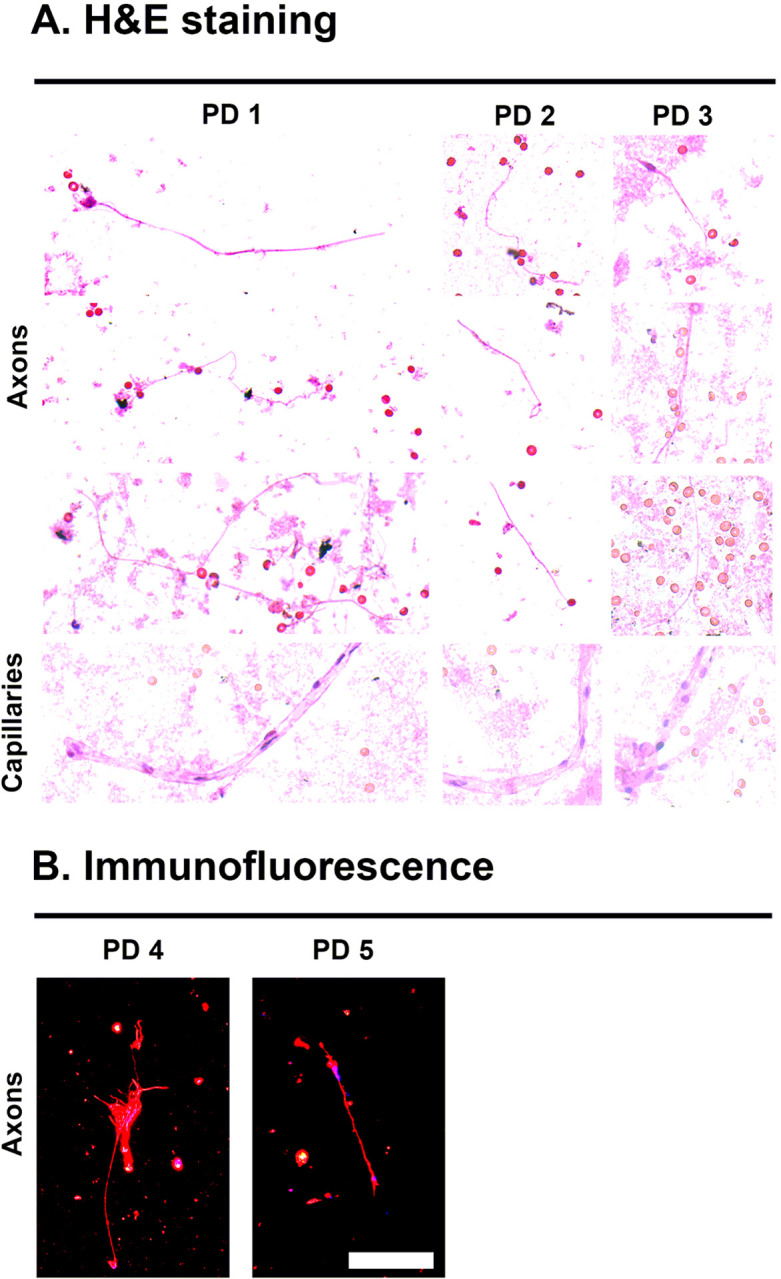 Figure 3
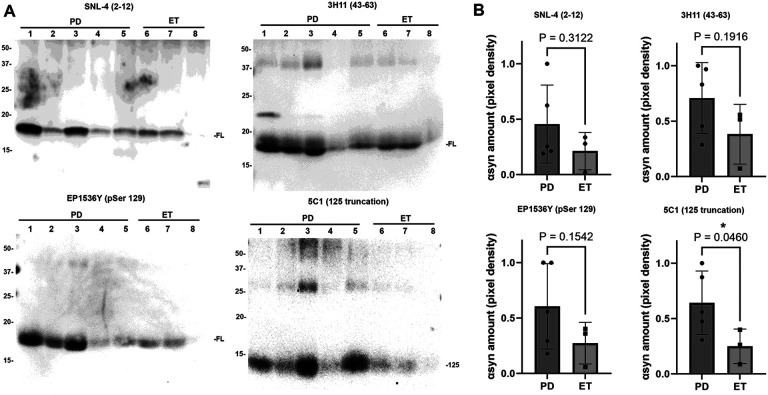 Figure 4
Peer Reviews
No public reviews on file for this paper yet. If you reviewed it on a platform where reviews are public (OpenReview, ICLR, NeurIPS, ICML), you can paste yours below so the community can read it here.
Videos
No videos yet. Explain this paper in a talk, walkthrough, or lecture? Add one.
Taxonomy
TopicsNeurological disorders and treatments · Parkinson's Disease Mechanisms and Treatments · Genetic Neurodegenerative Diseases