The Mms22-Rtt107 axis dampens the DNA damage checkpoint by reducing the stability of the Rad9 checkpoint mediator
Xiaolan Zhao, Bingbing Wan, Danying Guan, Shibai Li, Tzippora Chwat-Edelstein

TL;DR
This study reveals how yeast cells reduce DNA damage checkpoint activity by targeting a key protein, Rad9, through a pathway involving Rtt107 and Mms22.
Contribution
The discovery of a novel Rtt107-Mms22 pathway that downregulates the DNA damage checkpoint by promoting Rad9 degradation.
Findings
The Rtt107-Mms22 pathway promotes proteasomal degradation of Rad9, a key checkpoint mediator.
Rtt107 binding to Mms22 recruits an ubiquitin ligase complex to chromatin-bound Rad9.
The Rtt107-Mms22 axis works alongside the Rtt107-Slx4 axis to downregulate the DNA damage checkpoint.
Abstract
The DNA damage checkpoint is a highly conserved signaling pathway induced by genotoxin exposure or endogenous genome stress. It alters many cellular processes such as arresting the cell cycle progression and increasing DNA repair capacities. However, cells can downregulate the checkpoint after prolonged stress exposure to allow continued growth and alternative repair. Strategies that can dampen the DNA damage checkpoint are not well understood. Here, we report that budding yeast employs a pathway composed of the scaffold protein Rtt107, its binding partner Mms22, and an Mms22-associated ubiquitin ligase complex to downregulate the DNA damage checkpoint. Mechanistically, this pathway promotes the proteasomal degradation of a key checkpoint factor, Rad9. Furthermore, Rtt107 binding to Mms22 helps to enrich the ubiquitin ligase complex on chromatin and target the chromatin-bound form of…
Genes, proteins, chemicals, diseases, species, mutations and cell lines named across the full text — each resolved to its canonical identifier and authoritative record.
Click any figure to enlarge with its caption.
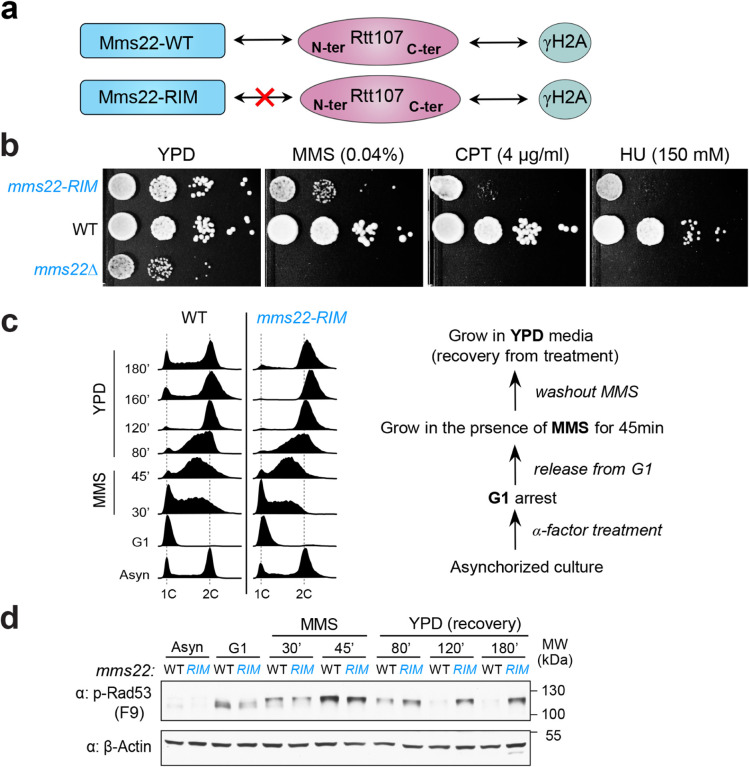 Figure 1
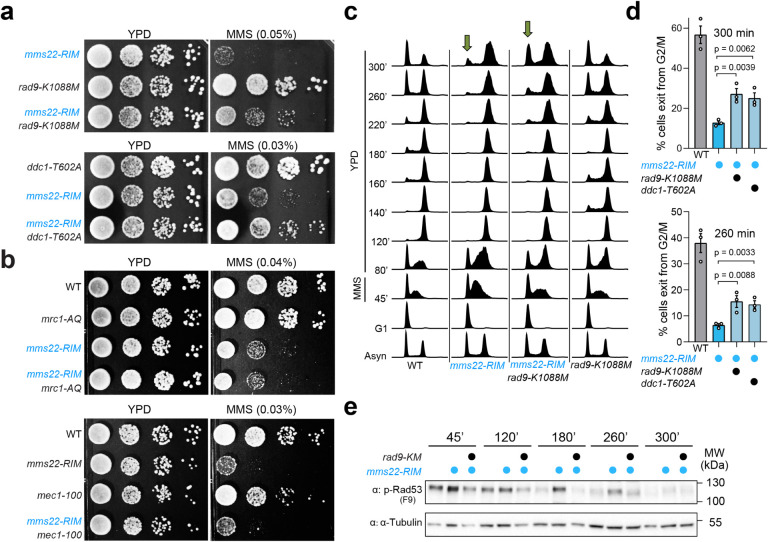 Figure 2
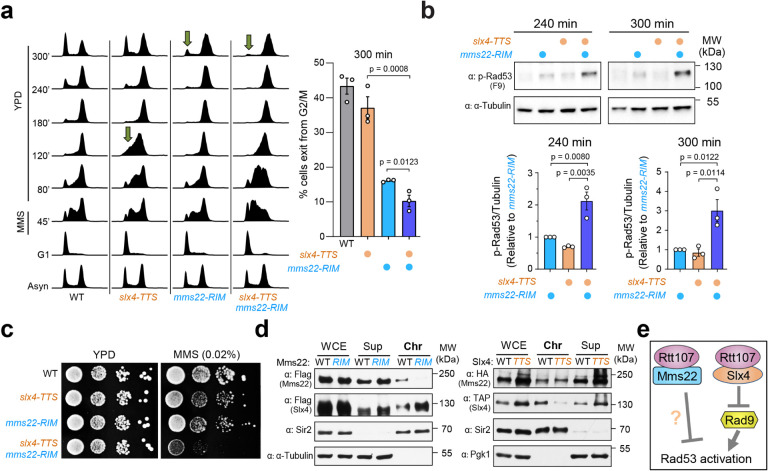 Figure 3
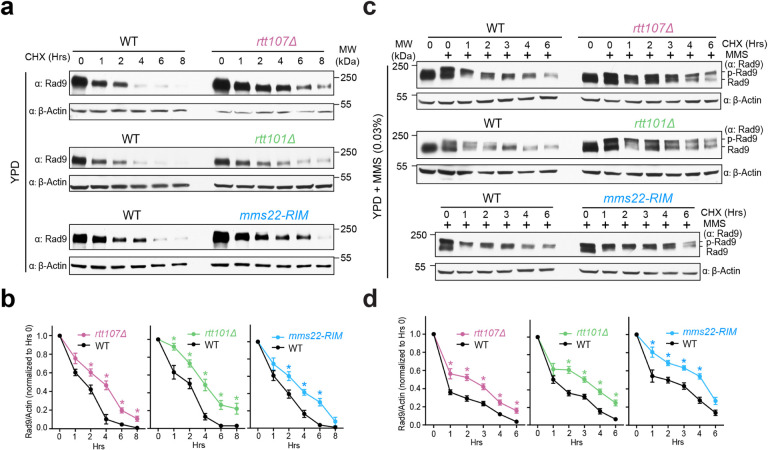 Figure 4
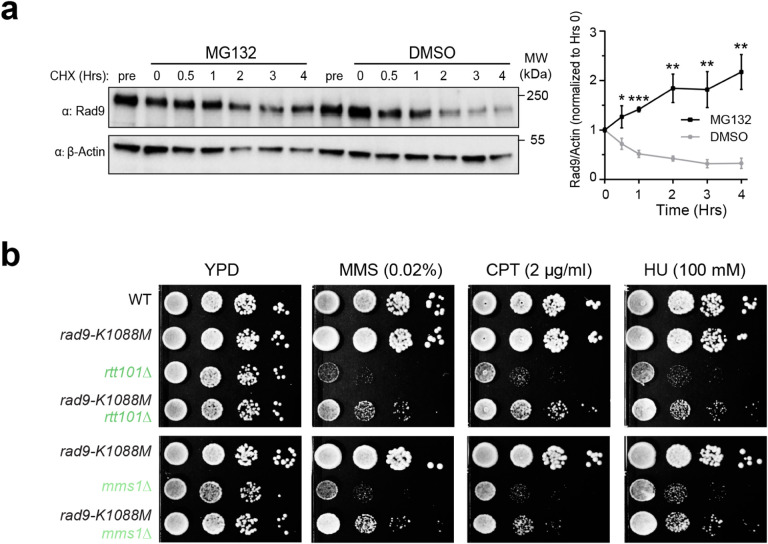 Figure 5
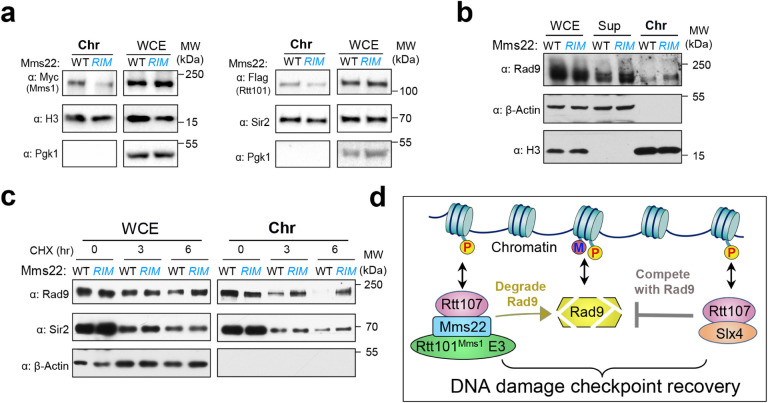 Figure 6
Peer Reviews
No public reviews on file for this paper yet. If you reviewed it on a platform where reviews are public (OpenReview, ICLR, NeurIPS, ICML), you can paste yours below so the community can read it here.
Videos
No videos yet. Explain this paper in a talk, walkthrough, or lecture? Add one.
Taxonomy
TopicsDNA Repair Mechanisms · PARP inhibition in cancer therapy · Cancer-related Molecular Pathways