What do mammals have to say about the neurobiology of acoustic communication?
Angeles Salles, Joshua Neunuebel

TL;DR
This paper reviews how different mammals, like mice and bats, help scientists understand how the brain processes sound for communication.
Contribution
The paper highlights underutilized mammalian models, such as mice and bats, for studying acoustic communication neurobiology.
Findings
Mice and bats offer unique insights into auditory communication due to their distinct behaviors and neural systems.
Comparative studies across species can reveal general principles of auditory processing and communication.
Songbirds remain a key model, but new mammalian models are expanding the field.
Abstract
Auditory communication is crucial across taxa, including humans, because it enables individuals to convey information about threats, food sources, mating opportunities, and other social cues necessary for survival. Comparative approaches to auditory communication will help bridge gaps across taxa and facilitate our understanding of the neural mechanisms underlying this complex task. In this work, we briefly review the field of auditory communication processing and the classical champion animal, the songbird. In addition, we discuss other mammalian species that are advancing the field. In particular, we emphasize mice and bats, highlighting the characteristics that may inform how we think about communication processing.
Genes, proteins, chemicals, diseases, species, mutations and cell lines named across the full text — each resolved to its canonical identifier and authoritative record.
Click any figure to enlarge with its caption.
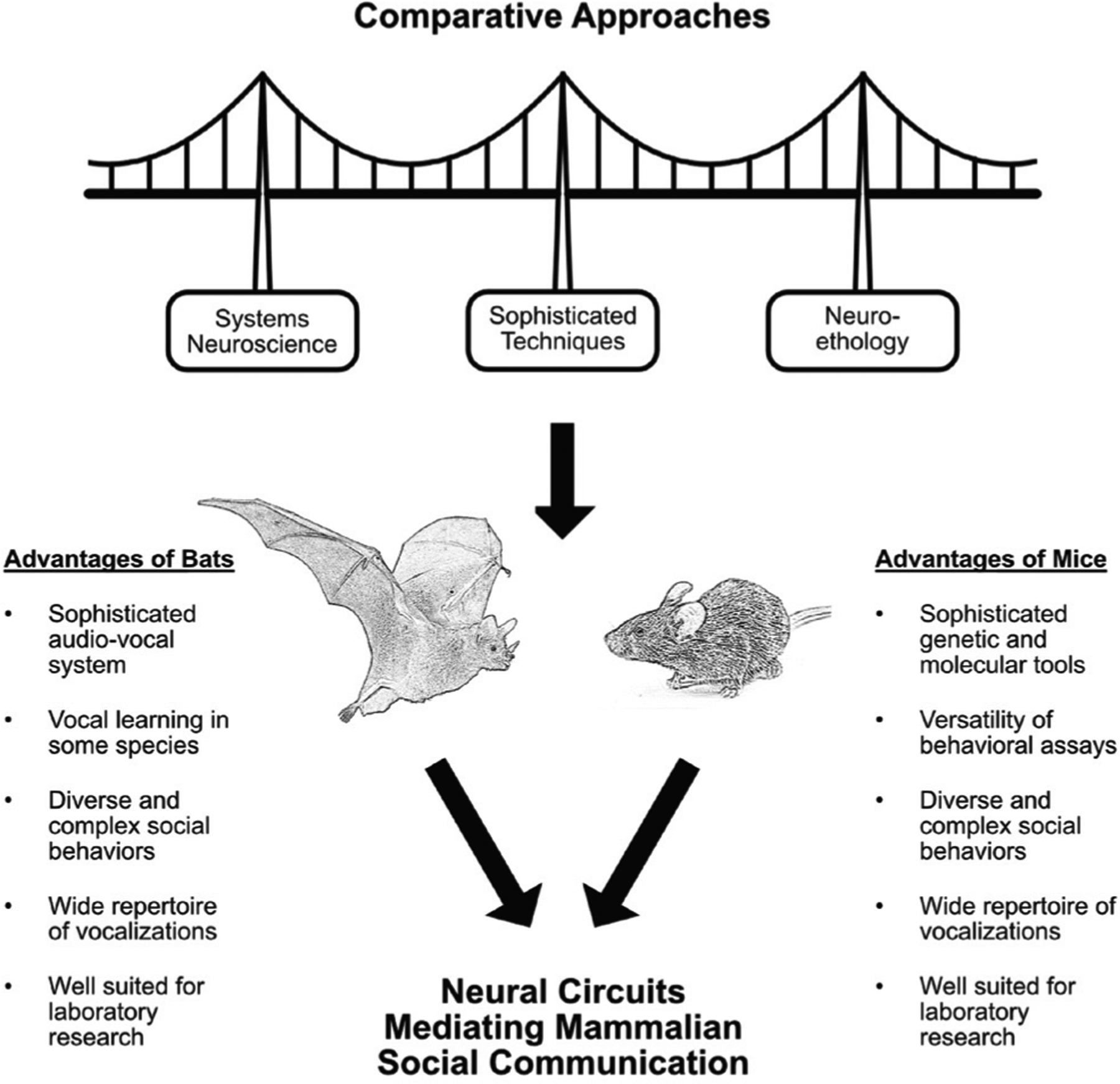 Figure 1
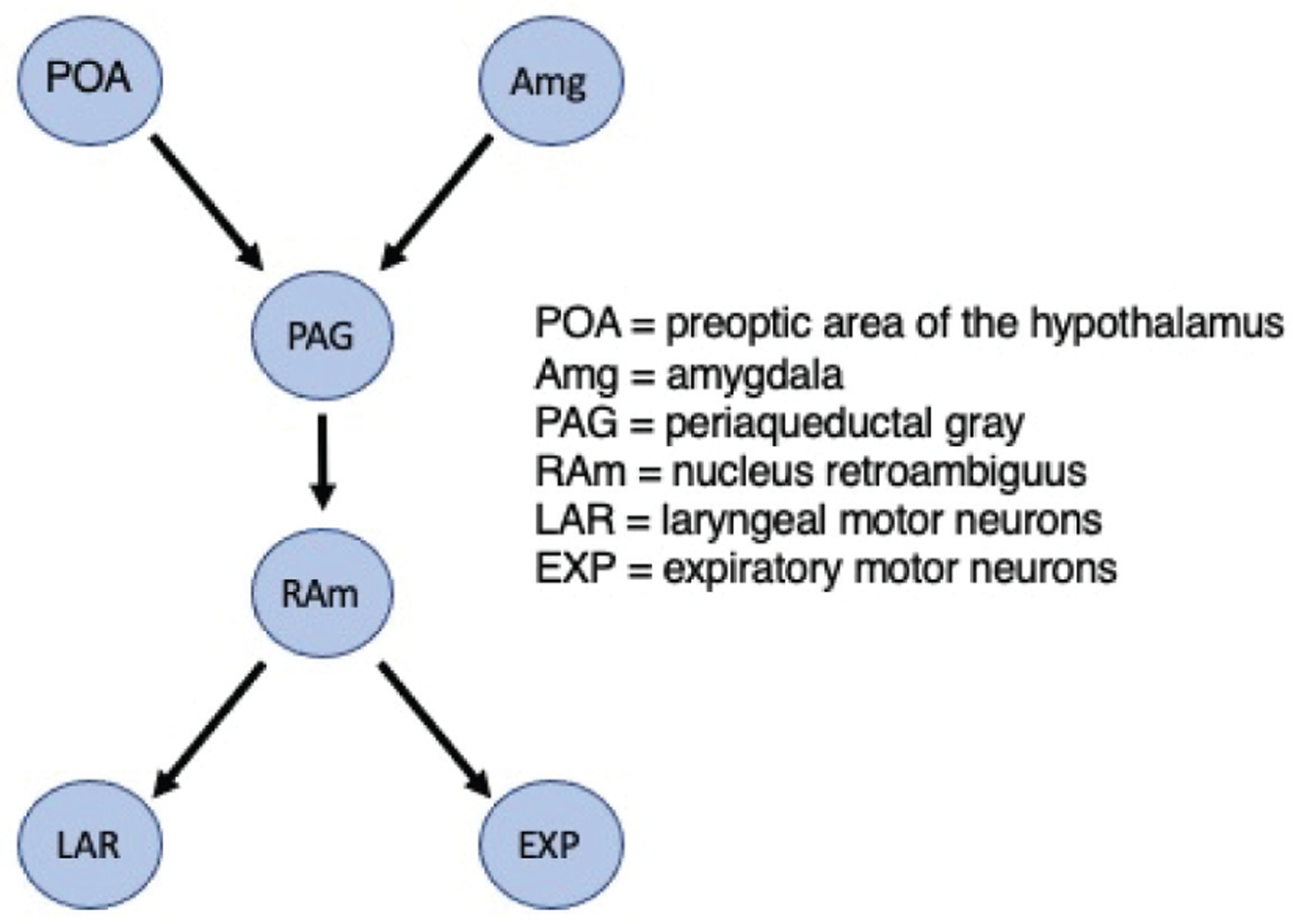 Figure 2
Peer Reviews
No public reviews on file for this paper yet. If you reviewed it on a platform where reviews are public (OpenReview, ICLR, NeurIPS, ICML), you can paste yours below so the community can read it here.
Videos
No videos yet. Explain this paper in a talk, walkthrough, or lecture? Add one.
Taxonomy
TopicsAnimal Vocal Communication and Behavior · Marine animal studies overview · Bat Biology and Ecology Studies