Dataset on evaluation of intra-specific genetic diversity and phylogenetic relationship of Launaea taraxacifolia (Willd.) Amin ex C. Jeffrey in southwest Nigeria using rbcL gene maker
Abiodun Sunday Oyelakin, Jacob Olagbenro Popoola, Favour Olanrewaju Babalola, Taiwo Adebowale Bamiro, Gloria Oladapo, Victor Olamide Oluwatuyi, Oluwatobi Faith Oke, Al-fuad Sobayo

TL;DR
This paper presents a dataset analyzing the genetic diversity and relationships of Launaea taraxacifolia in southwest Nigeria using the rbcL gene.
Contribution
The study provides a novel dataset on the genetic diversity and phylogenetic relationships of a neglected plant species in Nigeria.
Findings
The dataset shows low nucleotide diversity but high gene diversity among L. taraxacifolia populations.
Significant genetic differentiation was observed between some populations, while others showed no differentiation.
The dataset includes rbcL gene sequences and insights into haplotype diversity and codon usage.
Abstract
Launaea taraxacifolia (Willd.) Amin Ex C. Jeffrey (Asteraceae) popularly known as “African wild lettuce” is a neglected, underutilized, and sometimes classified as a weed in West and Central Africa. The plant has been naturalized in numerous regions of the world, including Asia, North America, Europe, and North Africa. This highly nutritional and medicinal leafy vegetable is endemic to some states in southwest, Nigeria. People who utilize the species still depend largely on its spontaneous appearance in the wild, except for some herbalists who cultivate it for therapeutic uses. Its domestication and cultivation are still at infant stage. Without the intervention of breeders, the full potential of this species would remain untapped. The inadequate information about the genetic diversity of L. taraxacifolia hinders its improvement through breeding programme and for conservation purposes,…
Genes, proteins, chemicals, diseases, species, mutations and cell lines named across the full text — each resolved to its canonical identifier and authoritative record.
Click any figure to enlarge with its caption.
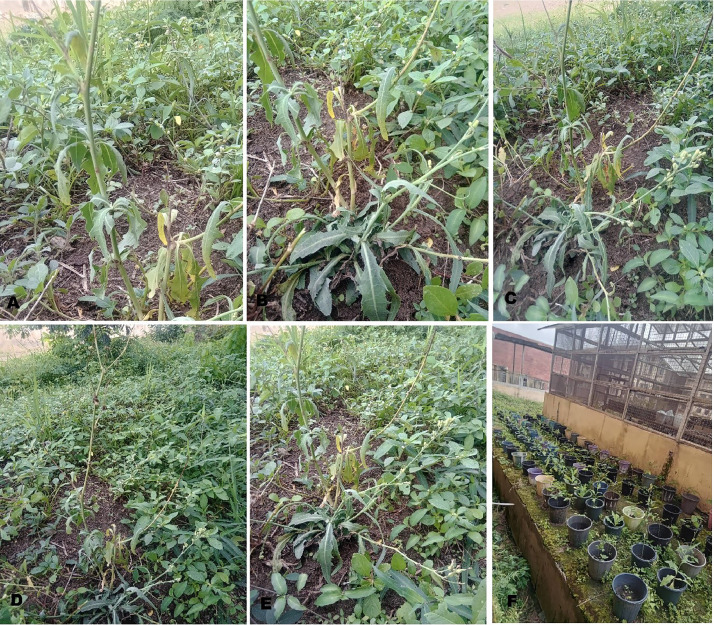 Figure 1
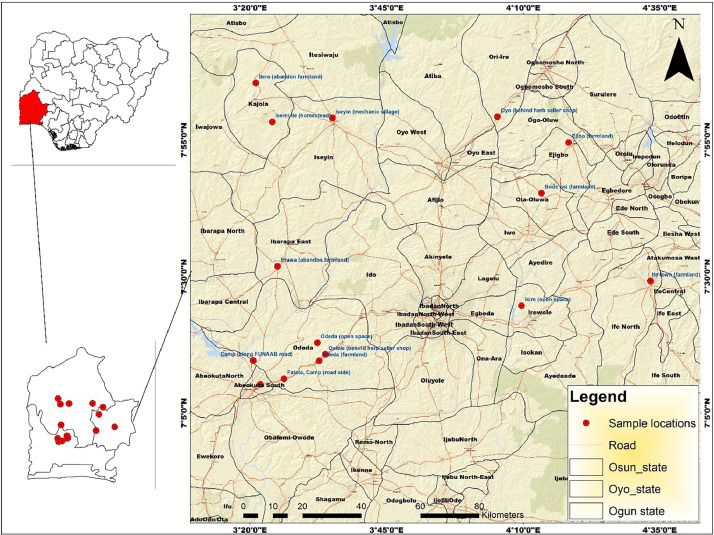 Figure 2
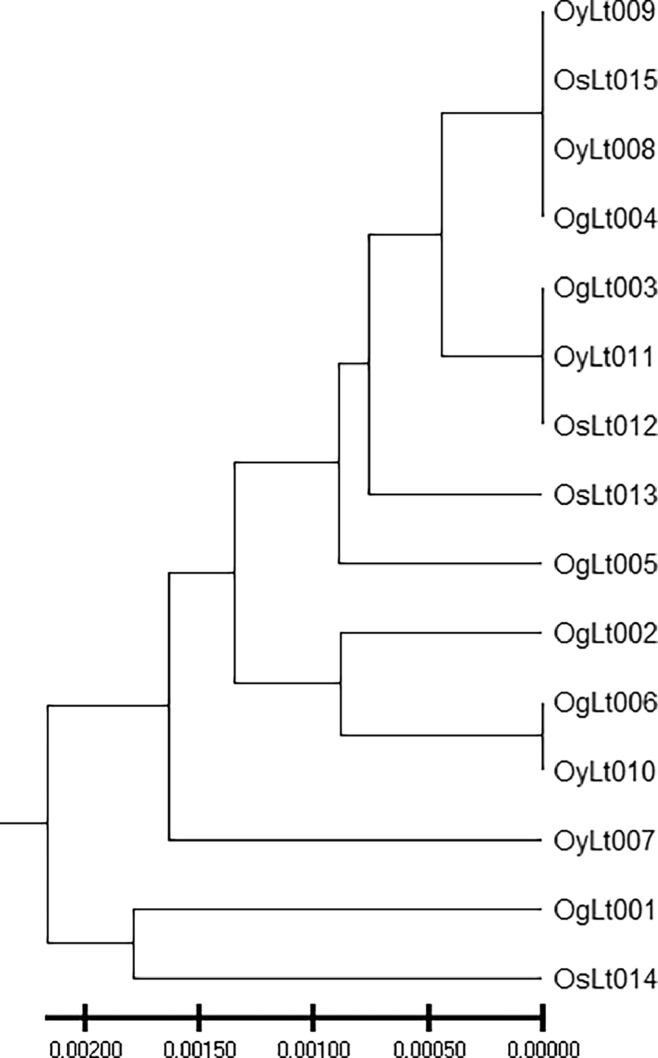 Figure 3
Peer Reviews
No public reviews on file for this paper yet. If you reviewed it on a platform where reviews are public (OpenReview, ICLR, NeurIPS, ICML), you can paste yours below so the community can read it here.
Videos
No videos yet. Explain this paper in a talk, walkthrough, or lecture? Add one.
Taxonomy
TopicsSeed and Plant Biochemistry · Advances in Cucurbitaceae Research · Genetic diversity and population structure
Specifications TableSubjectBiological SciencesSpecific subject areaBotany, Agricultural, Genetic diversity, Plant breeding, and ConservationData typesTables, FigureHow data were acquiredCollection of Launaea taraxacifolia root cuttings from open fields and wild spaces, PCR amplification of rbcL gene, and DNA Sanger Sequencing.Data formatRaw, and AnalysedDescription collected dataThe root cuttings of 15 accessions of Launaea taraxacifolia were collected from three states where the species is endemic in southwest, Nigeria, namely Oyo, Ogun and Osun States. The accessions were categorized into three populations according to their endemic states (Oyo: five accessions; Ogun: six accessions; and Osun: four accessions). The plants were identified as Launaea taraxacifolia at the Federal University of Agriculture, Abeokuta (FUNAAB) Herbarium, Nigeria. The root cuttings were planted in single lines per accession in 5 replicates in the screen house for two weeks. Genomic DNA was extracted from young leaves and subjected to polymerase chain reaction (PCR) and sanger sequencing using the ribulose-1,5-carboxylase/oxygenase large subunit (rbcL) gene marker. The nucleotide and amino acid compositions, sequence length, number of invariable sites/monomorphic, genetic differentiation and codon usage bias were analysed using DnaSP 6.0. The codon usage indices and amino acid residues with their molecular weight profiles were estimated using CodonW. The phylogenetic relationships among the accessions were inferred using the UPGMA method.Data source locationThe locations are presented in Table 1.Data accessibilityThe accessions sequence data have been deposited in NCBI GenBank and the following accession numbers were assigned; OR785724.1, OR785725.1, OR785726.1, OR785727.1, OR785728.1, OR785729.1, OR785730.1, OR785731.1, OR785732.1, OR785733.1, OR785734.1, OR785735.1, OR785736.1, OR785737.1, OR785738.1.Popset accession number: OR785724Direct URL to data:https://www.ncbi.nlm.nih.gov/popset/?term=OR785724
Value of the Data
1
- •The dataset including sequence relatedness, number of polymorphic sites, total number of mutations, haplotype (gene) diversity, codon usage bias, and amino acids weight profile provide insight into the genetic relatedness and phylogenetic relationships among the fifteen accessions of Launaea taraxacifolia studied from Nigeria.
- •It highlighted the availability of L. taraxacifolia within the studied areas valuable for possible germplasm collection for cultivation, conservation, and breeding purposes.
- •The relatively low genetic differentiation among the three populations of L. taraxacifolia indicates a high commonality in the nucleotide contents and information which may possibly corroborate the endemism of the species to the southwest, Nigeria.
- •The dataset underscores the potential of InDel haplotype genetic information to initiate mutation breeding to enlarge the existing narrow gene pool of L. taraxacifolia.
- •The amino acid profiles generated from L. taraxacifolia could be employed to promote its nutritional values to improve its local and regional utilisation for food, nutrition and medicine as well as for its infra-generic delimitation in Nigeria.
- •The genetic diversity and phylogenetic relationships can benefit breeders and scientists to facilitate L. taraxacifolia domestication, genetic improvement, and commercial cultivation in Nigeria.
Objectives
2
The research was initiated to provide information on location and distribution, assess intraspecific genetic diversity and phylogenetic relationships among fifteen accessions of L. taraxacifolia collected from three states in southwest Nigeria where the species is endemic using partial rbcL gene sequence.
Data Description
3
Launaea taraxacifolia is a perennial West Africa tropical plant commonly known as African wild lettuce in the Asteraceae family. It is called 'Efo yanrin' by Yoruba people in the southwestern part of Nigeria. It thrives on waste dumping places, and abandoned farmlands. L. taraxacifolia is one of the important neglected and underutilized leafy vegetables in Nigeria [1,2]. It is used to increase milk production in cattle and induce multiple births in livestock [[2], [3], [4]]. Despite the nutritional and medicinal values of L. taraxacifolia, it remains uncultivated and largely harvested from the wild. It is imperative to genetically improve this species, save it from impending extinction and promote its domestication and cultivation. The Rbcl sequencing information on L. taraxacifolia could provide insights into its genetic relatedness and facilitate its genetic improvement via marker-assisted strategies. The phenotypic images of L. taraxacifolia accessions growth habit collected from the wild and as planted in the screen house is shown in Fig. 1. The field collection details including passport data, location coordinates, altitude of L. taraxacifolia accessions and Genbank accession numbers for the deposited sequences are described in Table 1. Fig. 2 describes the map of the collection sites. The Genbank accession numbers, percentage identity, matched organism, and sequence length (bp) are presented in Table 2. The percentage nucleotide contents involving % GC, % T(U), %(C), % A and % G of the 15 accessions of L. taraxacifolia are described in Table 3. The description of genetic diversity parameters such as polymorphic and monomorphic sites, parsimony information sites, total number of mutations, number of haplotypes, and nucleotide diversity is recorded in Table 4. Single nucleotide polymorphisms among the accessions is presented in Table 5 while genetic differentiation among the three populations is recorded in Table 6. The codon bias usage information, frequencies, average codons, and relative synonymous codon usage (RSCU) for L. taraxacifolia studied are described in Table 7 while codon usage indices for each accession of L. taraxacifolia are presented in Table 8. The amino acid molecular weight profile of L. taraxacifolia sequences is shown in Table 9. Fig. 3 presents the evolutionary history of the species based on phylogenetic tree inferred using the UPGMA method.Fig. 1. Images of L. taraxacifolia collected from the wild and plants raised from the root cuttings.A. OgLt001B. OgLt006C. OyLt008D. OyLt009E. OsLt012F. Accessions raised from root cuttingsFig. 1:Table 1. Genbank accession number, collection number, passport data, location coordinates and altitude of L. taraxacifolia accessions studied.Table 1S/NGenbank accession numberCollection numberArea of collectionLGAStateLatitude NSLongitude EW1OR785724.1OgLt001Camp (along FUNAAB road)OdedaOgun7°11′14.8″3°26′04.9″2OR785725.1OgLt002Odeda (open space)OdedaOgun7°13′53.0″3°31′39.0″3OR785726.1OgLt003Osiele (behind herb seller shop)OdedaOgun7°19′83.0″3°47′00.0″4OR785727.1OgLt004Fatola, Camp (roadside)OdedaOgun7°11′07.2″3°26′04.1″5OR785728.1OgLt005Odeda (farmland)OdedaOgun7°13′53.0″3°31′39.0″6OR785729.1OgLt006Adatan (herb seller shop)Abeokuta SouthOgun7°14′52.4″3°32′76.9″7OR785730.1OyLt007Isemi-Ile (homestead)KajolaOyo7°98′65.3″3°37′47.9″8OR785731.1OyLt008Ilero (abandon farmland)KajolaOyo8°09′62.9″3°35′02.3″9OR785732.1OyLt009Eruwa (abandon farmland)Ibarapa EastOyo7°53′25.3″3°42′26.9″10OR785733.1OyLt010Iseyin (mechanic village)IseyinOyo7°96′53.5″3°56′96.8″11OR785734.1OyLt011Oyo (behind herb seller shop)AtibaOyo7°85′61.3″3°90′95.9″12OR785735.1OsLt012Ife town (farmland)IfeOsun7°45′96.7″4°55′69.7″13OR785736.1OsLt013Ejibo (farmland)EjiboOsun7°83′24.3″4°37′29.1″14OR785737.1OsLt014Ikire (open space)IrewoleOsun7°37′75.1″4°18′25.6″15OR785738.1OsLt015Bode osi (farmland)Ola oluwaOsun7°83′24.3″4°37′27.1″Fig. 2. Mapping of collection sites of the Launaea taraxacifolia accessions from Osun, Oyo and Ogun States, Nigeria.Fig. 2:Table 2. Summary of the deposited sequences, Genbank accession numbers, matched organism, and sequence length.Table 2. Sequence nameGenBank Accession NumberMatched Organism% IdentitySL (bp)Launaea taraxacifolia isolate OgLt002ribulose-1,5-bisphosphate carboxylase/oxygenase large subunit (rbcL) gene, partial cds; chloroplast.OR785725.1Launaea taraxacifolia100 %549Launaea taraxacifolia isolate OgLt003ribulose-1,5-bisphosphate carboxylase/oxygenase large subunit (rbcL) gene, partial cds; chloroplast.OR785726.1Launaea taraxacifolia100 %549Launaea taraxacifolia isolate OgLt004ribulose-1,5-bisphosphate carboxylase/oxygenase large subunit (rbcL) gene, partial cds; chloroplast.OR785727.1Launaea taraxacifolia100 %549Launaea taraxacifolia isolate OgLt006ribulose-1,5-bisphosphate carboxylase/oxygenase large subunit (rbcL) gene, partial cds; chloroplast.OR785729.1Launaea taraxacifolia100 %549Launaea taraxacifolia isolate OgLt009ribulose-1,5-bisphosphate carboxylase/oxygenase large subunit (rbcL) gene, partial cds; chloroplast.OR785732.1Launaea taraxacifolia100 %549Launaea taraxacifolia isolate OgLt010ribulose-1,5-bisphosphate carboxylase/oxygenase large subunit (rbcL) gene, partial cds; chloroplast.OR785733.1Launaea taraxacifolia100 %549Launaea taraxacifolia isolate OgLt012ribulose-1,5-bisphosphate carboxylase/oxygenase large subunit (rbcL) gene, partial cds; chloroplast.OR785735.1Launaea taraxacifolia100 %549Launaea taraxacifolia isolate OgLt013ribulose-1,5-bisphosphate carboxylase/oxygenase large subunit (rbcL) gene, partial cds; chloroplast.OR785736.1Launaea taraxacifolia100 %549Launaea taraxacifolia isolate OgLt001ribulose-1,5-bisphosphate carboxylase/oxygenase large subunit (rbcL) gene, partial cds; chloroplast.OR785724.1Launaea taraxacifolia100 %549Launaea taraxacifolia isolate OgLt005ribulose-1,5-bisphosphate carboxylase/oxygenase large subunit (rbcL) gene, partial cds; chloroplast.OR785728.1Launaea taraxacifolia100 %548Launaea taraxacifolia isolate OgLt007ribulose-1,5-bisphosphate carboxylase/oxygenase large subunit (rbcL) gene, partial cds; chloroplast.OR785730.1Launaea taraxacifolia100 %548Launaea taraxacifolia isolate OgLt008ribulose-1,5-bisphosphate carboxylase/oxygenase large subunit (rbcL) gene, partial cds; chloroplast.OR785731.1Launaea taraxacifolia100 %548Launaea taraxacifolia isolate OgLt011ribulose-1,5-bisphosphate carboxylase/oxygenase large subunit (rbcL) gene, partial cds; chloroplast.OR785734.1Launaea taraxacifolia100 %548Launaea taraxacifolia isolate OgLt014ribulose-1,5-bisphosphate carboxylase/oxygenase large subunit (rbcL) gene, partial cds; chloroplast.OR785737.1Launaea taraxacifolia100 %548Launaea taraxacifolia isolate OgLt015ribulose-1,5-bisphosphate carboxylase/oxygenase large subunit (rbcL) gene, partial cds; chloroplast.OR785738.1Launaea taraxacifolia100 %548Table 3Genbank Accession number, percentage nucleotide content of the rbcL gene of L. taraxacifolia.Table 3S/NGenbank Accession No.% GCT(U)%C%A%G1OR785724.142.8130.5519.3626.6423.452OR785725.143.0430.3419.5826.6323.463OR785726.142.8330.4419.4726.7323.364OR785727.142.9330.3919.6126.6823.325OR785728.142.8130.5519.5426.6423.276OR785729.142.7530.5719.6126.6823.147OR785730.143.1130.3919.6126.5023.508OR785731.143.1930.4419.6526.3723.549OR785732.142.7630.5919.5026.6523.2610OR785733.142.7530.5719.6126.6823.1411OR785734.142.8330.6219.4726.5523.3612OR785735.142.7530.5719.4326.6823.3213OR785736.143.0130.4419.4726.5523.5414OR785737.142.7330.8519.3326.4223.4015OR785738.143.0130.4419.6526.5523.36Average42.8930.5219.5326.60****23.36Table 4. Genetic diversity indices among fifteen (15) landraces of Launaea teraxaxifolia.Table 4. IndexValueNumber of nucleotides15Total number of sites (excluding sites with gaps / missing data3Number of sites3Invariable (monomorphic) sites0Number of polymorphic (segregating sites)3Parsimony informative sites2Total number of mutations (Eta)3Number of haplotypes (h)4Haplotype (gene) diversity (Hd)0.667Variance of Haplotype diversity + SD0.00982 ± 0.099Nucleotide diversity (Pi)0.298Average number of nucleotide differences (k)0.895Total number of (InDel and non-InDel) sites analysed3 + 0 = 3Table 5Single nucleotide polymorphic of the accessions of L. taraxacifolia studied.Table 5:S/NAccessionsSNSNSN1OgLt001GgA2OgLt002...3OgLt003...4OgLt004...5OgLt005..G6OgLt006...7OyLt007.aG8OyLt008..G9OyLt009A..10OyLt010...11OyLt011..G12OsLt012...13OsLt013...14OsLt014.aG15OsLt015..GAccessions correspond to collection numbers which also align with the Genebank accession numbers on Table 1.Table 6. Genetic differentiation among the three populations of L. taraxacifolia.Table 6:POPULATION 1POPULATION 2HsKsKxyGstDeltaStGammaStNstFstDxyDaPop_1Pop_20.5760.8180.9670.1120.0440.1670.1880.1030.3220.033Pop_1Pop_30.5000.6670.750−0.0340.0280.1390.0650.0000.2500.000Pop_2Pop_30.8731.2961.050−0.0690.0090.025−0.351−0.2220.350−0.078Hs = haplotype-based statistics; Ks = statistics based on nucleotide sequences, Kxy = average proportion of nucleotide difference between populations; Gst = genetic differentiation index based on the frequency of haplotypes; GammaSt = genetic differentiation coefficient; Fst = genetic differentiation; Dxy = average number of nucleotide substitutions per site between populations; Da = net nucleotide substitutions per site between populations. Pop_1 = Ogun State population, Pop_2 = Oyo State population, and Pop_3 = Osun State populationTable 7Codon usage bias: Relative Synonymous Codon Usage (RSCU) and count for L. taraxacifolia rbcL nucleotides.Table 7. CodonCountRSCUCodonCountRSCUCodonCountRSCUCodonCountRSCUUUU(F)61.5UCU(S)32.57UAU(Y)91.38UGU(C)21.33UUC(F)20.5UCC(S)21.71UAC(Y)40.62UGC(C)10.67UUA(L)20.71UCA(S)00UAA()0.13UGA()00UUG(L)62.12UCG(S)00UAG()00UGG(W)21CUU(L)51.76CCU(P)92.77CAU(H)0.20.33CGU(R)53CUC(L)00CCC(P)10.31CAC(H)11.67CGC(R)00CUA(L)10.35CCA(P)10.31CAA(Q)4.72CGA(R)31.8CUG(L)31.06CCG(P)20.62CAG(Q)00CGG(R)00AUU(I)52.14ACU(T)112.75AAU(N)10.5AGU(S)10.86AUC(I)20.86ACC(T)20.5AAC(N)31.5AGC(S)10.86AUA(I)00ACA(T)20.5AAA(K)8.11.6AGA(R)21.2AUG(M)11ACG(T)10.25AAG(K)20.4AGG(R)00GUU(V)72.15GCU(A)71.86GAU(D)7.61.58GGU(G)8.11.67GUC(V)00GCC(A)30.8GAC(D)20.42GGC(G)10.21GUA(V)51.54GCA(A)41.06GAA(E)101.67GGA(G)6.11.27GUG(V)10.31GCG(A)1.10.28GAG(E)20.33GGG(G)4.10.84Average# codons=186Table 8Codon usage Indices for each of the 15L. taraxacifolia* rbcL sequences.Table 8. AccessionsT3sC3sA3sG3sCAICBIFopNcGC3sGCL_symL_aaAromoOR785724.10.320.340.330.240.15−0.050.3947.300.470.46155.00168.000.18OR785725.10.300.250.300.400.16−0.040.3461.000.510.44170.00182.000.08OR785726.10.540.160.350.160.260.060.4545.120.260.43183.00187.000.12OR785727.10.310.340.320.250.15−0.060.3946.910.480.46156.00169.000.18OR785728.10.290.250.300.390.15−0.030.3461.000.510.43168.00180.000.08OR785729.10.310.350.330.240.15−0.050.3946.810.480.46156.00169.000.18OR785730.10.310.340.330.250.15−0.050.3946.060.470.46156.00170.000.17OR785731.10.320.340.330.250.15−0.050.3948.010.470.46156.00169.000.18OR785732.10.560.150.340.160.280.090.4744.180.250.43183.00186.000.12OR785733.10.310.350.330.240.15−0.050.3946.810.480.46156.00169.000.18OR785734.10.310.340.330.240.15−0.050.3946.740.480.46155.00169.000.18OR785735.10.310.340.330.240.15−0.050.3946.740.480.46155.00169.000.18OR785736.10.540.160.350.170.260.060.4545.200.260.43183.00187.000.12OR785737.10.300.250.300.390.16−0.040.3461.000.510.43168.00180.000.08OR785738.10.310.340.320.250.15−0.060.3946.910.480.46156.00169.000.18CAI - Codon Adaptation Index, CBI - Codon Bias Index, FoP - Frequency of optimal codons, Aromo - Aromaticity.Table 9. Amino Acid molecular weight profile of the L. taraxacifolia sequences.Table 9. Gene nameAmino acidsPheLeuIleMetValSerProThrAlaTyrTERHisGlnAsnLysAspGluCysTrpArgGlyOR785724.1812948268561319346333129197OR785725.17441081668943746815475468OR785726.181771129131714121144101012431019OR785727.18121048268561319346333129206OR785728.17441081678943734815475477OR785729.18121048268561319346333139196OR785730.171311482685712183463331210196OR785731.1812948268571319356243129196OR785732.181771137131715120144111012321019OR785733.18121048268561319346333139196OR785734.181210482685613193463331210196OR785735.181210482685613193463331210196OR785736.181771129131714121144101012431019OR785737.18449816681043834815575467OR785738.18121048268561319346333129206Fig. 3Phylogenetic relationships among L. taraxacifolia accessions using rbcL gene sequence.Fig. 3:
Experimental Design, Materials and Methods
4
Plant material
4.1
Fifteen (15) accessions of L. taraxacifolia were collected from three states in southwest, Nigeria namely Oyo, Ogun and Osun. They were assigned collection numbers at the point of collection (Table 1). The plants were identified as L. taraxacifolia in the Herbarium of the Department of Pure and Applied Botany (PAB) at the Federal University of Agriculture, Abeokuta (FUNAAB), Nigeria where voucher specimens were deposited. The root cuttings were transplanted into perforated 5-l buckets filled with topsoil and arranged in the PAB screen house. The buckets were irrigated once every two days with 5 l of tap water and monitored for leaf emergence. Young leaf samples collected from each accession were put into separate Ziploc bags, and transported to the laboratory of Inqaba Biotec West Africa Ltd, Ibadan, Nigeria for genomic DNA extraction and molecular studies.
Genomic DNA extraction
4.2
The genomic DNA was extracted from the sample leaves following the procedures described by Popoola et al. [5].
PCR amplification, visualization, and purification
4.3
Amplification of the PCR reactions for the rbcL regions was done using the following composition: 12.5 µL of NEB OneTaq 2X Master Mix with Standard Buffer (Catalogue No. M0482S), 2 µL of genomic DNA (10–30 ng/µl), 0.5 µL RbclA_F (5-ATGTCACCACAAACAGAGACTAAAGC-3 (Tm = 53 °C); and 724R RbclA_R (5-GTAAAATCAAGTCCACCCG-3 (Tm = 53 °C) (10 µM), and 9.5 µL of nuclease-free water (Catalogue No. E476) to make up a final volume of 25 µL. The PCR amplicons were sequenced at Inqaba Biotec West Africa Ltd Ibadan, Nigeria using Zymo Research DNA Sequencing Clean-Up Kits protocol according to manufacturer's instructions and as described by Popoola et al. [5].
Data analysis
4.4
The Sanger sequences were aligned using ClustalW on BioEdit (ver. 7.2.5) [6]. The sequences were submitted to the NCBI Gen-Bank and accession numbers allocated as presented in Table 1. Genetic diversity indices such as numbers of nucleotide, number of monomorphic/invariable sites, parsimony information sites, total number of mutations, number of haplotypes, haplotype (gene) diversity, nucleotide diversity and average number of nucleotide differences k(i), and codon usage bias were estimated using DnaSP 6.0 [7]. We also estimated genetic differentiation parameters among the three partitioned populations of L. taraxacifolia. The codon usage indices and amino acid residues were estimated using CodonW as implemented on a public Galaxy server [8]. The phylogenetic tree to reveal the evolutionary relationship among the studied accessions was constructed using the UPGMA method [9].
Limitations
We identify two limitations:
- 1.Difficulty in collecting many accessions from the wild because L. taraxacifolia is inching toward extinction.
- 2.Limitation of the partial rbcL to satisfactorily discriminate the L. taraxacifolia accessions as expected. Nevertheless, the partial rbcL deciphered the intra-specific genetic diversity and phylogenetic relationship of the species even though it is a segment of the gene that only contains a portion (large subunit) of the entire coding sequence. The partial rbcL used in this analysis is highly conserved with a similarity of 100 % among and between the same species. However, we recommend further genetic diversity analysis of L. taraxacifolia using diversity array technology sequence (DArTseq) which provides comprehensive genome coverage without requiring DNA sequence information like rbcL marker.
Ethics statement
The data of the sample collection as shown in Table 1 was obtained through field trips and no informed consent is required. No part of the data was obtained from any Social Media platform.
Data availability
Partial rbcL gene sequences of 15 Launaea taraxacifolia (Original data) (GenBank NCBI (Popset)).
CRediT Author Statement
Abiodun Sunday Oyelakin: Conceptualization, Supervision, Validation, Original draft writing; Jacob Olagbenro Popoola: Review manuscript; Data curation and analysis; Manuscript submission; Babalola Favour Olanrewaju: Accession collection; Formal analysis, Methodology, Submission of Sequences on GenBank; Bamiro Taiwo Adebowale: Accession collection, Methodology, review of manuscript; Oladapo Gloria: Accession collection, review, and editing of manuscript; Oluwatuyi Victor Olamide: Accession collection, Experimentation, Oke Oluwatobi Faith: Accession collection; Data analysis; Sobayo Al-fuad: Accession collection, Experimentation, Methodology.
The reference list from the paper itself. Each links out to its DOI / PubMed record.
- 1Oloyede F.M.Oloyede F.A.Obuotor E.M.Ibironke S.I.Antioxidant activities and food value of five underutilized green leafy vegetables in South Western Nigeria Niger. J. Nutr. Sci.322011152110.4314/njns.v 32i 1.67802 · doi ↗
- 2Ijarotimi O.S.Adesanya I.H.Oluwajuyitan T.D.Nutritional, antioxidant, angiotensin-converting-enzyme and carbohydrate-hydrolyzing-enzyme inhibitory activities of underutilized leafy vegetable: African wild lettuce (Lactuca taraxacifolia Willd)Clin. Phytosci.720214710.1186/s 40816-021-00282-4 · doi ↗
- 3Sani N.A.Kawu M.U.Bako I.G.Effects of Launaea taraxacifolia and resveratrol on milk yield and serum prolactin and oxytocin levels: a lactogenic study Int. J. Vet. Sci. Med.72019717710.1080/23144599.2019.169430732010724 PMC 6968715 · doi ↗ · pubmed ↗
- 4Gbadamosi I.T.Adeyi A.O.Oyekanmi O.O.Somade O.T.Launaea taraxacifolia leaf partitions ameliorate alloxan-induced pathophysiological complications via antioxidant mechanisms in diabetic rats Metab. Open 6202010002910.1016/j.metop.2020.100029 PMC 742480332812931 · doi ↗ · pubmed ↗
- 5Popoola J.O.Eruemulor D.I.Ojuederie O.B.Oyelakin A.S.Dataset on estimate of intra-specific genetic variability of African yam bean (Sphenostylis stenocarpa (Hochst. ex A. Rich.) Harms.) based on rbc L gene marker Data Br.47202310894410.1016/j.dib.2023.108944 PMC 994571536845648 · doi ↗ · pubmed ↗
- 6Hall T.A.Bio Edit: a user-friendly biological sequence alignment editor and analysis program for Windows 95/98/NT Nucl. Acids Symp. Ser.4119999598
- 7Rozas J.DNA sequence polymorphism analysis using Dna SP Posada D.Bioinformatics for DNA Sequence Analysis 2009 Humana Press Totowa, NJ 33735010.1007/978-1-59745-251-9_17 · doi ↗
- 8Mareuil F.Doppelt-Azeroual O.Ménager H.A public Galaxy platform at Pasteur used as an execution engine for web services F 1000 Research 62017103010.7490/f 1000 research.1114334.1[version 1; not peer reviewed] · doi ↗