Extraction of a perigastric foreign body using a lumen-apposing metal stent
Félix Corre, Marine Carpentier-Pourquier, Juliette Leroux, Romain Coriat, Stanislas Chaussade, Arthur Belle, Maximilien Barret

Abstract
Genes, proteins, chemicals, diseases, species, mutations and cell lines named across the full text — each resolved to its canonical identifier and authoritative record.
Click any figure to enlarge with its caption.
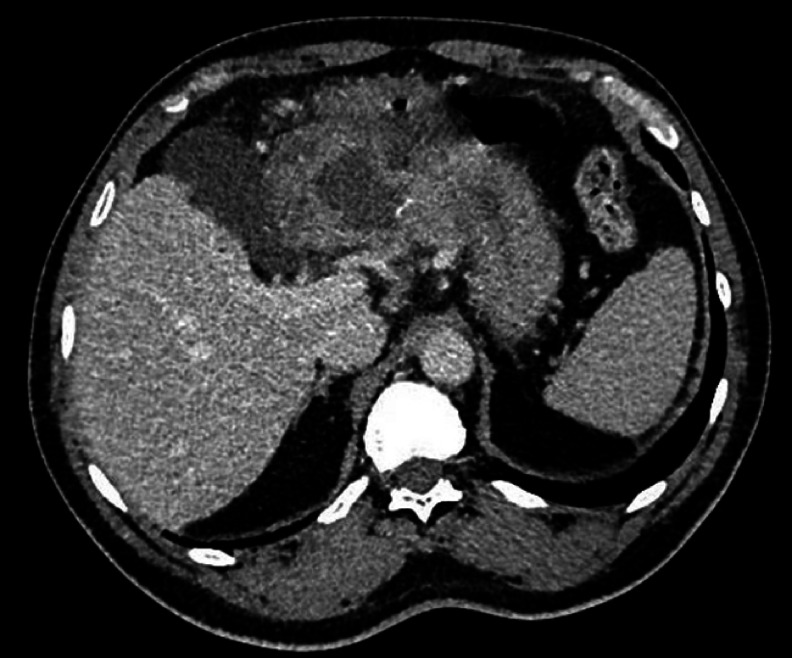 Fig. 1
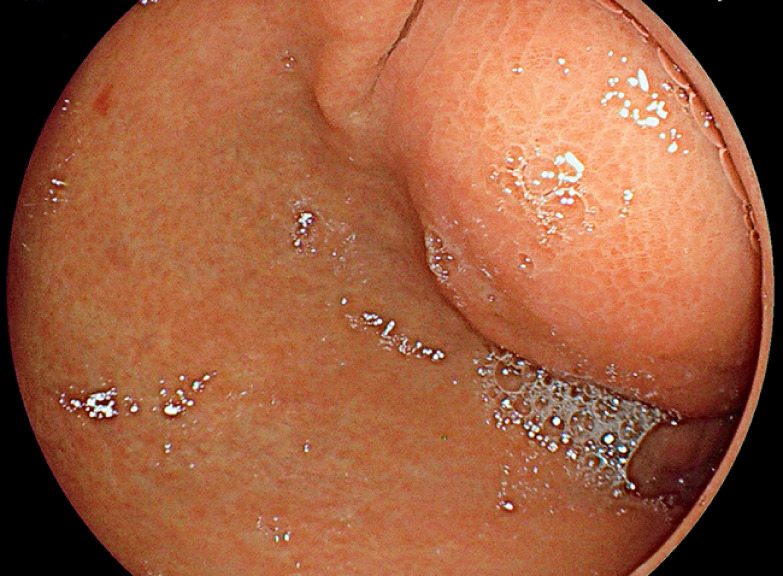 Fig. 2
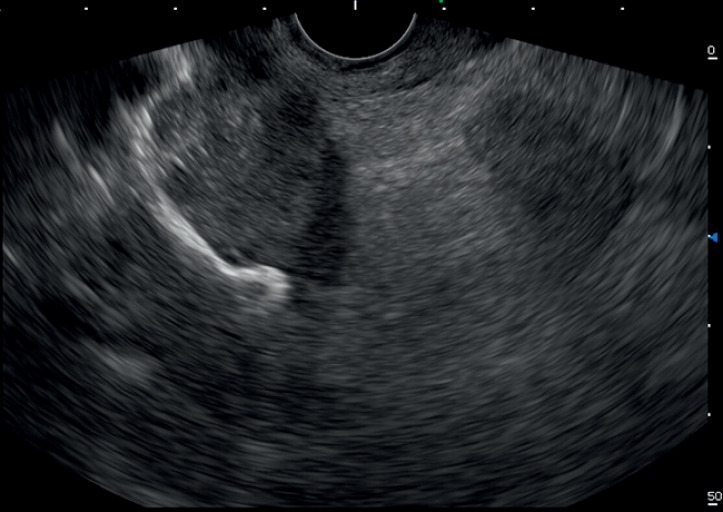 Fig. 3
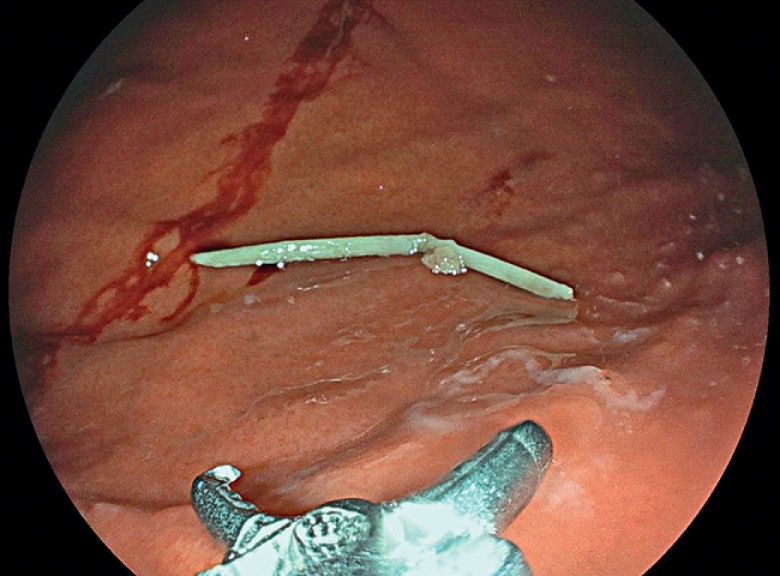 Fig. 4
Peer Reviews
No public reviews on file for this paper yet. If you reviewed it on a platform where reviews are public (OpenReview, ICLR, NeurIPS, ICML), you can paste yours below so the community can read it here.
Videos
No videos yet. Explain this paper in a talk, walkthrough, or lecture? Add one.
Taxonomy
TopicsTraumatic Ocular and Foreign Body Injuries · Foreign Body Medical Cases · Kidney Stones and Urolithiasis Treatments
Lumen-apposing metal stents (LAMS) were initially developed to drain perigastric pancreatic necrotic collections and perform endoscopic necrosectomy.
We report the case of a man hospitalized for a 4-cm infected antral perigastric collection secondary to a fishbone that had perforated the gastric antrum ( Fig. 1 , Video 1 ). Upper gastrointestinal endoscopy showed a bulging collection in the prepyloric antrum ( Fig. 2 ). Given the location of the collection, its size, and the presence of a foreign body within it, we first performed endoscopic cystogastrostomy using a 15×15 mm LAMS ( Fig. 3 ). A second upper gastrointestinal endoscopy was performed 7 days later to extract the fishbone through the LAMS ( Fig. 4 ). The procedure was successful. No complication occurred.
Extraction of a perigastric foreign body using a lumen-apposing metal stent.Video 1
Initial CT scan showing an antral perigastric collection measuring 4 cm in diameter and containing a hyperdense linear image suggestive of a bone or fishbone foreign body.
Upper gastrointestinal endoscopy showing a bulging collection in the prepyloric antrum.
Cystogastrostomy using a 15 × 15 mm lumen-apposing metal stent (LAMS).
Fishbone extraction through the LAMS using foreign-body forceps.
This endoscopic minimally invasive approach avoided surgery, and the patient was discharged from hospital the day after the fishbone extraction. The 6-month follow-up period was uneventful.
Endoscopy_UCTN_Code_TTT_1AO_2AL