Exploring the in vitro stability of insulin degrading enzyme as a potential biomarker for neurocognitive disorders and Alzheimer's disease risk
Helena Kullenberg, Marie M. Svedberg

TL;DR
This study examines how storage conditions affect insulin degrading enzyme levels in serum, which could impact its use as a biomarker for Alzheimer's disease.
Contribution
The study identifies optimal storage conditions for preserving insulin degrading enzyme stability in vitro.
Findings
Short-term storage at −20°C or −80°C preserves IDE levels similarly.
Prolonged storage and multiple freeze-thaw cycles reduce IDE stability.
Colder temperatures better preserve IDE over time.
Abstract
Insulin degrading enzyme (IDE) plays a critical role in degrading insulin and beta-forming proteins, implicating its significance as a biomarker in metabolic dysfunction and neurocognitive disorders, including Alzheimer's disease (AD). Understanding the impact of pre-analytic conditions of in vitro IDE levels is imperative for reliable biomarker assessment. This study explored the influence of freeze-thaw cycles, storage temperature, and storage time on IDE levels in human serum. Serum samples from seven healthy volunteers were subjected to various storage conditions, including refrigeration (4 °C) and freezing (−20 °C and −80 °C) for 24 h and six months, with differing freeze-thaw cycles. In vitro IDE levels were measured at 24 h and after 6 months using ELISA. Results indicate that while short-term storage at either −20 °C or −80 °C yielded similar IDE levels, prolonged storage and…
Genes, proteins, chemicals, diseases, species, mutations and cell lines named across the full text — each resolved to its canonical identifier and authoritative record.
Click any figure to enlarge with its caption.
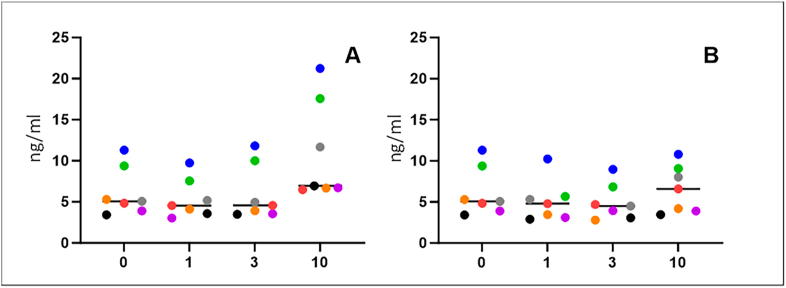 Figure 1
Peer Reviews
No public reviews on file for this paper yet. If you reviewed it on a platform where reviews are public (OpenReview, ICLR, NeurIPS, ICML), you can paste yours below so the community can read it here.
Videos
No videos yet. Explain this paper in a talk, walkthrough, or lecture? Add one.
Taxonomy
TopicsMetabolomics and Mass Spectrometry Studies · Advanced Proteomics Techniques and Applications · Protein purification and stability