Introducing AFS ([Al(SO3F)3]x) – a thermally stable, readily available, and catalytically active solid Lewis superacid
Johanna Schlögl, Ole Goldammer, Julia Bader, Franziska Emmerling, Sebastian Riedel

TL;DR
The paper introduces a new, stable, and easy-to-make superacid called AFS that can be used in chemical reactions like C–F bond activation.
Contribution
The novel contribution is the development of a thermally stable and easily synthesized solid Lewis superacid, AFS, with catalytic applications.
Findings
AFS is synthesized from commercially available materials without requiring complex procedures.
AFS demonstrates high superacidity confirmed by theoretical and experimental methods.
AFS is applicable in bond heterolysis reactions and C–F bond activations.
Abstract
Common Lewis superacids often suffer from low thermal stability or complicated synthetic protocols, requiring multi-step procedures and expensive starting materials. This prevents their large-scale application. Herein, the easy and comparably cheap synthesis of high-purity aluminium tris(fluorosulfate) ([Al(SO3F)3]x, AFS) is presented. All starting materials are commercially available and no work-up is required. The superacidity of this thermally stable, polymeric Lewis acid is demonstrated using both theoretical and experimental methods. Furthermore, its synthetic and catalytic applicability, e.g. in bond heterolysis reactions and C–F bond activations, is shown. This paper introduces the thermally stable, solid Lewis superacid aluminium tris(fluorosulfate) (AFS), that is easy-to-synthesize from commercially available starting materials. Its applicability, e.g. in catalytic C–F bond…
Genes, proteins, chemicals, diseases, species, mutations and cell lines named across the full text — each resolved to its canonical identifier and authoritative record.
Click any figure to enlarge with its caption.
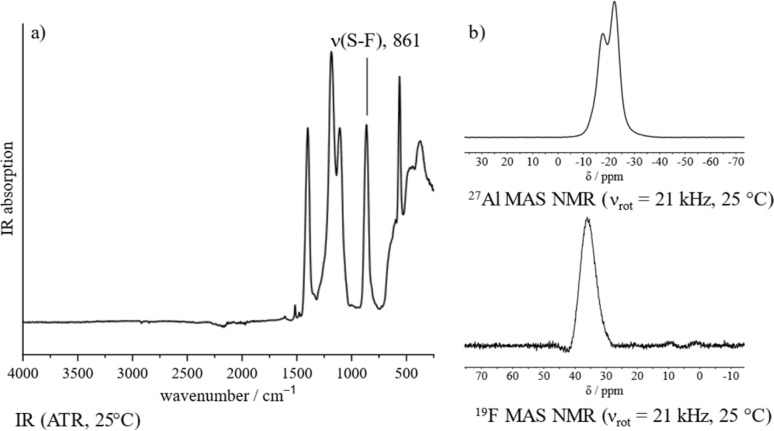 Figure 1
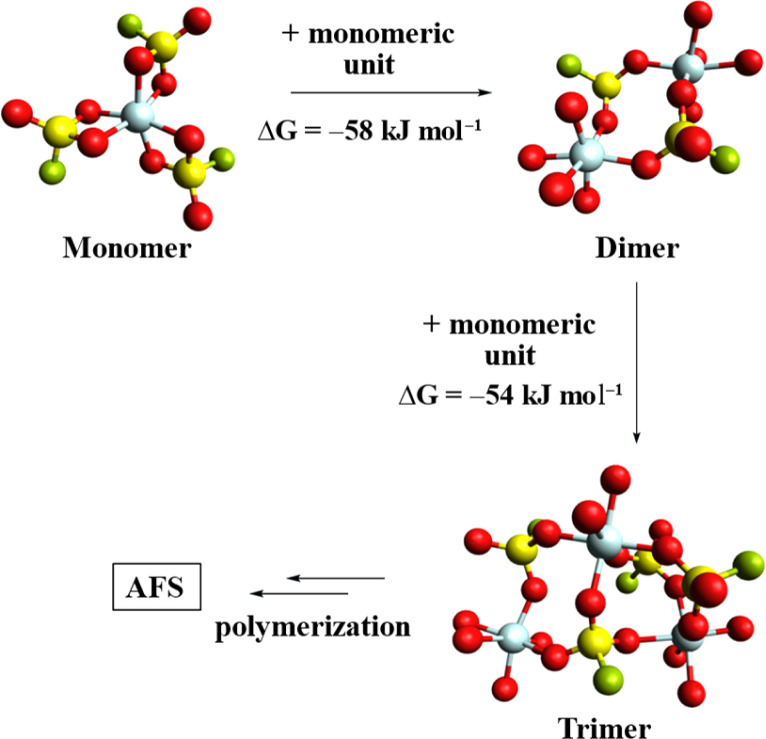 Figure 2
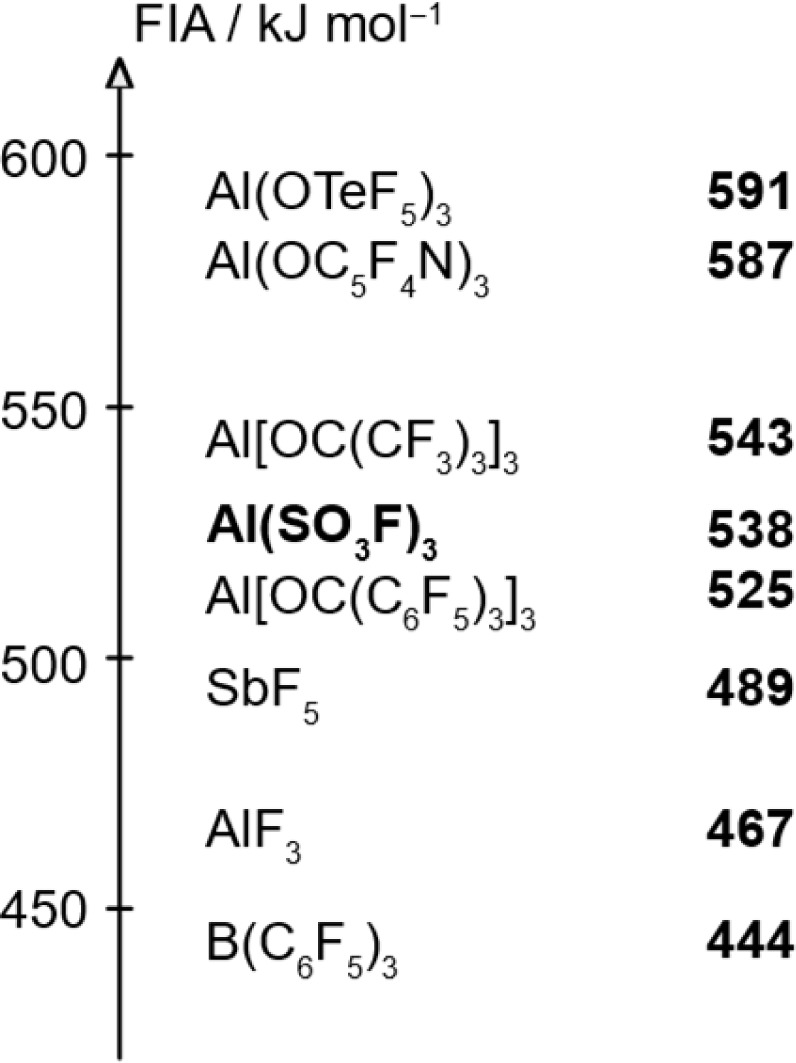 Figure 3
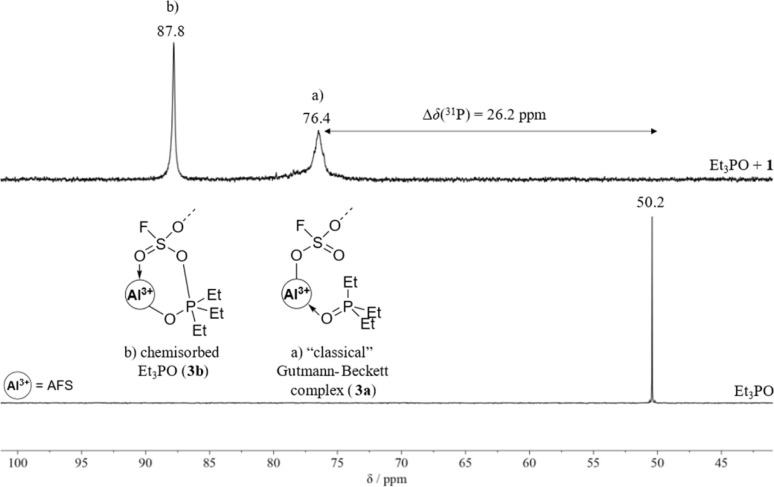 Figure 4
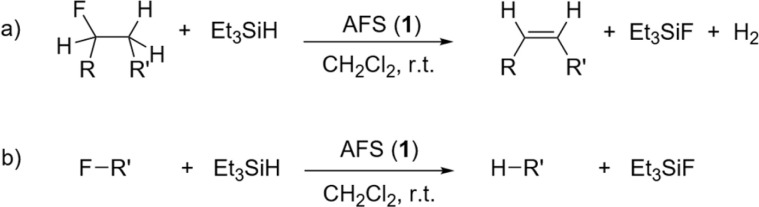 Figure 5
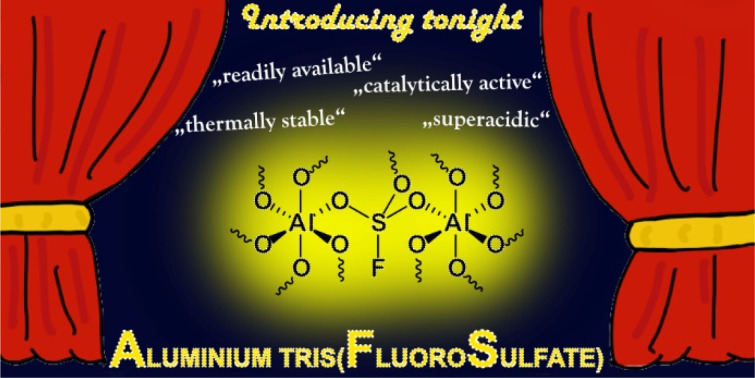 Figure 6
 Figure 7
 Figure 8
 Figure 9
 Figure 10
Peer Reviews
No public reviews on file for this paper yet. If you reviewed it on a platform where reviews are public (OpenReview, ICLR, NeurIPS, ICML), you can paste yours below so the community can read it here.
Videos
No videos yet. Explain this paper in a talk, walkthrough, or lecture? Add one.
Taxonomy
TopicsOrganic and Inorganic Chemical Reactions · Organoboron and organosilicon chemistry · Chemical Synthesis and Reactions