Digital Literacy Training for Low-Income Older Adults Through Undergraduate Community-Engaged Learning: Single-Group Pretest-Posttest Study
Lisa M Soederberg Miller, Rachel A Callegari, Theresa Abah, Helen Fann

TL;DR
A training program paired students with low-income older adults to improve digital skills and attitudes toward aging, showing positive outcomes for both groups.
Contribution
A community-engaged learning approach to bridge the digital divide among low-income older adults while educating students about aging.
Findings
Older adults improved in digital literacy skills and confidence.
Participants showed improved attitudes toward aging and positive trainee-trainer relationships.
Students increased comfort in working with older adults despite no change in fear.
Abstract
Digital technology is a social determinant of health that affects older people’s ability to engage in health maintenance and disease prevention activities; connect with family and friends; and, more generally, age in place. Unfortunately, disparities in technology adoption and use exist among older adults compared with other age groups and are even greater among low-income older adults. In this study, we described the development and implementation of a digital literacy training program designed with the dual goals of training low-income older adults in the community and teaching students about aging using a community-engaged learning (CEL) approach. The training program was embedded within a 10-week CEL course that paired undergraduates (N=27) with low-income older adults (n=18) for 8 weeks of digital literacy training. Older adults and students met weekly at the local senior center…
Genes, proteins, chemicals, diseases, species, mutations and cell lines named across the full text — each resolved to its canonical identifier and authoritative record.
Click any figure to enlarge with its caption.
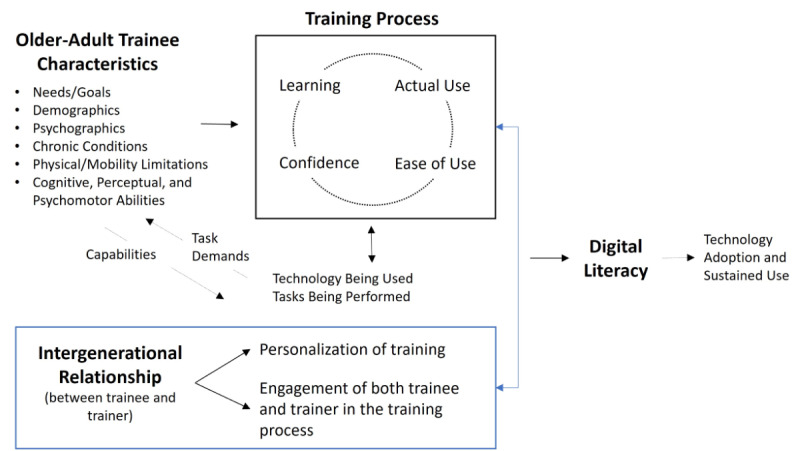 Figure 1
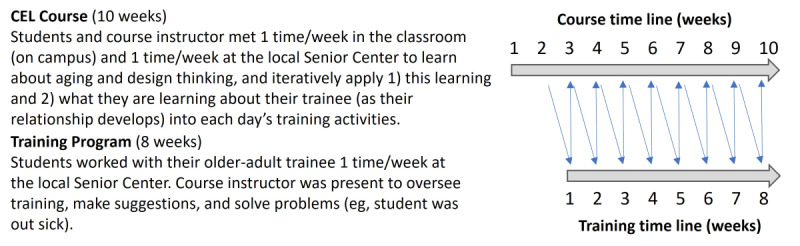 Figure 2
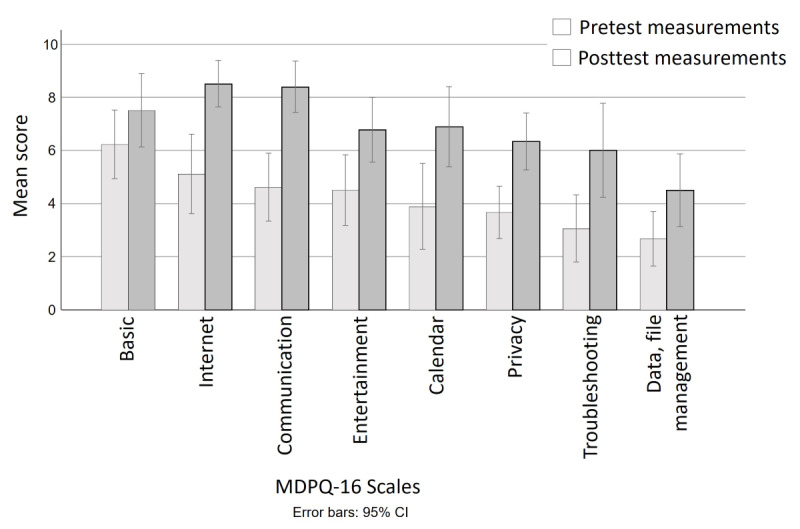 Figure 3
Peer Reviews
No public reviews on file for this paper yet. If you reviewed it on a platform where reviews are public (OpenReview, ICLR, NeurIPS, ICML), you can paste yours below so the community can read it here.
Videos
No videos yet. Explain this paper in a talk, walkthrough, or lecture? Add one.
Taxonomy
TopicsTechnology Use by Older Adults · Health Literacy and Information Accessibility · Digital Accessibility for Disabilities