A computational tool suite to facilitate single-cell lineage tracing analyses
Joshua J. Waterfall, Adil Midoun, Leïla Perié

TL;DR
This paper introduces a set of computational tools to help researchers study how cell populations evolve and relate to each other.
Contribution
The paper presents a new suite of tools specifically designed for single-cell lineage tracing analyses.
Findings
The tools aim to make lineage tracing more accessible and widely applicable.
They are intended to support diverse biological research contexts.
Abstract
Tracking the lineage relationships of cell populations is of increasing interest in diverse biological contexts. In this issue of Cell Reports Methods, Holze et al. present a suite of computational tools to facilitate such analyses and encourage their broader application. Tracking the lineage relationships of cell populations is of increasing interest in diverse biological contexts. In this issue of Cell Reports Methods, Holze et al. present a suite of computational tools to facilitate such analyses and encourage their broader application.
Genes, proteins, chemicals, diseases, species, mutations and cell lines named across the full text — each resolved to its canonical identifier and authoritative record.
Click any figure to enlarge with its caption.
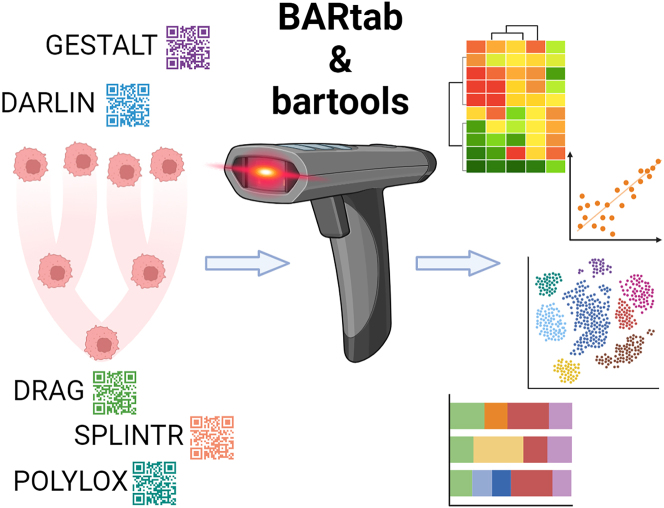 Figure 1
Peer Reviews
No public reviews on file for this paper yet. If you reviewed it on a platform where reviews are public (OpenReview, ICLR, NeurIPS, ICML), you can paste yours below so the community can read it here.
Videos
No videos yet. Explain this paper in a talk, walkthrough, or lecture? Add one.
Taxonomy
TopicsSingle-cell and spatial transcriptomics · Cancer Genomics and Diagnostics · Gene Regulatory Network Analysis