Development of label-free electrochemical OMP-DNA probe biosensor as a highly sensitive system to detect of citrus huanglongbing
Hashem Kazemzadeh-Beneh, Mohammad Reza Safarnejad, Parviz Norouzi, Davood Samsampour, Seyed Mehdi Alavi, Davood Shaterreza

TL;DR
This paper introduces a new label-free biosensor that can detect citrus huanglongbing disease with high sensitivity and selectivity.
Contribution
The first label-free electrochemical DNA probe biosensor for detecting CLas is developed with high sensitivity and specificity.
Findings
The biosensor detects CLas DNA with a detection limit of 0.026 nM.
It shows high selectivity by avoiding cross-interference with other DNA sequences.
The biosensor successfully discriminates mutation oligonucleotides from complementary targets.
Abstract
The fabrication of the first label-free electrochemical DNA probe biosensor for highly sensitive detection of Candidatus Liberibacter asiaticus (CLas), as the causal agent of citrus huanglongbing disease, is conducted here. An OMP probe was designed based on the hybridization with its target-specific sequence in the outer membrane protein (OMP) gene of CLas. The characterization of the steps of biosensor fabrication and hybridization process between the immobilized OMP-DNA probe and the target ssDNA oligonucleotides (OMP-complementary and three mismatches OMP or OMP-mutation) was monitored using cyclic voltammetry and electrochemical impedance spectroscopy based on increasing or decreasing in the electron transfer in [Fe (CN)6]3−/4− on the modified gold electrode surface. The biosensor sensitivity indicated that the peak currents were linear over ranges from 20 to 100 nM for…
Genes, proteins, chemicals, diseases, species, mutations and cell lines named across the full text — each resolved to its canonical identifier and authoritative record.
Click any figure to enlarge with its caption.
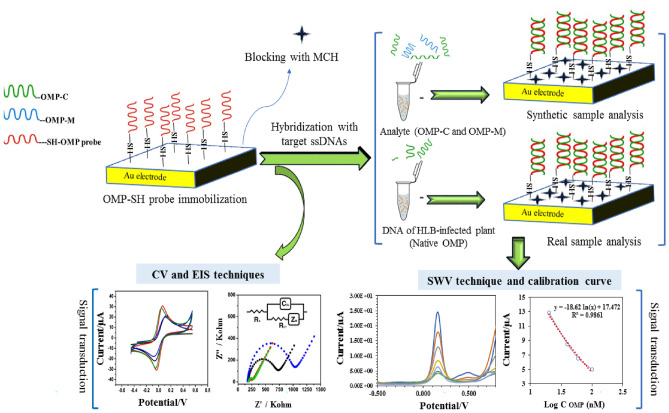 Figure 1
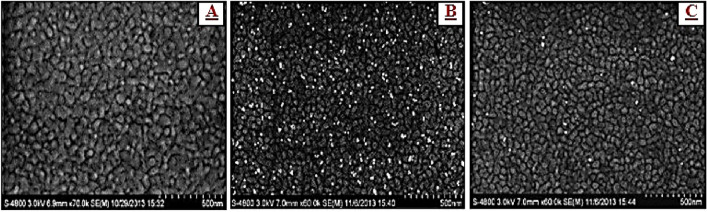 Figure 2
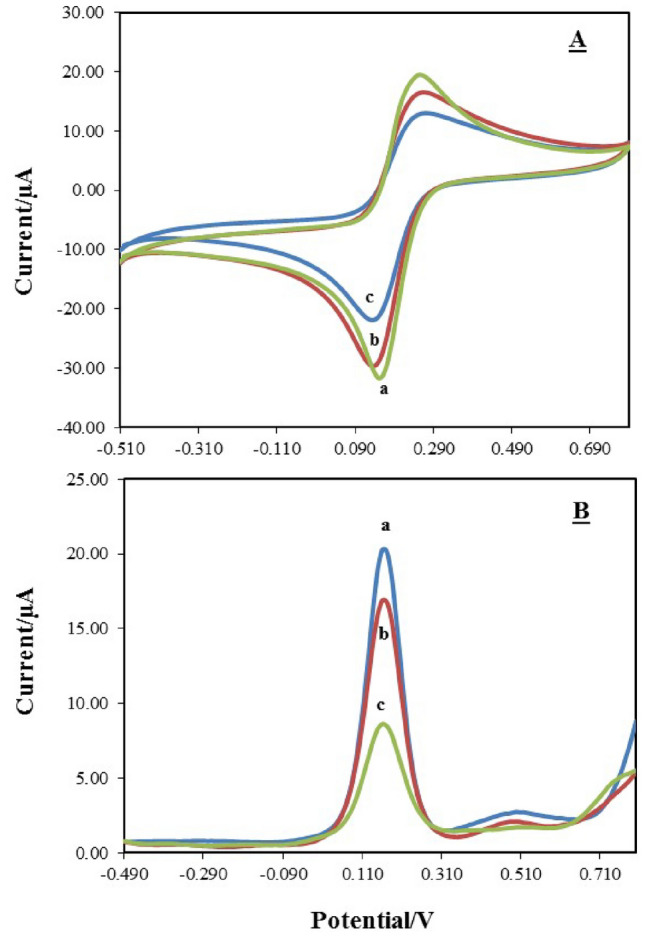 Figure 3
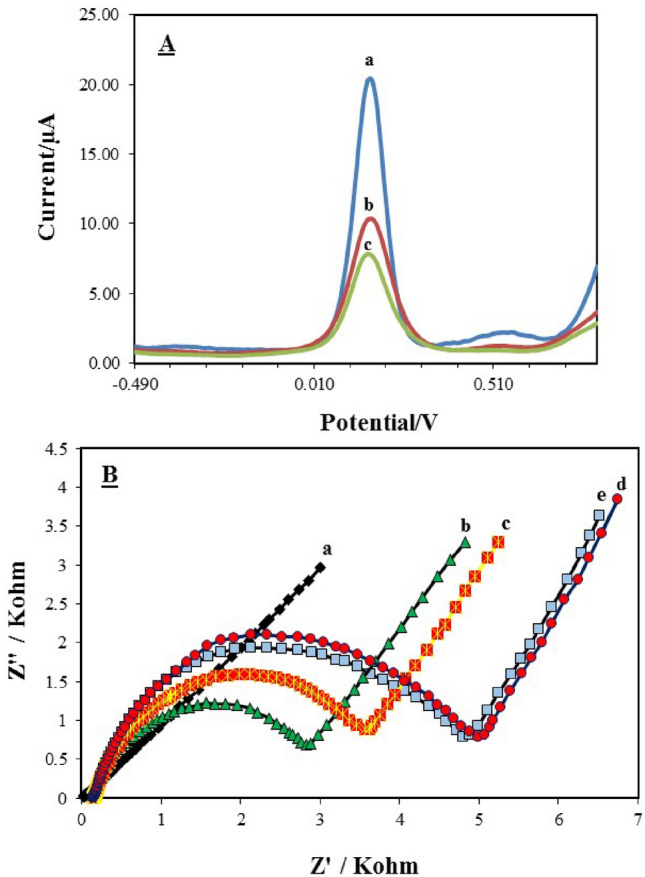 Figure 4
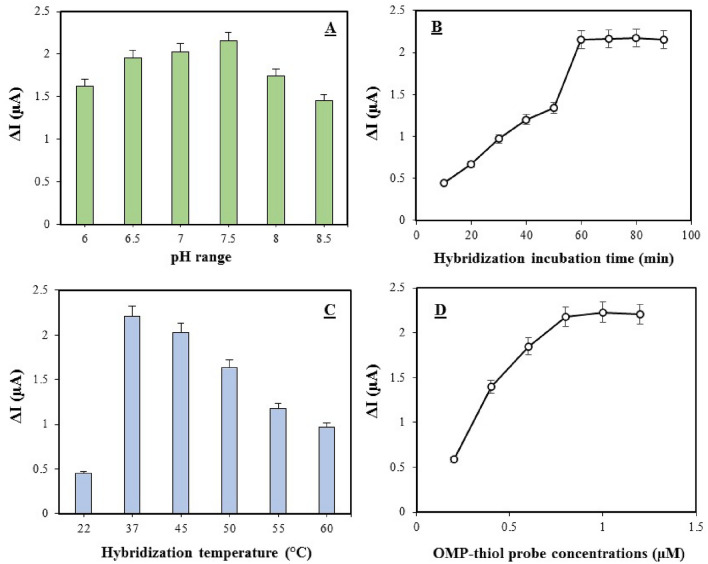 Figure 5
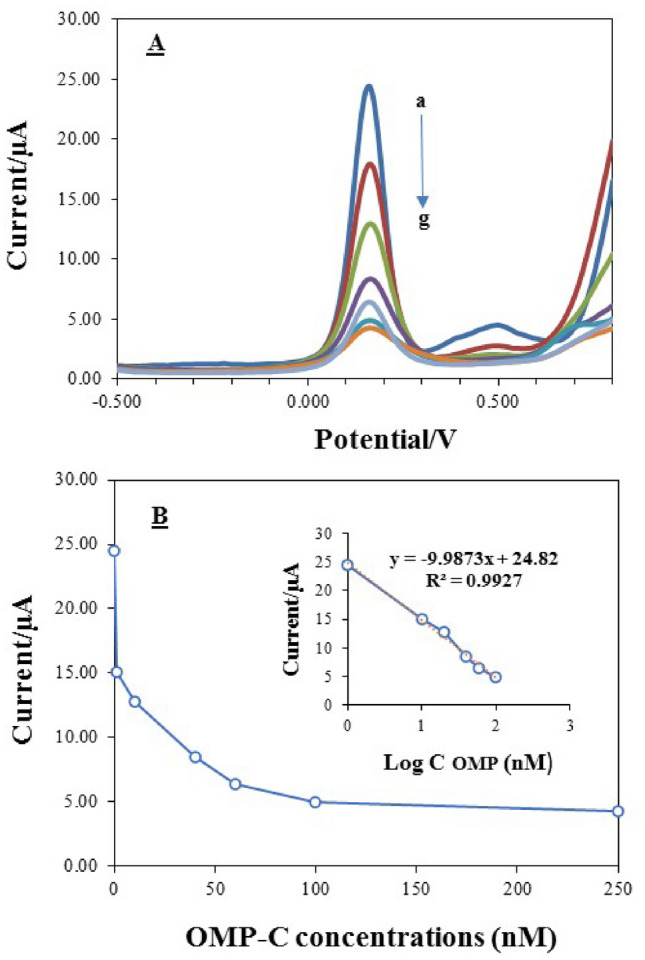 Figure 6
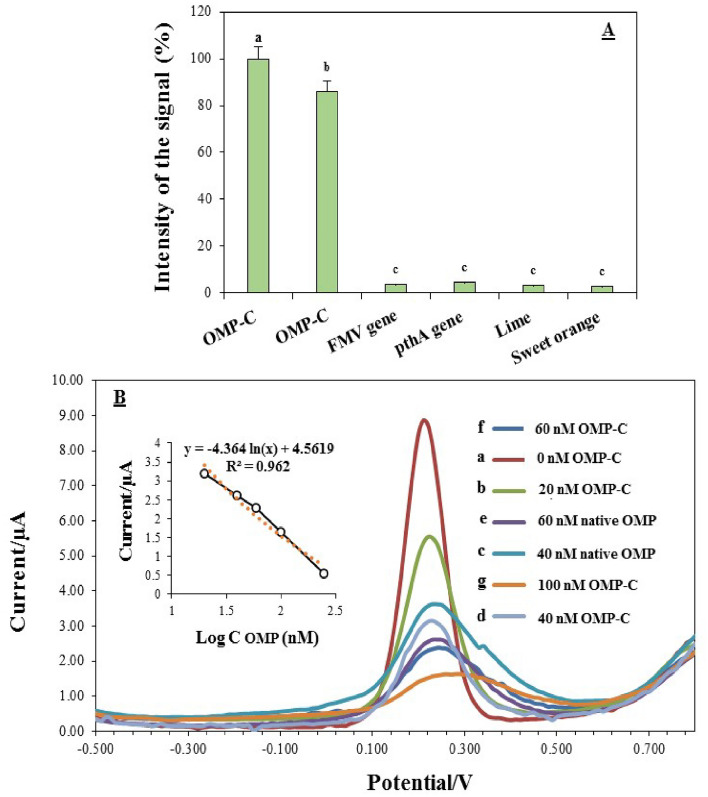 Figure 7
Peer Reviews
No public reviews on file for this paper yet. If you reviewed it on a platform where reviews are public (OpenReview, ICLR, NeurIPS, ICML), you can paste yours below so the community can read it here.
Videos
No videos yet. Explain this paper in a talk, walkthrough, or lecture? Add one.
Taxonomy
TopicsSpanish Literature and Culture Studies · Comparative Literary Analysis and Criticism · Cinema History and Criticism