Paenochrobactrum pullorum Bacteremia: A Case Report
Pradeep Kumar Mada

TL;DR
This paper presents the first case of Paenochrobactrum pullorum causing bacteremia in a human.
Contribution
The novelty lies in reporting the first clinical case of P. pullorum bacteremia.
Findings
P. pullorum was identified in a patient with bilateral lower extremity wound infection.
This case highlights the potential clinical significance of P. pullorum as a human pathogen.
Abstract
Paenochrobactrum pullorum is a gram-negative bacterium and is not usually considered a human pathogen. This is the first case report of P. pullorum, highlighting the importance of understanding its clinical significance. The author reports a case of P. pullorum bacteremia from bilateral lower extremity wound infection.
Genes, proteins, chemicals, diseases, species, mutations and cell lines named across the full text — each resolved to its canonical identifier and authoritative record.
Click any figure to enlarge with its caption.
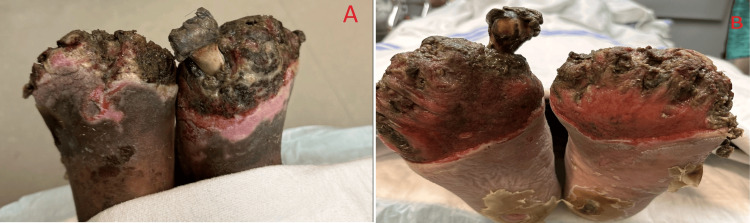 Figure 1
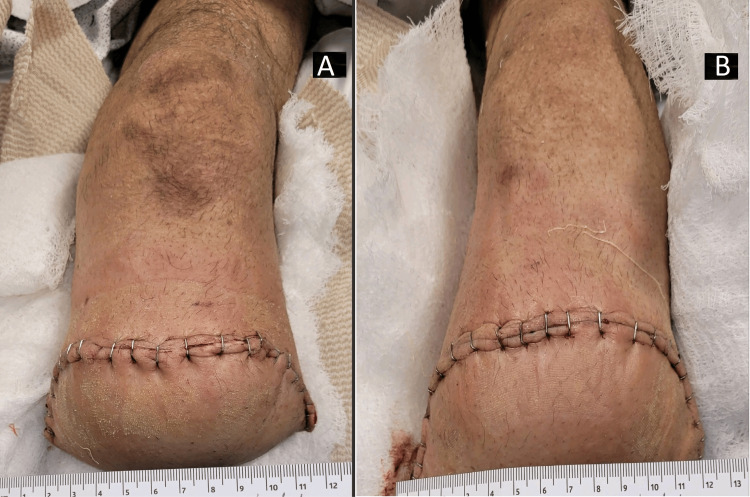 Figure 2
| Parameter | Results | Reference range | Units | ||
| White blood cell count | 18.81 | 4.40-11.00 | 10x3/mm3 (cubic millimeter) | ||
| Red blood cell count | 3.11 | 4.50-5.90 | 10x6/mm3 | ||
| Hemoglobin (Hb) | 9.1 | 13.2-16.5 | g/dL (grams per deciliter) | ||
| Hematocrit | 29 | 39-49 | % | ||
| Mean corpuscular volume (MCV) | 94 | 80-94 | fL or fl (femtoliter) | ||
| Mean corpuscular hemoglobin (MCH) | 29 | 27-31 | pg (picograms per cell) | ||
| Mean corpuscular hemoglobin concentration (MCHC) | 31 | 33-37 | g/dL | ||
| Red cell distribution width (RDW) | 14.5 | 11.5-16.1 | % | ||
| Platelets | 708 | 130-440 | 10x3/mm3 | ||
| Mean platelet volume | 8.6 | 7.2-11.1 | fL | ||
| Sodium | 137 | 135-145 | mmol/L (millimoles per liter) | ||
| Potassium | 4.5 | 3.5-5.0 | mmol/L | ||
| Chloride | 101 | 96-110 | mmol/L | ||
| Bicarbonate | 18 | 21-31 | mmol/L | ||
| Glucose | 135 | 80-100 | mg/dL (milligrams per deciliter) | ||
| Blood urea nitrogen | 33.1 | 6.0-21.0 | mg/dL | ||
| Creatinine | 1.5 | 0.6-1.4 | mg/dL | ||
| Calcium | 8.8 | 8.8-11.1 | mg/dL | ||
| Total protein | 6.6 | 5.9-8.4 | g/dL | ||
| Albumin | 2.8 | 3.2-5.2 | g/dL | ||
| Bilirubin total | 1.35 | 0.00-1.20 | mg/dL | ||
| Alkaline phosphatase | 145 | 40-129 | U/L (units per liter) | ||
| Aspartate aminotransferase | 36 | 10-50 | U/L | ||
| Alanine aminotransferase | 34 | 10-50 | U/L | ||
| Glomerular filtration rate (GFR) | 59 | 60-180 | mL/min/1.73 m2 | ||
| Parameter | Results | Reference range | Units |
| White blood cell count | 7.36 | 4.40-11.00 | 10x3/mm3 |
| Red blood cell count | 3.61 | 4.50-5.90 | 10x6/mm3 |
| Hemoglobin (Hgb) | 10.5 | 13.2-16.5 | g/dL |
| Hematocrit (Hct) | 34 | 39-49 | % |
| Mean corpuscular volume (MCV) | 95 | 80-94 | fL |
| Mean corpuscular hemoglobin (MCH) | 29 | 27-31 | pg |
| Mean corpuscular hemoglobin concentration (MCHC) | 31 | 33-37 | g/dL |
| Red cell distribution width (RDW) | 15.6 | 11.5-16.1 | % |
| Platelets | 603 | 130-440 | 10x3/mm3 |
| Mean platelet volume (MPV) | 8.6 | 7.2-11.1 | fL |
| Neut% | 62 | 40-74 | % |
| Lymph% | 22 | 19-48 | % |
| Mono% | 7.5 | 3.4-10.0 | % |
| Eos% | 3.8 | 0.0-7.0 | % |
| Baso% | 1.4 | 0.0-1.5 | % |
| Neut# | 4.6 | 1.9-8.0 | 10x3 |
| Lymph# | 1.6 | 1.0-4.9 | 10x3 |
| Mono# | 0.6 | 0.2-1.0 | 10x3 |
| Eos# | 0.3 | 0.0-0.7 | 10x3 |
| Baso# | 0.1 | 0.0-0.2 | 10x3 |
| Sodium | 135 | 135-145 | mmol/L |
| Potassium | 4.9 | 3.5-5.0 | mmol/L |
| Chloride | 103 | 96-110 | mmol/L |
| Bicarbonate | 24 | 21-31 | mmol/L |
| Glucose | 94 | 80-100 | mg/dL |
| Blood urea nitrogen | 25.8 | 6.0-21.0 | mg/dL |
| Creatinine | 0.7 | 0.6-1.4 | mg/dL |
| Calcium | 8.5 | 8.8-11.1 | mg/dL |
| Total protein | 6.2 | 5.9-8.4 | g/dL |
| Albumin | 2.7 | 3.2-5.2 | g/dL |
| Bilirubin total | 0.35 | 0.00-1.20 | mg/dL |
| Alkaline phosphatase | 77 | 40-129 | U/L |
| Aspartate aminotransferase | 27 | Oct-50 | U/L |
| Alanine aminotransferase | 36 | Oct-50 | U/L |
Peer Reviews
No public reviews on file for this paper yet. If you reviewed it on a platform where reviews are public (OpenReview, ICLR, NeurIPS, ICML), you can paste yours below so the community can read it here.
Videos
No videos yet. Explain this paper in a talk, walkthrough, or lecture? Add one.
Taxonomy
TopicsInfections and bacterial resistance · Plant Pathogenic Bacteria Studies · Mycobacterium research and diagnosis
Introduction
Paenochrobactrum pullorum is a gram-negative bacterium known for its nitrogen-fixing capabilities and has been isolated from various environmental sources, including the poultry environment [1]. It is not usually considered a human pathogen, and this is the first case report of P. pullorum bacteremia, emphasizing the importance of understanding its clinical impact. A 46-year-old homeless male with multiple comorbidities presented with bilateral lower extremity wound infections. He was found to have P. pullorum bacteremia.
Case presentation
A 46-year-old homeless male with multiple comorbidities, including emphysema, bipolar disorder, schizophrenia, and a history of a motor vehicle accident in 2000 with traumatic brain injury, presented with bilateral lower extremity wound infections. He reported smoking half a pack of cigarettes per day and using marijuana but denied using alcohol or recreational drugs intravenously. He denied recent travel and exposure to animals or birds. On physical exam, his phalanges from bilateral feet came off with the socks when the staff removed his shoes (Figure 1).
Bilateral exposed metatarsal bones due to auto amputation-necrotic stump area with a very foul-smelling purulent scanty discharge.A: dorsal view; B: plantar view
He essentially had auto amputations of the trans metatarsal of both lower extremities with gangrene. There was an exposed metatarsal bone on the right lower extremity. The patient was showered, and the wounds were cleaned. In the emergency department, the patient was febrile to 102.4°F and tachycardic at 139 beats per minute. Labs revealed leukocytosis, acute kidney injury, sedimentation rate of 108 mm/hour, hemoglobin A1C of 6.1%, and lactic acid of 4.9 mmol/L (Table 1).
Blood cultures were obtained, and empiric broad-spectrum antibiotics with IV vancomycin and piperacillin/tazobactam were started. After 48 hours of incubation, two out of two blood culture bottles were positive for gram-negative rods, which were identified as P. pullorum (beta-lactamase negative) using matrix-assisted laser desorption/ionization time-of-flight mass spectrometry (MALDI-TOF MS) [2]. Wound cultures grew polymicrobial growth including P. pullorum. He underwent simultaneous bilateral below-knee amputations (Figure 2).
Bilateral below knee amputation (BKA).A: right BKA; B: left BKA
Histopathology of the below-the-knee amputation revealed acute osteomyelitis, active ulcers, large vessels with calcification within the wall, and viable skin, soft tissue, and bone at the margin. The sensitivity report of P. pullorum was not available and the patient was treated with oral ciprofloxacin 500 mg twice daily for two weeks. He was discharged in a stable condition (Table 2).
Discussion
P. pullorum is a gram-negative bacterium belonging to the genus Paenochrobactrum, which falls under the family Brucellaceae. It was first described in 2010 by Kämpfer et al., after isolating from the poultry environment [3]. The genus Paenochrobactrum consists of three classified species including Paenochrobactrum gallinarii, Paenochrobactrum glaciei, P. pullorum, and unclassified Paenochrobactrum including *Paenochrobactrum *sp., *Paenochrobactrum *sp. BAB-4388, *Paenochrobactrum *sp. BAB-4391, *Paenochrobactrum *sp. DB-12, *Paenochrobactrum *sp. VRE47B1_13_1E, Paenochrobactrum sp. VRE69B1_13_1E [4]. P. pullorum is a rod-shaped, non-spore-forming, non-motile, oxidase-positive, and has a specific ability to fix atmospheric nitrogen, thus having a potential role in agriculture [5-7]. P. pullorum infections are uncommon but can arise, particularly in patients with comorbidities or exposure to environmental sources sheltering the bacterium. Though it is typically susceptible to ciprofloxacin and trimethoprim-sulfamethoxazole, appropriate antibiotic selection guided by susceptibility testing is essential for successful outcomes [3]. There is limited information available on the pathogenic potential of P. pullorum in humans and more research is needed to understand its pathogenic mechanisms and clinical significance in human disease.
Conclusions
This case report highlights the significance of considering unusual pathogens like P. pullorum in the differential diagnosis of bacteremia, particularly in patients with environmental exposures. Timely identification and appropriate antibiotic therapy are essential for successful outcomes.
The reference list from the paper itself. Each links out to its DOI / PubMed record.
- 1Coexistence of predominantly nonculturable rhizobia with diverse, endophytic bacterial taxa within nodules of wild legumes FEMS Microbiol Ecol Muresu R Polone E Sulas L 3834006320081819434510.1111/j.1574-6941.2007.00424.x · doi ↗ · pubmed ↗
- 2Impact of matrix-assisted laser desorption ionization time-of-flight mass spectrometry on the clinical management of patients with gram-negative bacteremia: a prospective observational study Clin Infect Dis Clerc O Prod'hom G Vogne C Bizzini A Calandra T Greub G 110111075620132326436310.1093/cid/cis 1204 · doi ↗ · pubmed ↗
- 3Paenochrobactrum gallinarii gen. nov., sp. nov., isolated from air of a duck barn, and reclassification of Pseudochrobactrum glaciei as Paenochrobactrum glaciei comb. nov Int J Syst Evol Microbiol Kämpfer P Martin E Lodders N 149314986020101968431810.1099/ijs.0.015842-0 · doi ↗ · pubmed ↗
- 4NCBI Taxonomy: a comprehensive update on curation, resources and tools Database (Oxford) Schoch CL Ciufo S Domrachev M 02020202010.1093/database/baaa 062PMC 740818732761142 · doi ↗ · pubmed ↗
- 5Nitrogen fixation in Arctic vegetation and soils from Svalbard, Norway Polar Biol Solheim B Endal A Vigstad H 3540161996
- 6Biological nitrogen fixation in non-leguminous field crops: facilitating the evolution of an effective association between Azospirillum and wheat PLANT SOIL Kennedy IR Pereg-Gerk LL Wood C Deaker R Gilchrist K Katupitiya S 65791941997
- 7Rhizobium sullae sp. nov. (formerly 'Rhizobium hedysari'), the root-nodule microsymbiont of Hedysarum coronarium L Int J Syst Evol Microbiol Squartini A Struffi P Döring H 126712765220021214863910.1099/00207713-52-4-1267 · doi ↗ · pubmed ↗