Testing and Diagnosis of Clostridioides difficile Infection in Special Scenarios: A Systematic Review
Karan B Singh, Anas Khouri, Deepak Singh, Jose Prieto, Priyata Dutta, Maduka C Nnadozie, Clista Clanton, Esther Morrison, William Sonnier

TL;DR
This review examines how to accurately test for Clostridioides difficile infection in high-risk patients, emphasizing the need for proper testing algorithms and clinical judgment.
Contribution
The paper provides a systematic review of CDI testing strategies in special clinical scenarios, highlighting the importance of context-aware diagnostic approaches.
Findings
Testing for CDI is highly recommended in patients with inflammatory bowel disease, immunocompromise, or surgical history.
A stepwise diagnostic approach improves accuracy in distinguishing infection from colonization.
Clinical context is essential to avoid over- or under-treatment in high-risk populations.
Abstract
Introduction: Clostridioides difficile infection (CDI) is a clinical and laboratory diagnosis. Populations at higher risk of developing disease require a high clinical index of suspicion for laboratory testing to avoid incorrect assumptions of colonization. Common risk factors include recent antibiotic use, elderly (>65 years old), and immunocompromised patients. C. difficile assays should be ordered in an algorithm approach to diagnose an infection rather than colonization. Screening tests are widely available in hospital systems, but novel molecular testing may aid in diagnosis in patients with inconclusive or discordant antigen and toxin test results. Methods: Data was extracted from PubMed, Scopus, and Cumulative Index of Nursing and Allied Health Literature (CINAHL) databases based on the keywords “clostridioides difficile”, “toxin assay”, and “toxic megacolon”. The data extracted…
Genes, proteins, chemicals, diseases, species, mutations and cell lines named across the full text — each resolved to its canonical identifier and authoritative record.
Click any figure to enlarge with its caption.
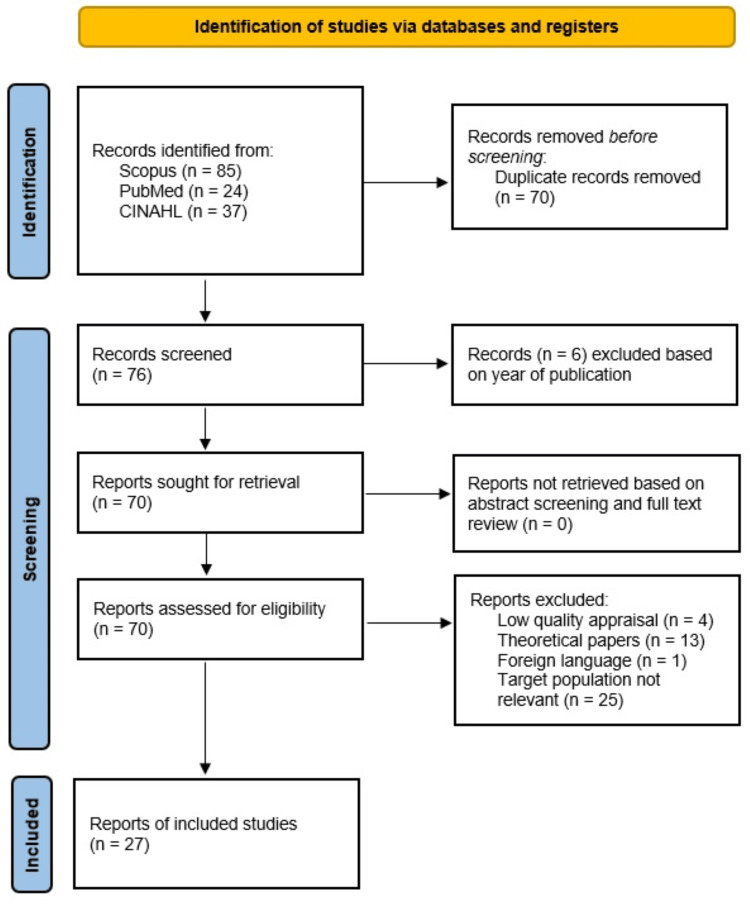 Figure 1
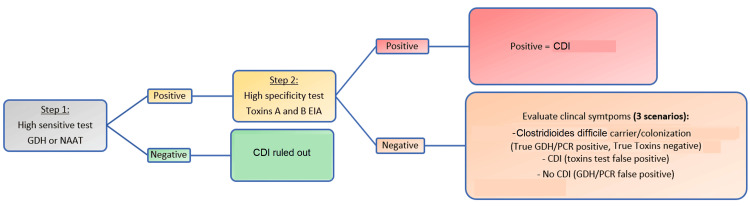 Figure 2
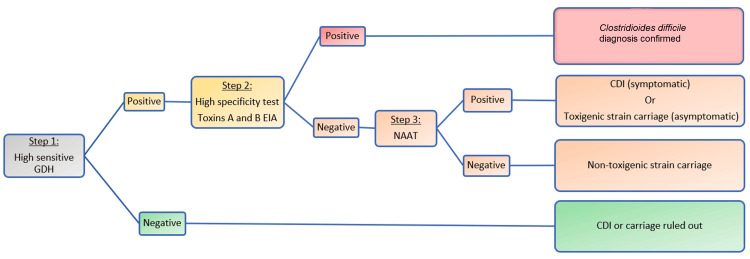 Figure 3
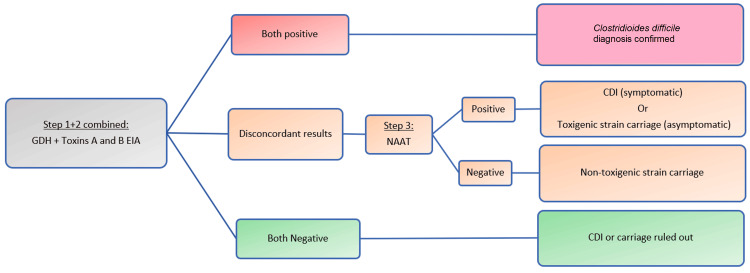 Figure 4
Peer Reviews
No public reviews on file for this paper yet. If you reviewed it on a platform where reviews are public (OpenReview, ICLR, NeurIPS, ICML), you can paste yours below so the community can read it here.
Videos
No videos yet. Explain this paper in a talk, walkthrough, or lecture? Add one.
Taxonomy
TopicsClostridium difficile and Clostridium perfringens research · Microscopic Colitis · Viral gastroenteritis research and epidemiology