Feasibility of continuous non-invasive delivery of oxygen monitoring in cardiac surgical patients: a proof-of-concept preliminary study
Roderica R. G. Ng, Suneel R. Desai, Felicia S. W. Chu, Ming Ann Sim, Sheryl W. L. Chee, Jerry Y. H. Fuh, Lian-Kah Ti, Sophia T. H. Chew

TL;DR
This study shows a new way to continuously monitor oxygen delivery in heart surgery patients using non-invasive methods, which could improve recovery outcomes.
Contribution
A novel algorithm was developed to enable continuous, non-invasive oxygen delivery monitoring in cardiac surgical patients.
Findings
The algorithm was successfully implemented in 93% of cardiac surgical patients.
The study demonstrated the feasibility of real-time, non-invasive DO2 monitoring.
The approach could help identify personalized critical DO2 thresholds for better postoperative care.
Abstract
Oxygen delivery (DO2) and its monitoring are highlighted to aid postoperative goal directed therapy (GDT) to improve perioperative outcomes such as acute kidney injury (AKI) after high-risk cardiac surgeries associated with multiple morbidities and mortality. However, DO2 monitoring is neither routine nor done postoperatively, and current methods are invasive and only produce intermittent DO2 trends. Hence, we proposed a novel algorithm that simultaneously integrates cardiac output (CO), hemoglobin (Hb) and oxygen saturation (SpO2) from the Edwards Life Sciences ClearSight System® and Masimo SET Pulse CO-Oximetry® to produce a continuous, real-time DO2 trend. Our algorithm was built systematically with 4 components – machine interface to draw data with PuTTY, data extraction with parsing, data synchronization, and real-time DO2 presentation using a graphic-user interface. Hb readings…
Genes, proteins, chemicals, diseases, species, mutations and cell lines named across the full text — each resolved to its canonical identifier and authoritative record.
Click any figure to enlarge with its caption.
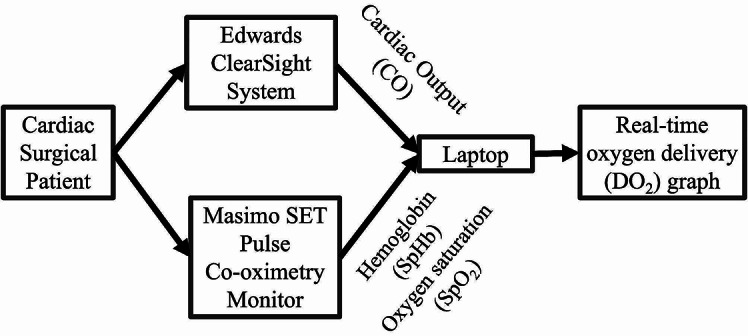 Figure 1
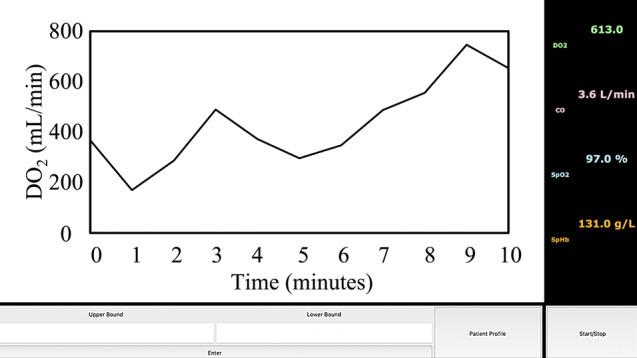 Figure 2
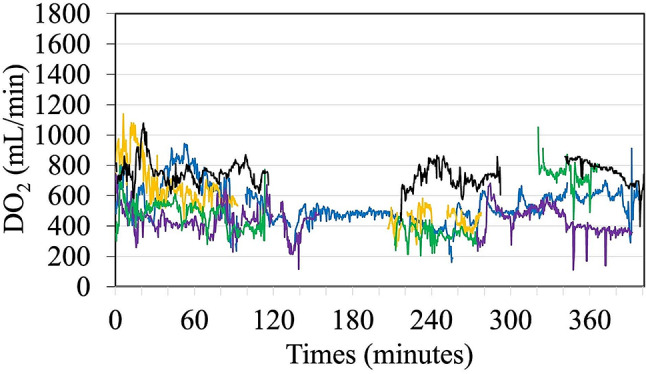 Figure 3
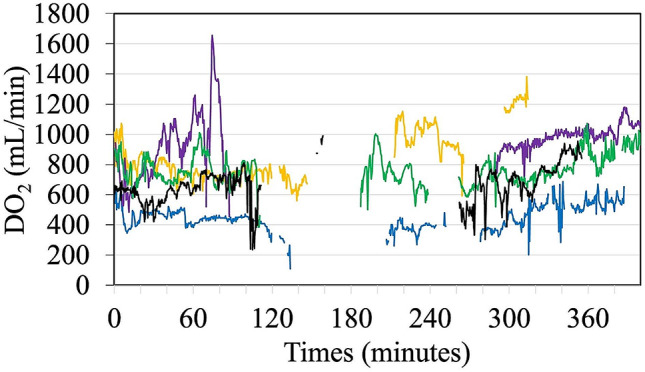 Figure 4
Peer Reviews
No public reviews on file for this paper yet. If you reviewed it on a platform where reviews are public (OpenReview, ICLR, NeurIPS, ICML), you can paste yours below so the community can read it here.
Videos
No videos yet. Explain this paper in a talk, walkthrough, or lecture? Add one.
Taxonomy
TopicsHemodynamic Monitoring and Therapy · Cardiac Arrest and Resuscitation · Non-Invasive Vital Sign Monitoring