Improving the antinutritional profiles of common beans (Phaseolus vulgaris L.) moderately impacts carotenoid bioaccessibility but not mineral solubility
Katherine Alvarado-Ramos, Ángela Bravo-Nunez, Charlotte Halimi, Matthieu Maillot, Christèle Icard-Vernière, Chiara Forti, Chiara Preite, Luisa Ferrari, Tea Sala, Alessia Losa, Eleonora Cominelli, Francesca Sparvoli, Emanuela Camilli, Silvia Lisciani, Stefania Marconi

TL;DR
This study shows that reducing antinutritional factors in beans improves carotenoid absorption but has no effect on mineral solubility.
Contribution
The study identifies specific bean lines with reduced antinutritional factors and evaluates their impact on nutrient bioavailability.
Findings
Low phytic acid bean lines showed an 80% reduction in phytate levels compared to controls.
HP5/1 bean line improved carotenoid bioaccessibility by 32-38%.
Reduced phytate levels alone did not significantly affect mineral solubility.
Abstract
Common beans are a common staple food with valuable nutritional qualities, but their high contents in antinutritional factors (ANFs) can decrease the bioavailability of (i) fat-soluble micronutrients including carotenoids and (ii) minerals. Our objective was to select ANF-poor bean lines that would not interfere with carotenoid and mineral bioavailability. To achieve this objective, seeds of commercial and experimental Phaseolus vulgaris L. bean lines were produced for 2 years and the bean’s content in ANFs (saponins, phytates, tannins, total polyphenols) was assessed. We then measured carotenoid bioaccessibility and mineral solubility (i.e. the fraction of carotenoid and mineral that transfer into the aqueous phase of the digesta and is therefore absorbable) from prepared beans using in vitro digestion. All beans contained at least 200 mg/100 g of saponins and 2.44 mg/100 g tannins.…
Genes, proteins, chemicals, diseases, species, mutations and cell lines named across the full text — each resolved to its canonical identifier and authoritative record.
Click any figure to enlarge with its caption.
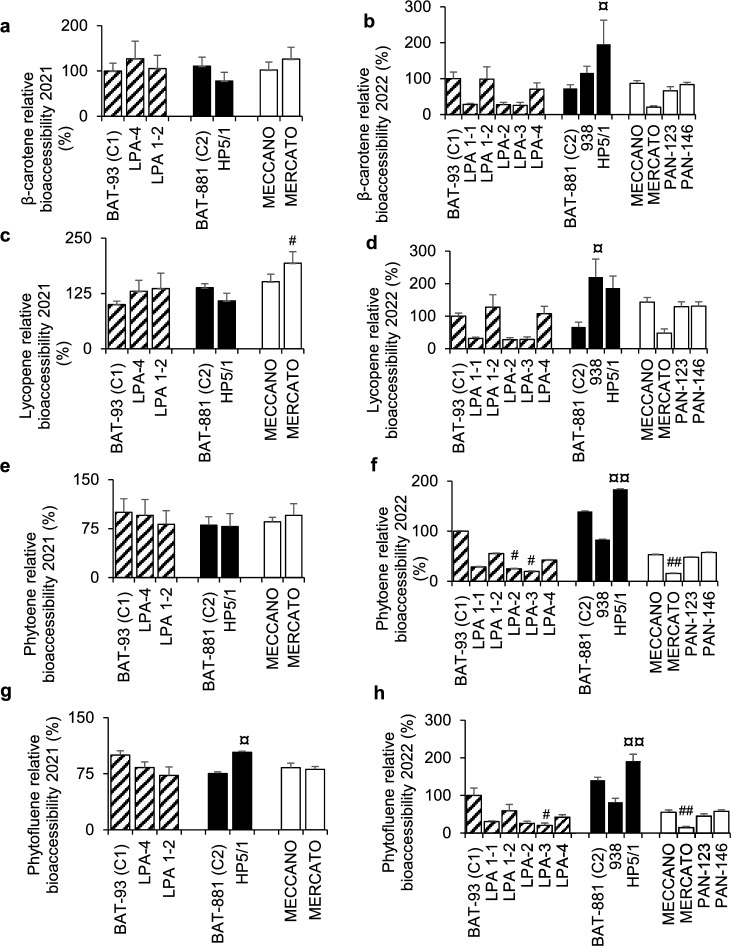 Figure 1
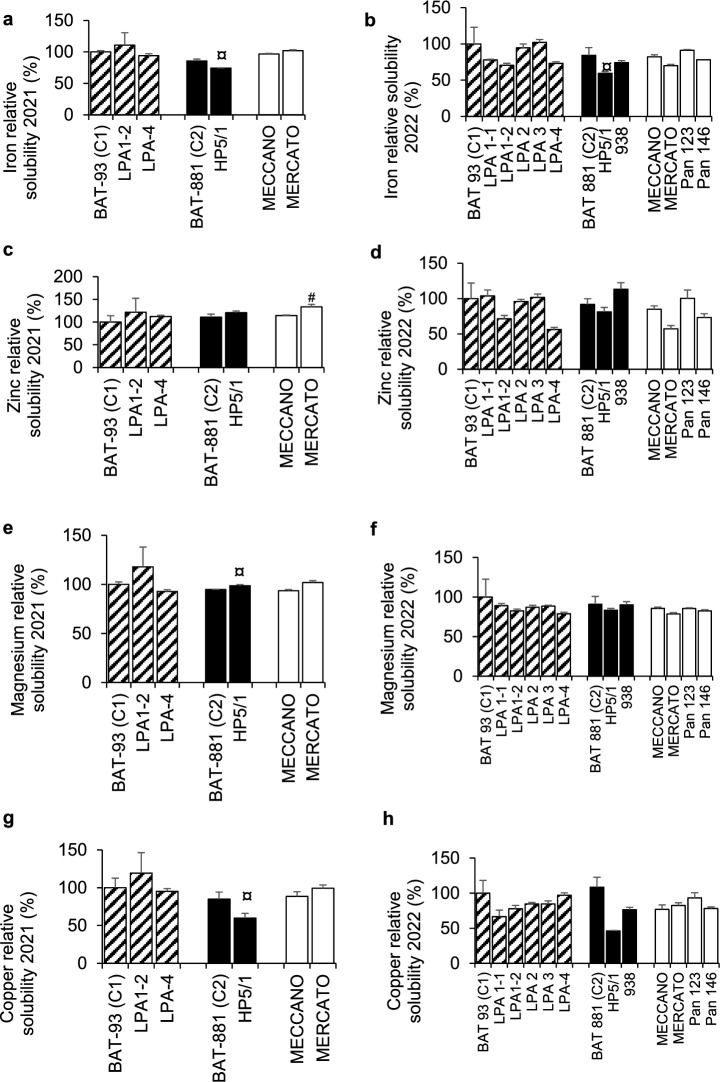 Figure 2
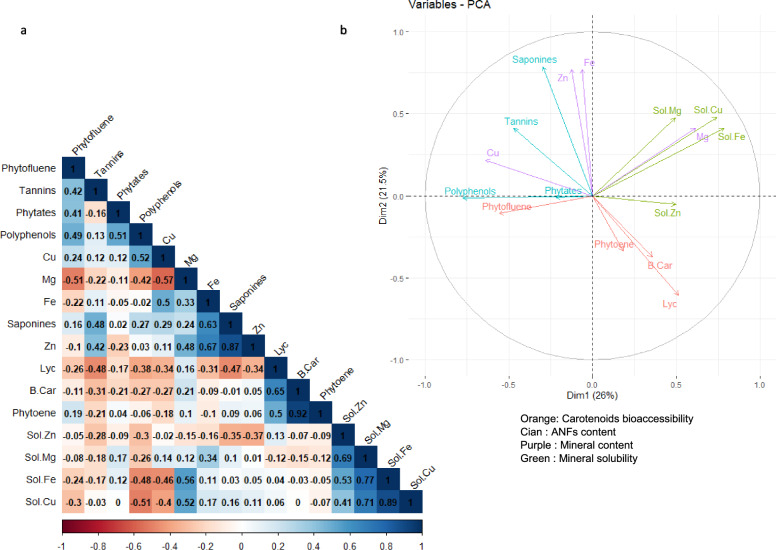 Figure 3
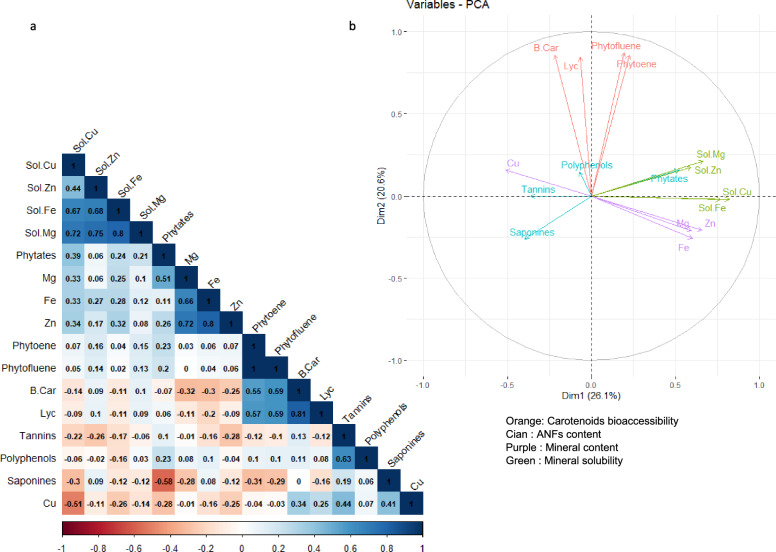 Figure 4
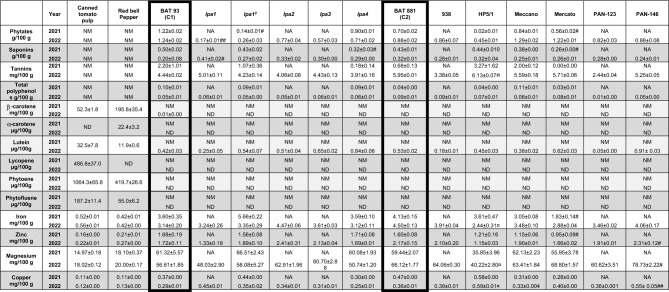 Figure 5
Peer Reviews
No public reviews on file for this paper yet. If you reviewed it on a platform where reviews are public (OpenReview, ICLR, NeurIPS, ICML), you can paste yours below so the community can read it here.
Videos
No videos yet. Explain this paper in a talk, walkthrough, or lecture? Add one.
Taxonomy
TopicsProteins in Food Systems · Phytase and its Applications · Phytoestrogen effects and research