A combined approach exploring gene function based on Worm-Human Orthology
Ivica Tamas, Emily Hodges, Patrick Dessi, Robert Johnsen, Ana Vaz Gomes

TL;DR
This study uses C. elegans and human cells to explore the function of genes with unknown roles, revealing new expression patterns and RNAi effects.
Contribution
The novel approach combines worm RNAi and human cell over-expression to infer gene functions across species.
Findings
Four C. elegans genes showed previously unknown expression patterns.
Four RNAi phenotypes were observed in down-regulated worm genes.
Subcellular over-expression profiles of human orthologs were analyzed for seven genes.
Abstract
Many aspects of the nematode Caenorhabditis elegans biology are conserved between invertebrates and vertebrates establishing this particular organism as an excellent genetic model. Because of its small size, large populations and self-fertilization of the hermaphrodite, functional predictions carried out by genetic modifications as well as RNAi screens, can be rapidly tested. In order to explore the function of a set of C. elegans genes of unknown function, as well as their potential functional roles in the human genome, we performed a phylogenetic analysis to select the most probable worm orthologs. A total of 13 C. elegans genes were subjected to down- regulation via RNAi and characterization of expression profiles using GFP strains. Previously unknown distinct expression patterns were observed for four of the analyzed genes, as well as four visible RNAi phenotypes. In addition,…
Genes, proteins, chemicals, diseases, species, mutations and cell lines named across the full text — each resolved to its canonical identifier and authoritative record.
Click any figure to enlarge with its caption.
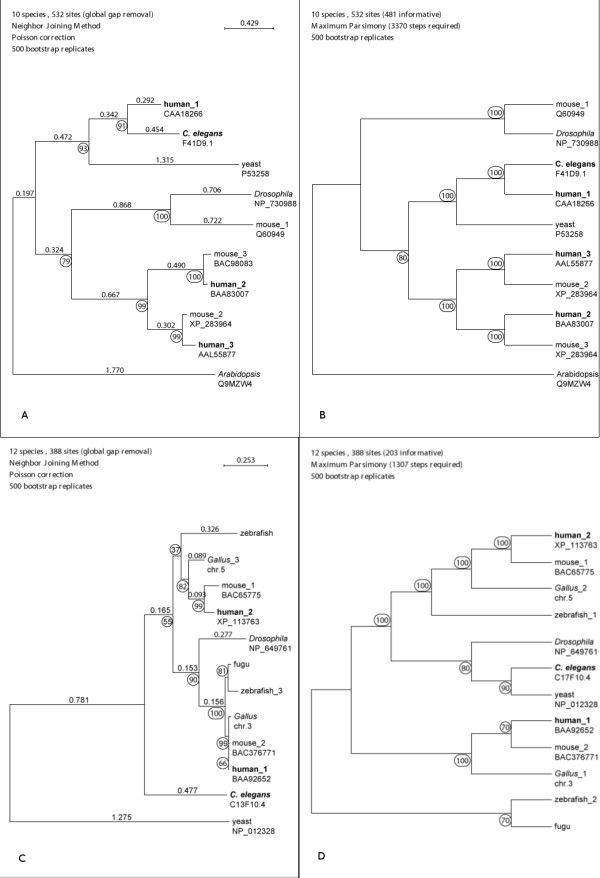 Figure 1
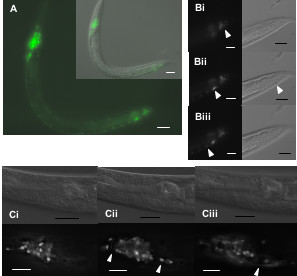 Figure 2
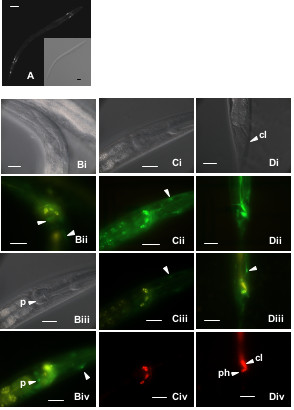 Figure 3
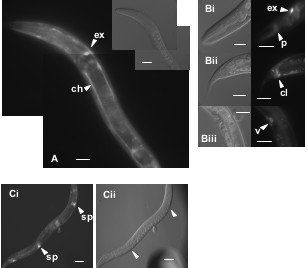 Figure 4
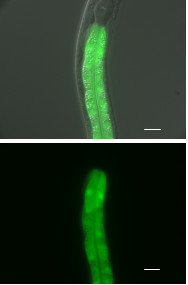 Figure 5
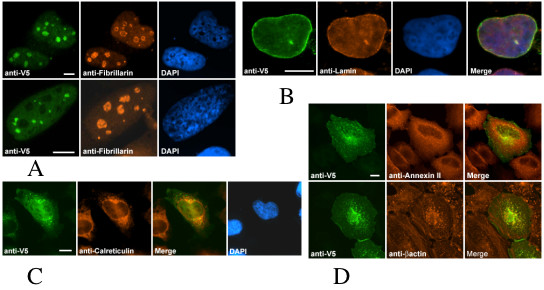 Figure 6
Peer Reviews
No public reviews on file for this paper yet. If you reviewed it on a platform where reviews are public (OpenReview, ICLR, NeurIPS, ICML), you can paste yours below so the community can read it here.
Videos
No videos yet. Explain this paper in a talk, walkthrough, or lecture? Add one.
Taxonomy
TopicsGenetics, Aging, and Longevity in Model Organisms · Genetic Neurodegenerative Diseases · Mitochondrial Function and Pathology