Accuracy of Anti-SARS-CoV-2 Antibody in Comparison with Surrogate Viral Neutralization Test in Persons Living with HIV, Systemic Lupus Erythematosus, and Chronic Kidney Disease
Marita Restie Tiara, Chrisan Bimo Prayuda, Tara Titian Maulidya, Hofiya Djauhari, Dadang Suhendar, Rudi Wisaksana, Laniyati Hamijoyo, Rudi Supriyadi, Agnes Rengga Indrati, Bachti Alisjahbana

TL;DR
This study compares the accuracy of a rapid antibody test for SARS-CoV-2 with a more detailed neutralization test in people with HIV, lupus, and kidney disease.
Contribution
The study evaluates the reliability of a point-of-care anti-RBD test in immunocompromised populations compared to a reference neutralization test.
Findings
The anti-RBD test showed strong correlation with the sVNT in all groups, with the highest in people living with HIV.
The test had high specificity across all groups but lower sensitivity in those with systemic lupus erythematosus.
The results suggest the anti-RBD test can reliably detect low neutralization capacity in immunocompromised individuals.
Abstract
The presence of the anti-SARS-CoV-2-RBD antibody (anti-RBD) prevents severe COVID-19. We aimed to determine the accuracy of a point-of-care anti-RBD testing implemented in persons living with HIV (PLWH), systemic lupus erythematosus (SLE), and chronic kidney disease (CKD). We enrolled 182 non-comorbid subjects and 335 comorbid subjects (PLWH, SLE, CKD) to test the anti-RBD assay compared to the surrogate viral neutralization test (sVNT) as the reference test. We performed linear correlation analysis between anti-RBD and sVNT, along with an ROC analysis to ascertain the anti-RBD cutoff at 30%, 60%, and 90% inhibition of sVNT, to calculate accuracy. The correlations between anti-RBD and sVNT among all groups were excellent, with R = 0.7903, R = 0.7843, and R = 0.8153 among the non-comorbid, SLE, and CKD groups, respectively, and with significantly higher correlation among the PLWH group…
Genes, proteins, chemicals, diseases, species, mutations and cell lines named across the full text — each resolved to its canonical identifier and authoritative record.
Click any figure to enlarge with its caption.
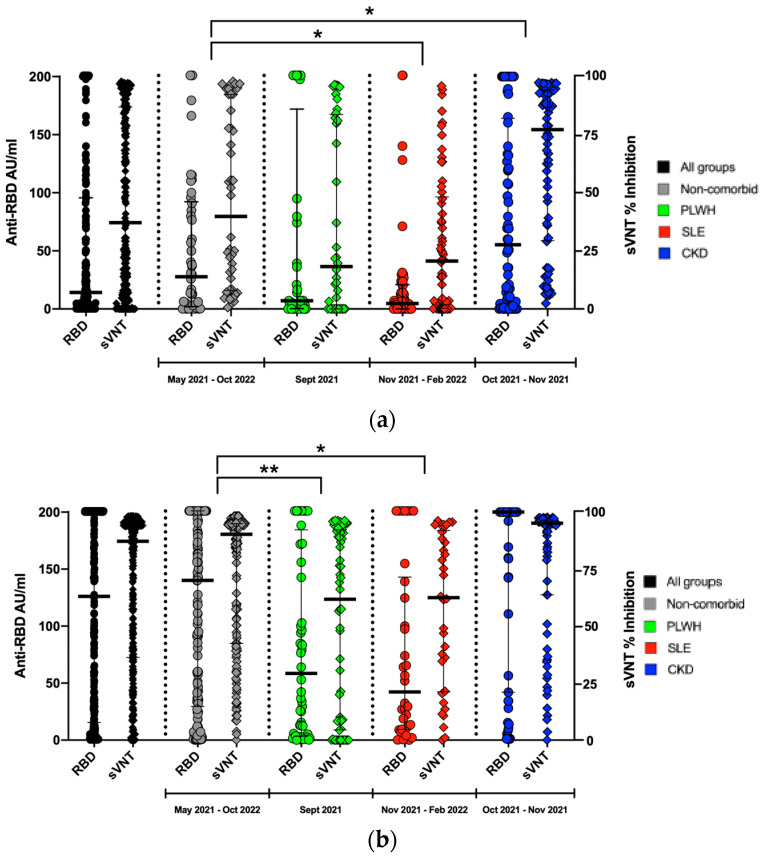 Figure 1
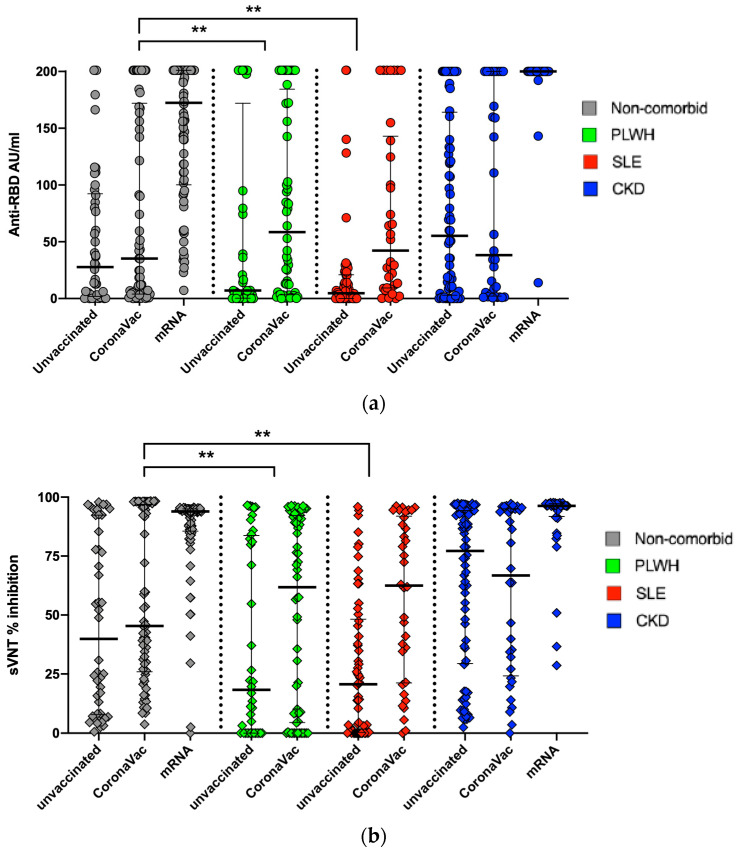 Figure 2
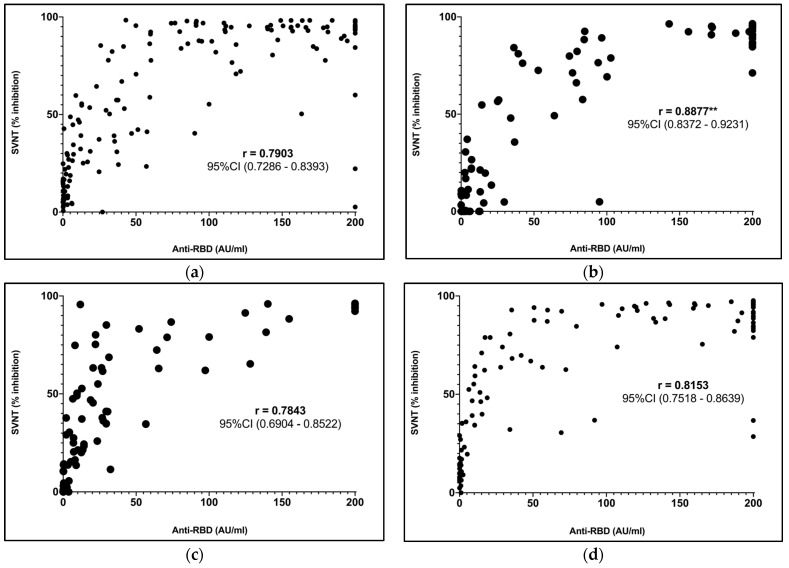 Figure 3
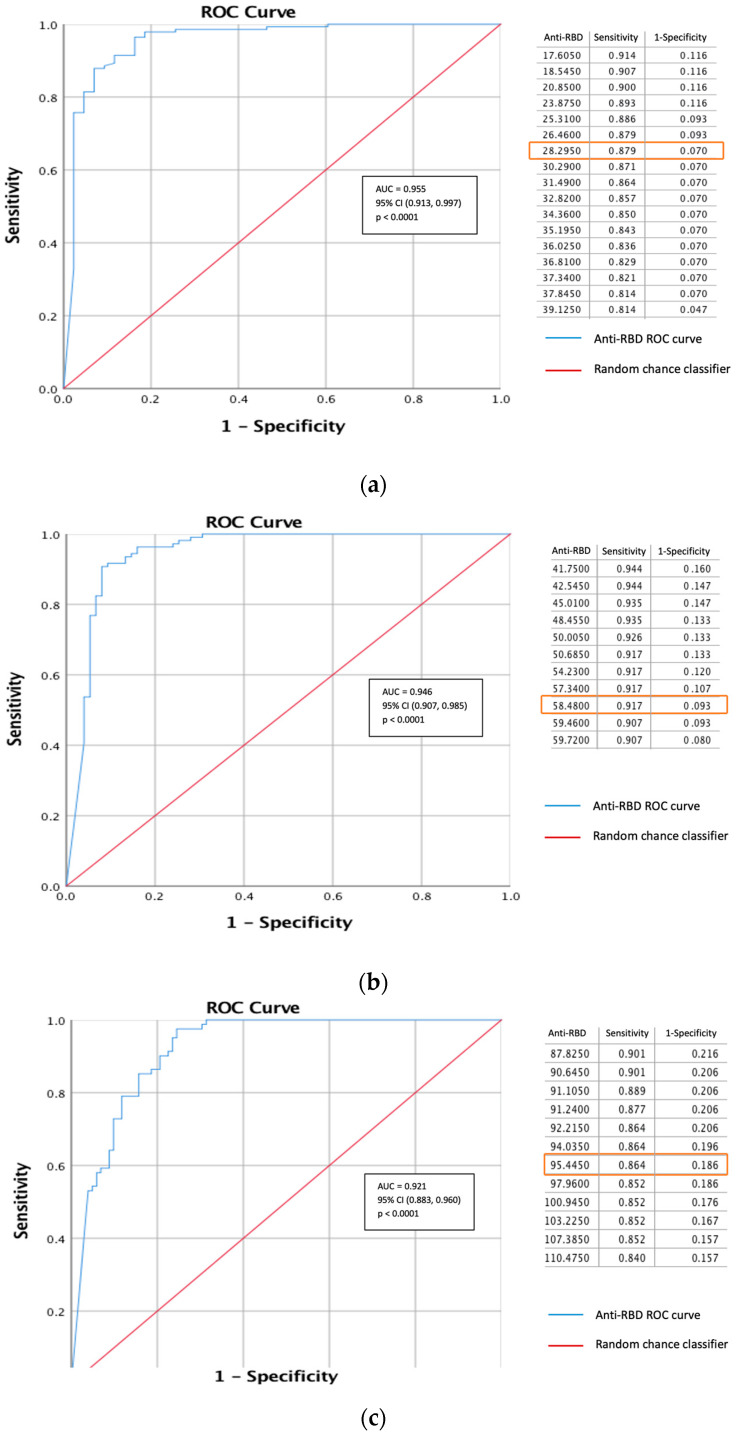 Figure 4
Peer Reviews
No public reviews on file for this paper yet. If you reviewed it on a platform where reviews are public (OpenReview, ICLR, NeurIPS, ICML), you can paste yours below so the community can read it here.
Videos
No videos yet. Explain this paper in a talk, walkthrough, or lecture? Add one.
Taxonomy
TopicsSARS-CoV-2 and COVID-19 Research · COVID-19 Clinical Research Studies · Long-Term Effects of COVID-19