Learning with filopodia and spines: Complementary strong and weak competition lead to specialized, graded, and protected receptive fields
Albert Albesa-González, Claudia Clopath, Daniele Marinazzo, Blake A Richards, Daniele Marinazzo, Blake A Richards, Daniele Marinazzo, Daniele Marinazzo

TL;DR
The paper introduces a new model of synaptic learning that combines filopodia and spines to improve memory stability and specificity.
Contribution
A novel learning rule called FS-STDP that integrates strong and weak competition mechanisms of filopodia and spines.
Findings
The model captures input correlations as effectively as multiplicative STDP models.
The learning rule protects memories and enables synaptic consolidation.
Filopodia and spines work together to overcome individual limitations of strong and weak competition.
Abstract
Filopodia are thin synaptic protrusions that have been long known to play an important role in early development. Recently, they have been found to be more abundant in the adult cortex than previously thought, and more plastic than spines (button-shaped mature synapses). Inspired by these findings, we introduce a new model of synaptic plasticity that jointly describes learning of filopodia and spines. The model assumes that filopodia exhibit strongly competitive learning dynamics -similarly to additive spike-timing-dependent plasticity (STDP). At the same time it proposes that, if filopodia undergo sufficient potentiation, they consolidate into spines. Spines follow weakly competitive learning, classically associated with multiplicative, soft-bounded models of STDP. This makes spines more stable and sensitive to the fine structure of input correlations. We show that our learning rule…
Genes, proteins, chemicals, diseases, species, mutations and cell lines named across the full text — each resolved to its canonical identifier and authoritative record.
Click any figure to enlarge with its caption.
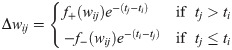 Figure 1
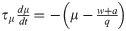 Figure 2
 Figure 3
 Figure 4
 Figure 5
 Figure 6
 Figure 7
 Figure 8
 Figure 9
 Figure 10
 Figure 11
 Figure 12
 Figure 13
 Figure 14
 Figure 15
 Figure 16
 Figure 17
 Figure 18
 Figure 19
 Figure 20
 Figure 21
 Figure 22
 Figure 23
 Figure 24
 Figure 25
 Figure 26
 Figure 27
 Figure 28
 Figure 29
 Figure 30
 Figure 31
 Figure 32
 Figure 33
 Figure 34
 Figure 35
 Figure 36
 Figure 37
 Figure 38
 Figure 39
 Figure 40
 Figure 41
 Figure 42
 Figure 43
 Figure 44
 Figure 45
 Figure 46
 Figure 47
 Figure 48
 Figure 49
 Figure 50
Peer Reviews
No public reviews on file for this paper yet. If you reviewed it on a platform where reviews are public (OpenReview, ICLR, NeurIPS, ICML), you can paste yours below so the community can read it here.
Videos
No videos yet. Explain this paper in a talk, walkthrough, or lecture? Add one.
Taxonomy
TopicsAdvanced Memory and Neural Computing · Neuroscience and Neuropharmacology Research · Neural dynamics and brain function