The effect of solarium light therapy on selected biological and biochemical parameters of peripheral blood in young and old horses
Aleksandra Orzołek, Katarzyna Teresa Rafalska, Anna Domosławska-Wyderska, Agata Monika Rafalska, Anna Dziekońska, Ewa Jastrzębska, Dominika Dobbek

TL;DR
This study examines how solarium light therapy affects blood parameters in young and old horses, finding changes in cell indices and antioxidant levels.
Contribution
The study provides new insights into the effects of solarium light therapy on blood morphology and antioxidant status in horses of different ages.
Findings
Light therapy increased MCV, HDW, MCVr, CHr, and MPV indices while decreasing basophil counts and MCHC in both young and old horses.
TAS levels rose in all horses, while GSH levels declined, and MDA levels decreased, especially in older horses.
GPx and GR activities increased in young horses but decreased in older ones, indicating age-related differences in response to therapy.
Abstract
The aim of the study was to assess the impact of solarium light therapy on selected biological and biochemical parameters of peripheral blood in recreational horses. The study involved 10 horses divided into two groups of young (aged 5 to 7 years) and old (aged 14 to 19 years) individuals. All animals participated in light therapy sessions every other day. Blood was sampled three times during the study: before the treatment, after five light sessions, and after ten light sessions. Morphological parameters, the activity of antioxidant enzymes, TAS values, and the levels of glutathione (GSH), vitamin D3, vitamin C, and malondialdehyde (MDA) were measured in the whole blood. Light therapy contributed to an increase in MCV, HDW, MCVr, CHr and MPV indices, and simultaneously a decrease in the basophil counts, MCHC, RDW and CHCMr indices in both groups of horses (p ≤ 0.05). At the same time…
Genes, proteins, chemicals, diseases, species, mutations and cell lines named across the full text — each resolved to its canonical identifier and authoritative record.
Click any figure to enlarge with its caption.
 Figure 1
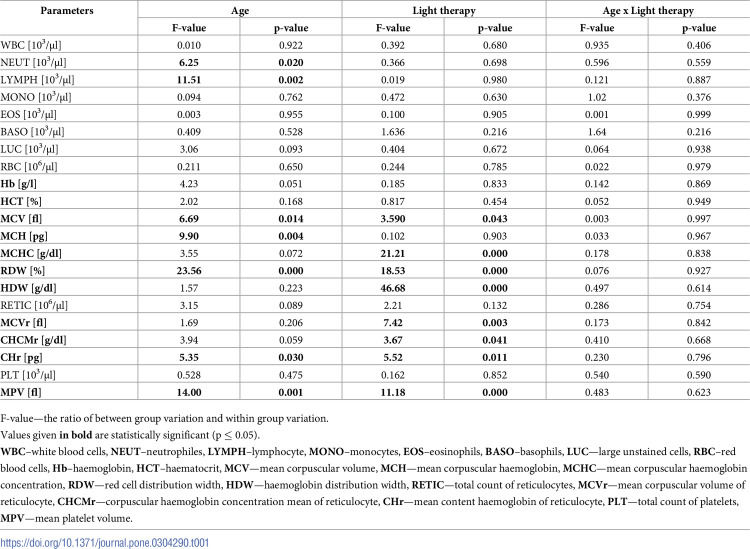 Figure 2
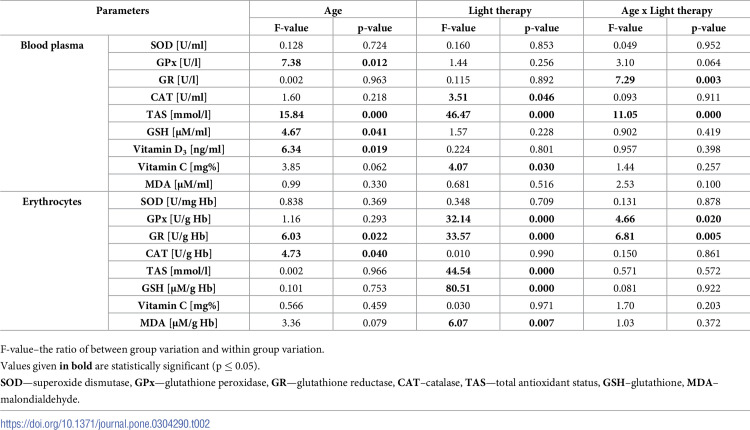 Figure 3
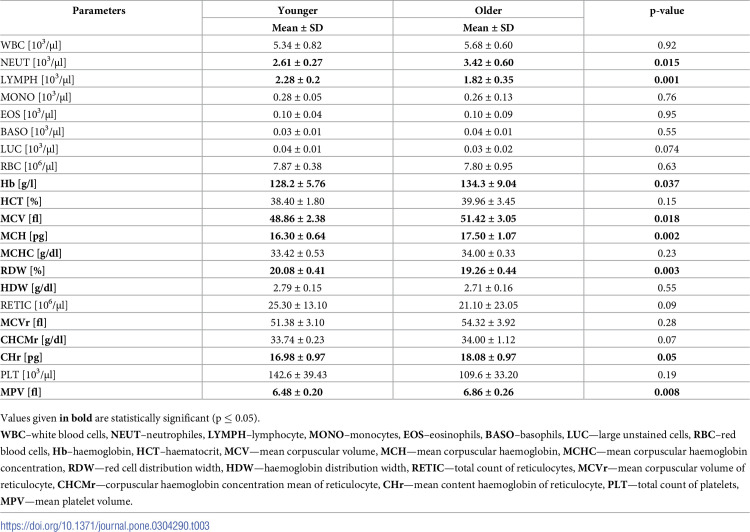 Figure 4
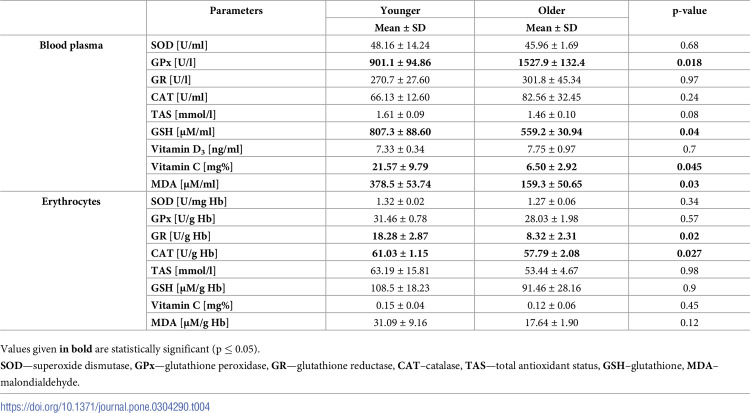 Figure 5
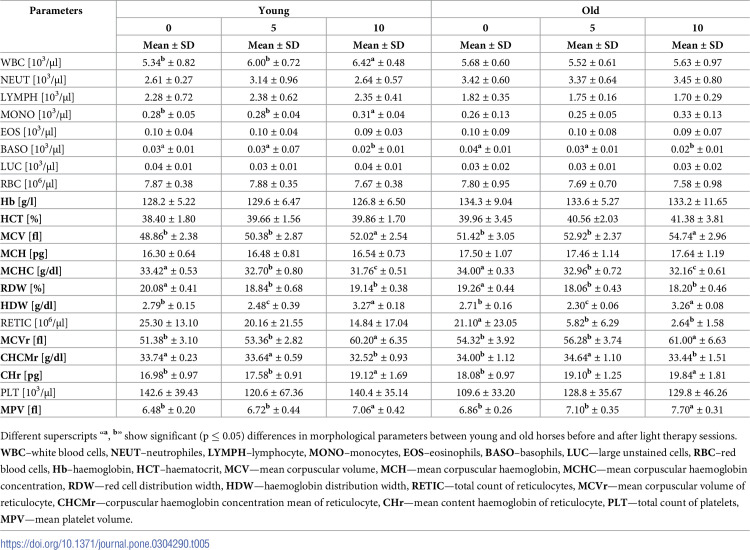 Figure 6
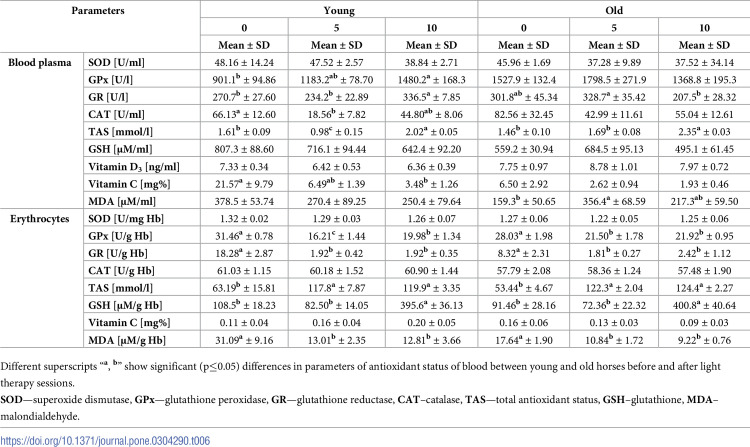 Figure 7
Peer Reviews
No public reviews on file for this paper yet. If you reviewed it on a platform where reviews are public (OpenReview, ICLR, NeurIPS, ICML), you can paste yours below so the community can read it here.
Videos
No videos yet. Explain this paper in a talk, walkthrough, or lecture? Add one.
Taxonomy
TopicsLaser Applications in Dentistry and Medicine · Exercise and Physiological Responses · Medical and Biological Ozone Research