4D-Printed Tool for Compressing a Shape Memory Polyurethane Foam during Programming
Dilip Chalissery, Thorsten Pretsch

TL;DR
Researchers developed a 4D-printed tool that can compress shape memory foam in a controlled way, allowing it to return to its original shape after being stored for 900 days.
Contribution
A novel 4D-printed cylindrical tool is introduced for homogenous compression of shape memory polyurethane foam during programming.
Findings
A 4D-printed tool enabled controlled compression of a cylindrical foam sample, which retained its new shape after cooling.
The foam recovered its original shape after 900 days of storage when reheated to 75 °C.
The 4D-printed tool remained functional after 900 days of hibernation, retaining its thermoresponsive properties.
Abstract
Although several force application concepts are known that can be used to deform shape memory polymers (SMPs) within the scope of programming, controlled deformation is challenging in the case of samples with a cylinder-like shape, which need to be homogeneously compressed starting from the lateral surface. To solve this problem, this contribution follows a material approach that takes advantage of four-dimensional (4D) printing. Fused filament fabrication (FFF) was used as an additive manufacturing (AM) technique to produce a thermoresponsive tool in a cylindrical shape from a polyether urethane (PEU) having a glass transition temperature (Tg) close to 55 °C, as determined by differential scanning calorimetry (DSC). Once it was 4D-printed, a sample of laser cut polyester urethane urea (PEUU) foam with a cylindrical wall was placed inside of it. Subsequent heating to 75 °C and keeping…
Genes, proteins, chemicals, diseases, species, mutations and cell lines named across the full text — each resolved to its canonical identifier and authoritative record.
Click any figure to enlarge with its caption.
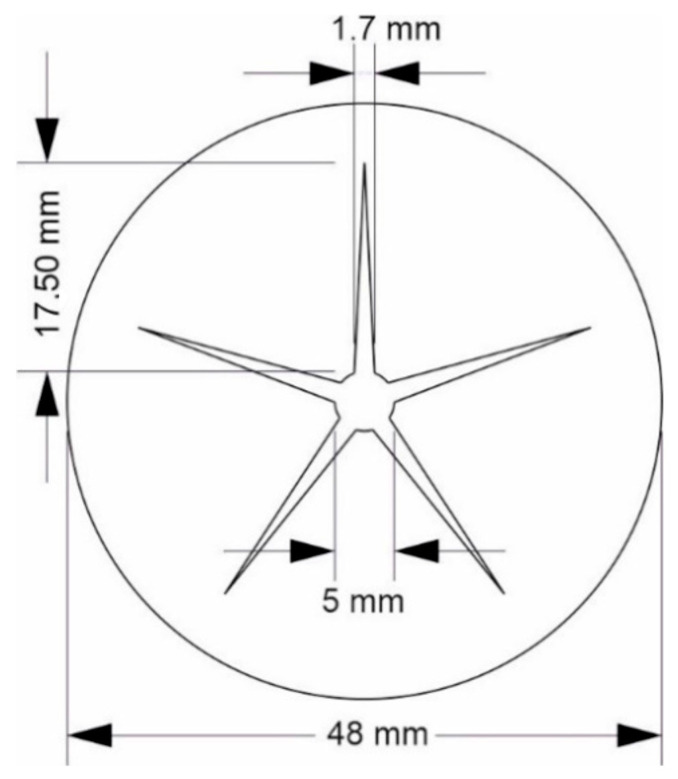 Figure 1
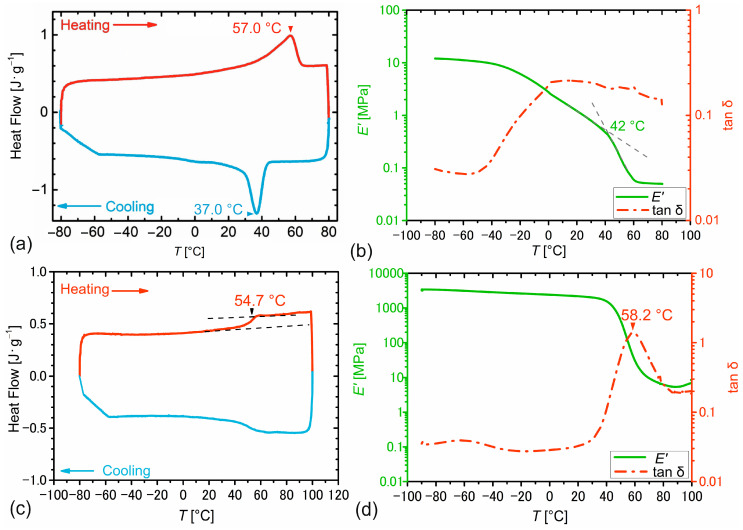 Figure 2
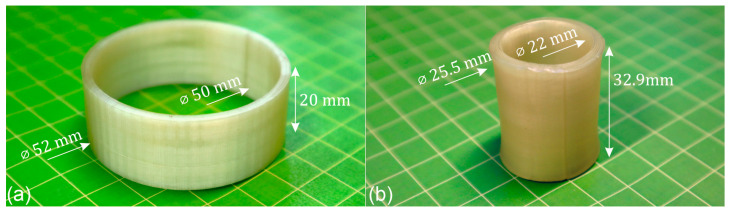 Figure 3
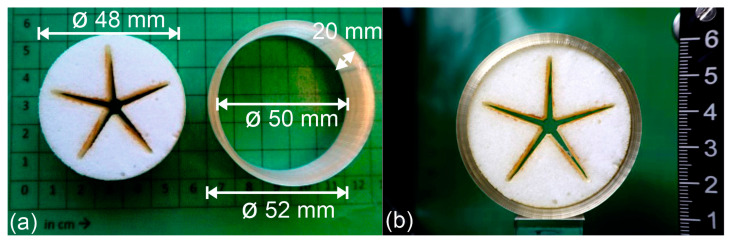 Figure 4
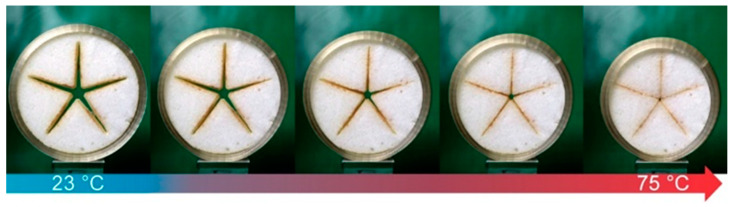 Figure 5
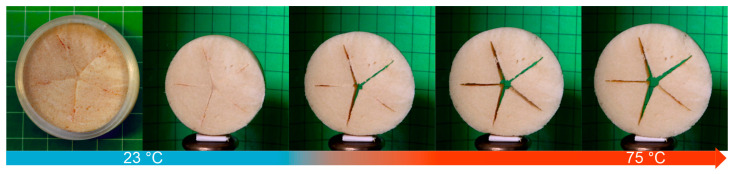 Figure 6
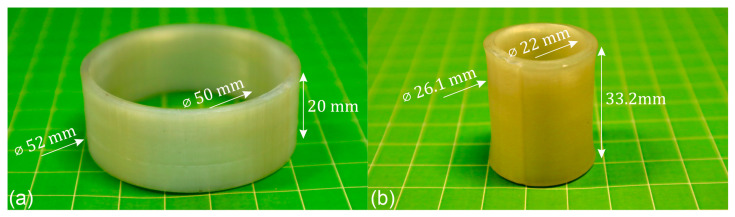 Figure 7
Peer Reviews
No public reviews on file for this paper yet. If you reviewed it on a platform where reviews are public (OpenReview, ICLR, NeurIPS, ICML), you can paste yours below so the community can read it here.
Videos
No videos yet. Explain this paper in a talk, walkthrough, or lecture? Add one.
Taxonomy
TopicsPolymer composites and self-healing · Advanced Materials and Mechanics · Advanced Sensor and Energy Harvesting Materials