Contributions of γ-Aminobutyric Acid (GABA) Receptors for the Activities of Pectis brevipedunculata Essential Oil against Drosophila suzukii and Pollinator Bees
Sabrina Helena da Cruz Araujo, Javier Guillermo Mantilla-Afanador, Thiago Svacina, Tarciza Fernandes Nascimento, Aldilene da Silva Lima, Marcos Bispo Pinheiro Camara, Luis Oswaldo Viteri Jumbo, Gil Rodrigues dos Santos, Cláudia Quintino da Rocha, Eugênio Eduardo de Oliveira

TL;DR
This study explores how the essential oil from a neotropical plant affects fruit flies and bees, showing it is more toxic to fruit flies due to interactions with GABA receptors.
Contribution
The study identifies GABA receptors as key targets for the insecticidal activity of Pectis brevipedunculata essential oil against Drosophila suzukii.
Findings
Neral and geranial are the main components of the essential oil responsible for killing Drosophila suzukii.
The essential oil showed higher affinity for GABA receptors in Drosophila suzukii compared to pollinator bees.
Pollinator bees were more tolerant to the essential oil and showed no changes in diet consumption.
Abstract
The γ-aminobutyric acid (GABA) receptors play pivotal roles in the transmission of neuronal information in the nervous system of insects, which has led these proteins to be targeted by synthetic and natural products. Here, we assessed the insecticidal potential of the essential oil of Pectis brevipedunculata (Gardner) Sch. Bip., a neotropical Asteraceae plant used in traditional medicine, for controlling Drosophila suzukii (Matsumura) adults by feeding exposure. By using in silico approaches, we disentangle the contribution of GABA receptors and other potential neuronal targets (e.g., acetylcholinesterase, glutathione-S-transferases) in insects that may explain the essential oil differential activities against D. suzukii and two essential pollinator bees (Apis mellifera Linnaeus and Partamona helleri Friese). Neral (26.7%) and geranial (33.9%) were the main essential oil components…
Genes, proteins, chemicals, diseases, species, mutations and cell lines named across the full text — each resolved to its canonical identifier and authoritative record.
Click any figure to enlarge with its caption.
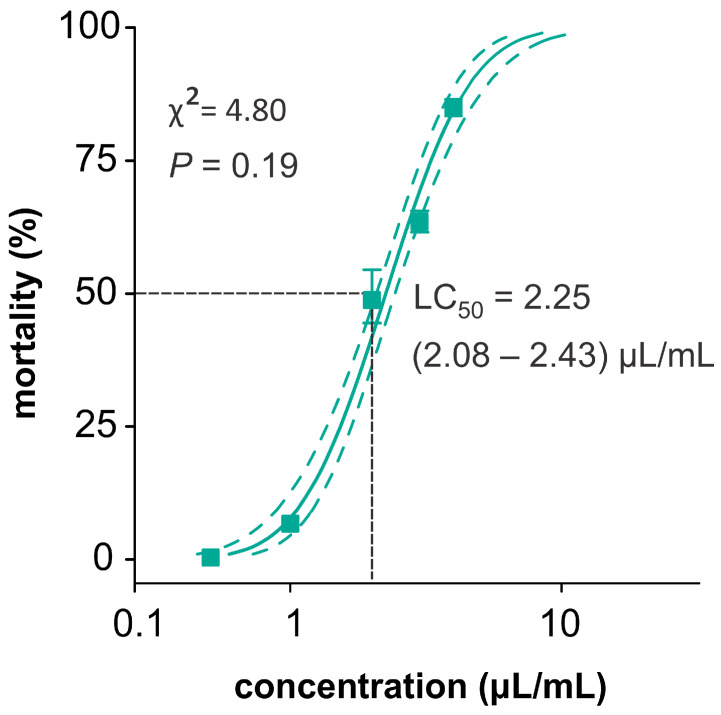 Figure 1
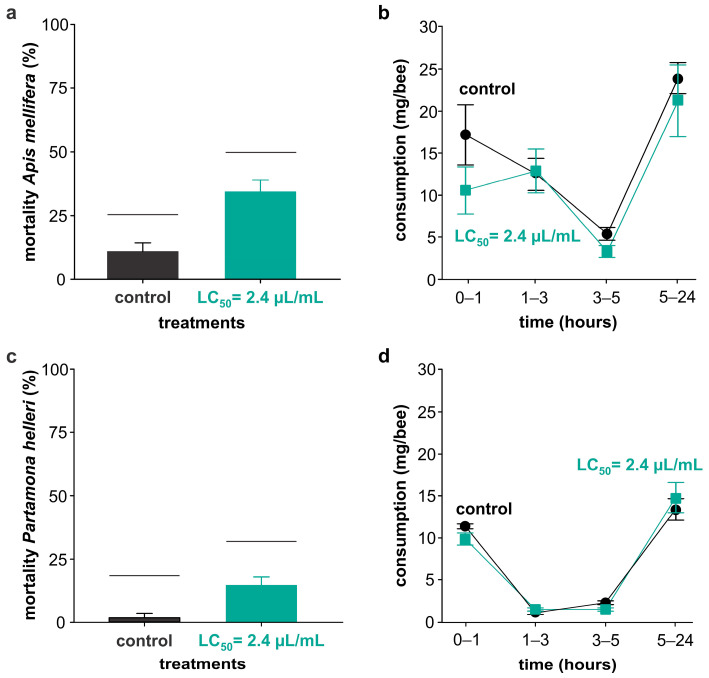 Figure 2
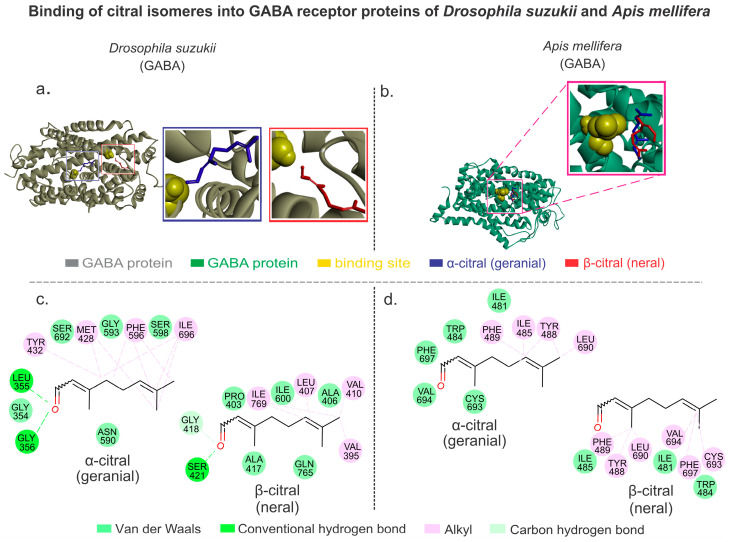 Figure 3
Peer Reviews
No public reviews on file for this paper yet. If you reviewed it on a platform where reviews are public (OpenReview, ICLR, NeurIPS, ICML), you can paste yours below so the community can read it here.
Videos
No videos yet. Explain this paper in a talk, walkthrough, or lecture? Add one.
Taxonomy
TopicsInsect Pest Control Strategies · Insect and Pesticide Research · Insect-Plant Interactions and Control