The Role of the Unbinding Cycle on the Coordination Abilities of the Bi-Cyclopeptides toward Cu(II) Ions
Alicja Lisowska, Paulina Świątek, Filip Dębicki, Agnieszka Lewińska, Aleksandra Marciniak, Lorenzo Pacini, Anna Maria Papini, Justyna Brasuń

TL;DR
This study explores how the structure of bi-cyclopeptides affects their ability to bind Cu(II) ions, revealing insights into their coordination behavior.
Contribution
The paper introduces new insights into how the unbinding cycle in bi-cyclopeptides influences their coordination abilities toward Cu(II) ions.
Findings
Bicyclic structures enhance the involvement of imidazole donors in Cu(II) binding.
The position of histidine residues affects the coordination of amide donors in monocyclic analogues.
Structural differences significantly influence Cu(II) coordination abilities in bi-cyclopeptides.
Abstract
Bicyclic peptides have attracted the interest of pharmaceutical companies because of their remarkable properties, putting them on a new path in medicine. Their conformational rigidity improves proteolytic stability and leads to rapid penetration into tissues via any possible route of administration. Moreover, elimination of renal metabolism is of great importance, for example, for people with a history of liver diseases. In addition, each ring can function independently, making bicyclic peptides extremely versatile molecules for further optimization. In this paper, we compared the potentiometric and spectroscopic properties studied by UV–vis, MCD, and EPR of four synthetic analogues of the bi-cyclic peptide c(PKKHP-c(CFWKTC)-PKKH) (BCL). In particular, we correlated the structural and spectral properties of complexes with coordinating abilities toward Cu(II) ions of MCL1…
Genes, proteins, chemicals, diseases, species, mutations and cell lines named across the full text — each resolved to its canonical identifier and authoritative record.
Click any figure to enlarge with its caption.
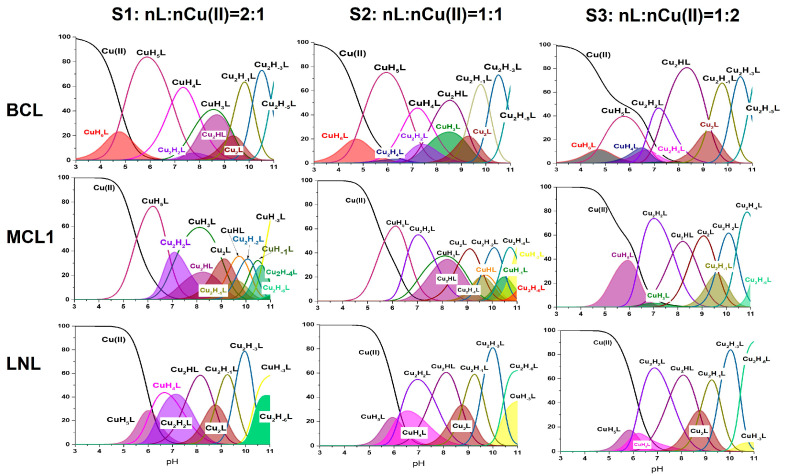 Figure 1
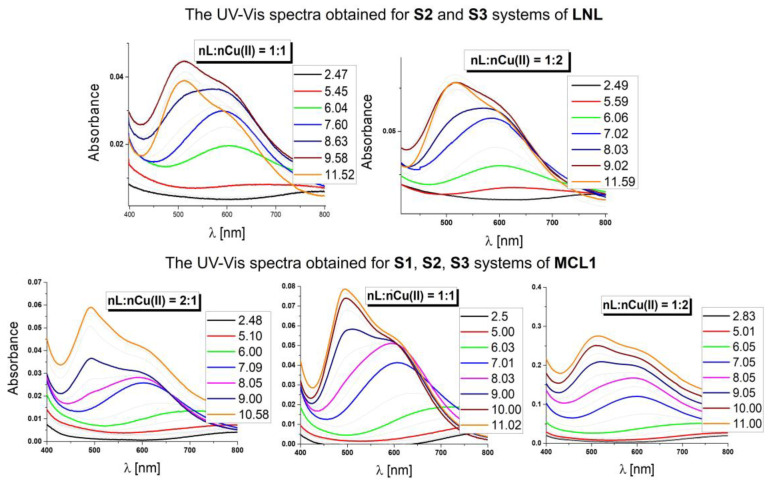 Figure 2
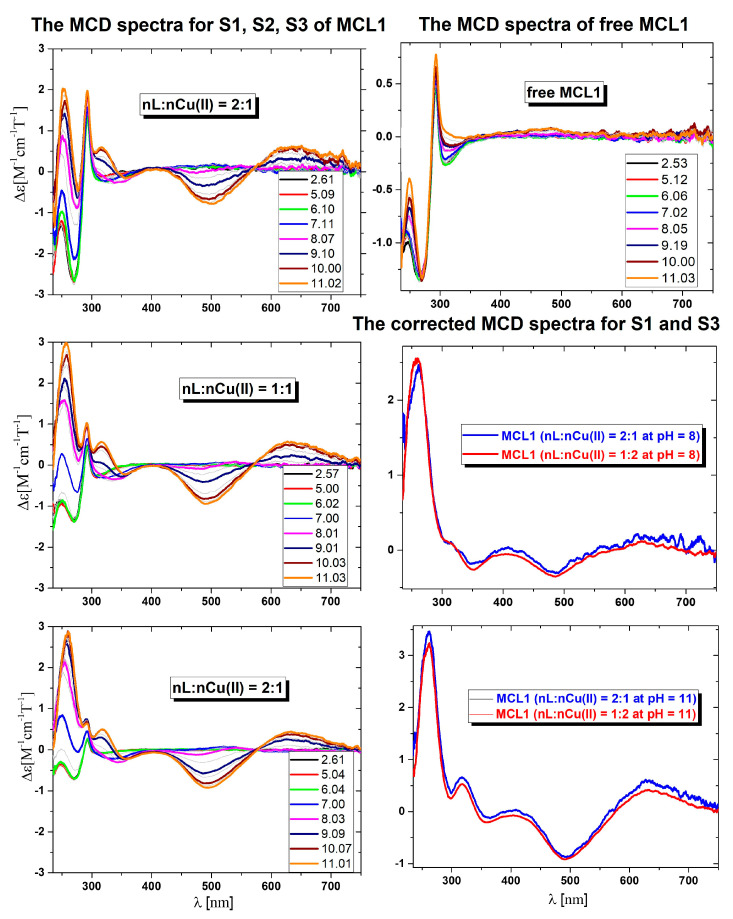 Figure 3
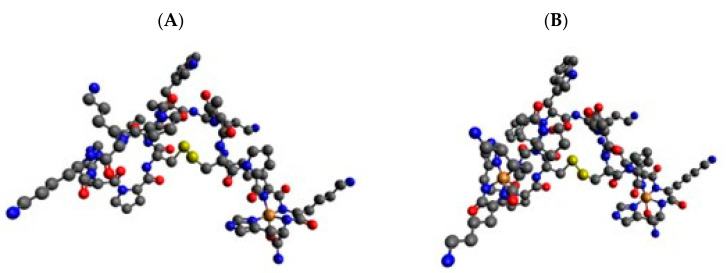 Figure 4
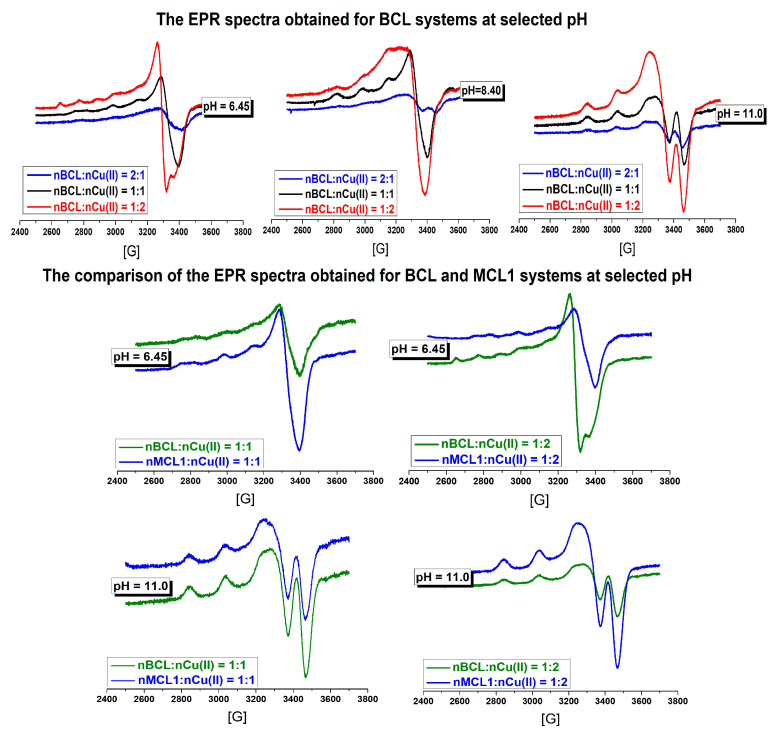 Figure 5
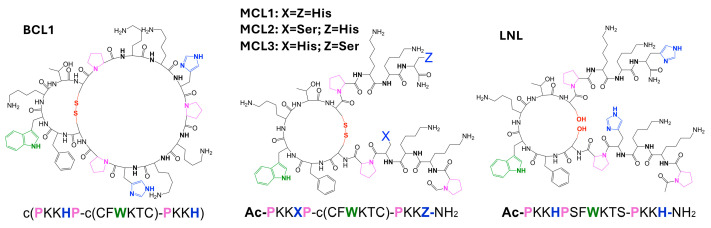 Figure 6
Peer Reviews
No public reviews on file for this paper yet. If you reviewed it on a platform where reviews are public (OpenReview, ICLR, NeurIPS, ICML), you can paste yours below so the community can read it here.
Videos
No videos yet. Explain this paper in a talk, walkthrough, or lecture? Add one.
Taxonomy
TopicsChemical Synthesis and Analysis · Computational Drug Discovery Methods · Molecular Sensors and Ion Detection