Strong Acceptors Based on Derivatives of Benzothiadiazoloimidazole
Hanyun Du, Bin Chen, Fengyuan Zhang

TL;DR
This paper introduces a new strong acceptor material that could improve air-stable n-type organic semiconductors.
Contribution
The novel benzothiadiazoloimidazole-based acceptor BTI-NDI-BTI-a shows high electron affinity and air stability.
Findings
BTI-NDI-BTI-a has a high electron affinity of 3.94 eV and good solubility.
The material forms 1D slipped-stacking crystals, which is promising for semiconductor applications.
It shows potential for air-stable n-type organic semiconductors.
Abstract
Despite the rapid progression of organic semiconductors, developing high-air-stability n-type organic semiconductors are still challenging. Herein, novel strong acceptors based on benzothiadiazoloimidazole units are reported. The results reveal that the strong acceptor BTI-NDI-BTI-a has good solubility and high electron affinity (3.94 eV), accompanied by 1D slipped-stacking crystals. Notably, the material presents promising potential for developing into air-stable n-type organic semiconductor materials.
Genes, proteins, chemicals, diseases, species, mutations and cell lines named across the full text — each resolved to its canonical identifier and authoritative record.
Click any figure to enlarge with its caption.
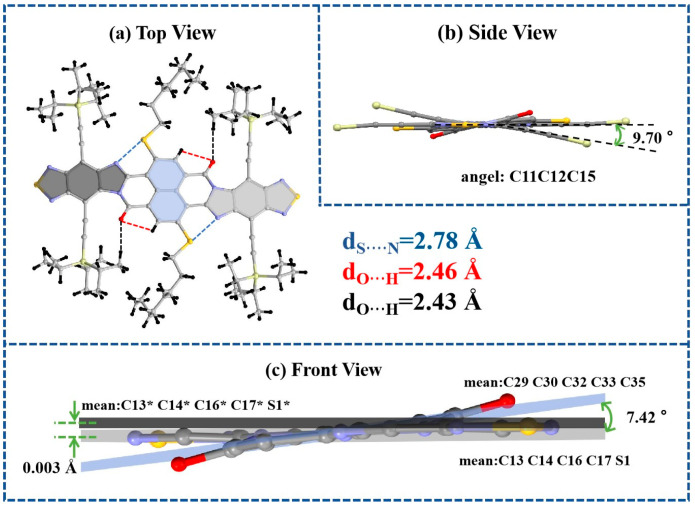 Figure 1
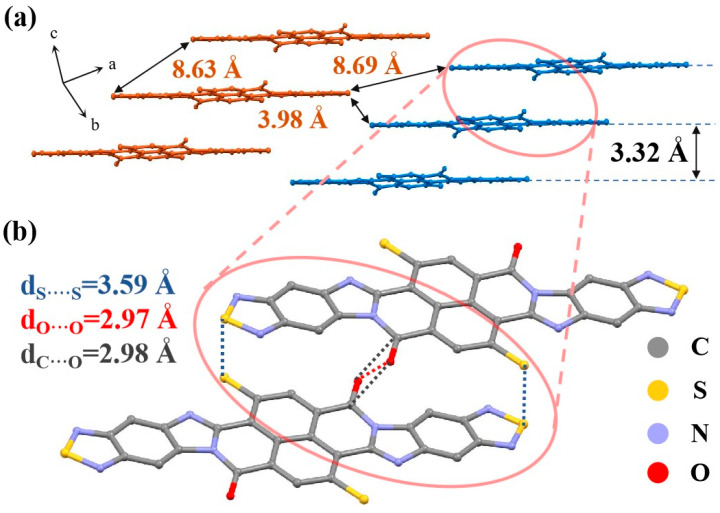 Figure 2
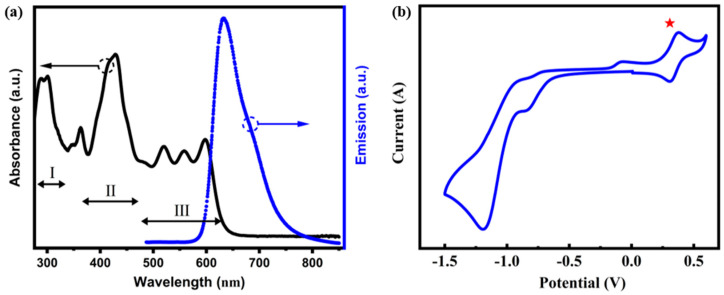 Figure 3
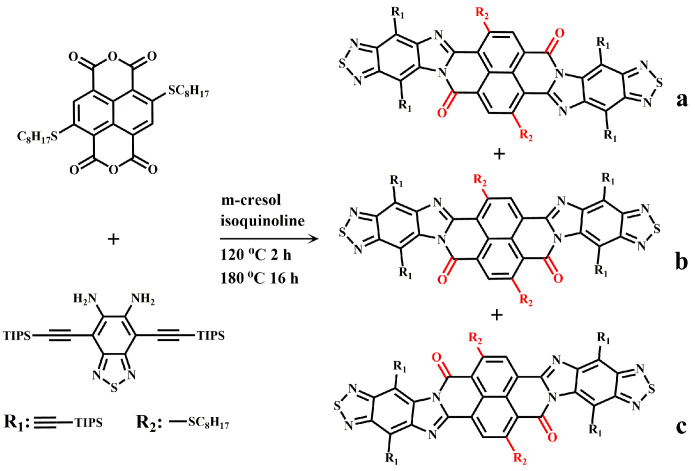 Figure 4
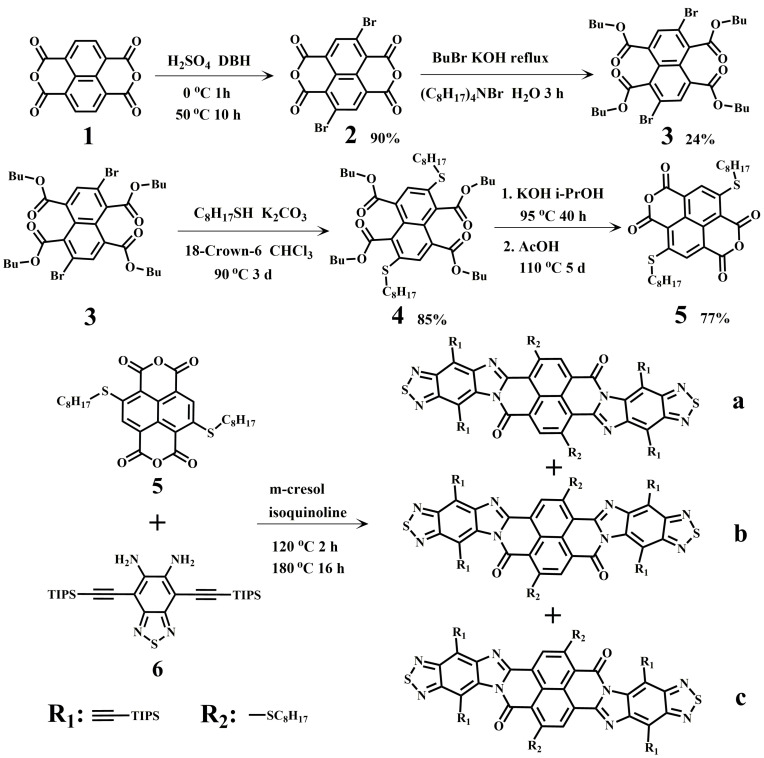 Figure 5
Peer Reviews
No public reviews on file for this paper yet. If you reviewed it on a platform where reviews are public (OpenReview, ICLR, NeurIPS, ICML), you can paste yours below so the community can read it here.
Videos
No videos yet. Explain this paper in a talk, walkthrough, or lecture? Add one.
Taxonomy
TopicsOrganic Electronics and Photovoltaics · Luminescence and Fluorescent Materials · Organic and Molecular Conductors Research