Recognition of 8-Oxo-2′-deoxyguanosine in DNA Using the Triphosphate of 2′-Deoxycytidine Connecting the 1,3-Diazaphenoxazine Unit, dCdapTP
Takato Sakurada, Yuta Chikada, Ryo Miyahara, Yosuke Taniguchi

TL;DR
This paper introduces a new artificial nucleoside that can detect a specific type of DNA damage linked to cancer and neurological diseases.
Contribution
A novel pyrimidine-based nucleoside derivative is developed for improved recognition of 8-oxo-2′-deoxyguanosine in DNA.
Findings
The new nucleoside derivative was incorporated into DNA during a primer extension reaction.
It showed higher effectiveness at recognizing oxodG compared to a dG template.
The cytidine skeleton enabled template-directed incorporation, while the 1,3-diazaphenoxazine unit enhanced oxodG recognition.
Abstract
DNA is constantly damaged by various external and internal factors. In particular, oxidative damage occurs in a steady state, and 8-oxo-2′-deoxyguanosine (oxodG) is known as the main oxidative damage. OxodG is a strong genotoxic nucleoside and is thought to be involved in the pathogenesis of cancer and neurological diseases. However, a breakthrough method to detect the position of oxodG in DNA has not yet been developed. Therefore, we attempted to develop a novel method to detect oxodG in DNA using artificial nucleosides. Recently, we have succeeded in the recognition of oxodG in DNA by a single nucleotide elongation reaction using nucleoside derivatives based on a purine skeleton with a 1,3-diazaphenoxazine unit. In this study, we developed a new nucleoside derivative with a pyrimidine skeleton in order to further improve the recognition ability and enzymatic reaction efficiency. We,…
Genes, proteins, chemicals, diseases, species, mutations and cell lines named across the full text — each resolved to its canonical identifier and authoritative record.
Click any figure to enlarge with its caption.
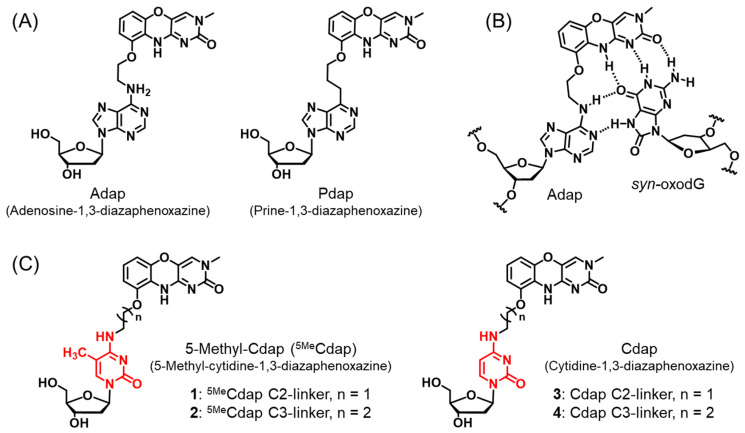 Figure 1
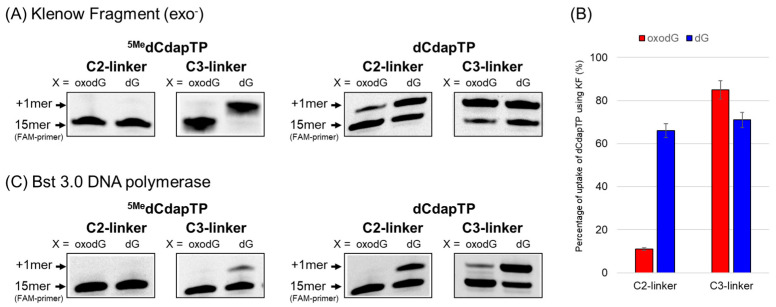 Figure 2
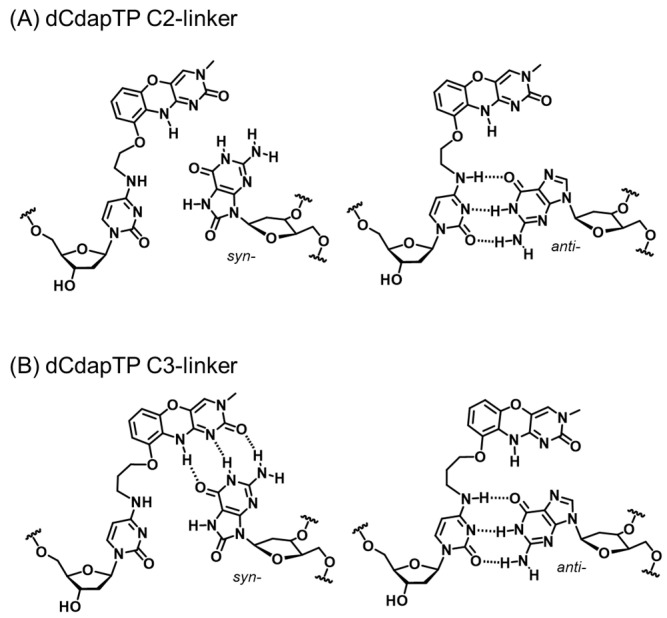 Figure 3
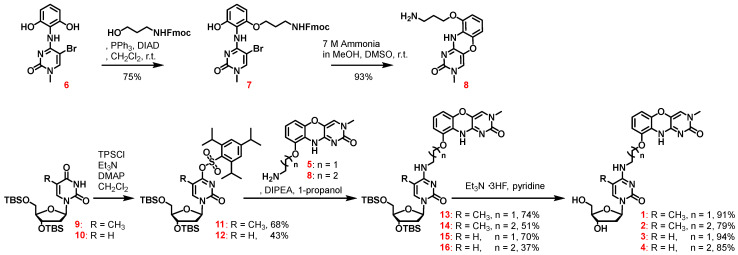 Figure 4
 Figure 5
Peer Reviews
No public reviews on file for this paper yet. If you reviewed it on a platform where reviews are public (OpenReview, ICLR, NeurIPS, ICML), you can paste yours below so the community can read it here.
Videos
No videos yet. Explain this paper in a talk, walkthrough, or lecture? Add one.
Taxonomy
TopicsDNA and Nucleic Acid Chemistry · DNA Repair Mechanisms · Advanced biosensing and bioanalysis techniques