Naïve Inflammatory Proteome Profiles of Glucocorticoid Responsive Polymyalgia Rheumatica and Rheumatic Arthritis Patients—Links to Triggers and Proteomic Manifestations
Allan Stensballe, Jacob Skallerup Andersen, Christopher Aboo, Anders Borg Andersen, Jie Ren, Michael Kruse Meyer, Kate Lykke Lambertsen, Peter Derek Christian Leutscher

TL;DR
This study explores the blood protein patterns in patients with polymyalgia rheumatica before and after treatment, revealing key proteins linked to inflammation and treatment response.
Contribution
The study provides new insights into the serum proteome and inflammatory markers in glucocorticoid-treated polymyalgia rheumatica patients.
Findings
Serum amyloid A (SAA1) levels significantly decrease with glucocorticoid treatment in PMR patients.
Interleukin-6 (IL-6) and interferon-gamma (IFN-γ) are significantly affected by treatment.
PGLYRP2 may indicate a bacterial infection response in acute PMR.
Abstract
Polymyalgia rheumatica (PMR) is an inflammatory disorder of unknown etiology, sharing symptoms with giant cell arthritis (GCA) and rheumatoid arthritis (RA). The pathogenic inflammatory roots are still not well understood, and there is a lack of extensive biomarker studies to explain the disease debut and post-acute phase. This study aimed to deeply analyze the serum proteome and inflammatory response of PMR patients before and after glucocorticoid treatment. We included treatment-naïve PMR patients, collecting samples before and after 3 months of treatment. For comparison, disease-modifying antirheumatic drug (DMARD)-naïve RA patients were included and matched to healthy controls (CTL). The serum proteome was examined using label-free quantitative mass spectrometry, while inflammation levels were assessed using multiplex inflammatory cytokine and cell-free DNA assays. The serum…
Genes, proteins, chemicals, diseases, species, mutations and cell lines named across the full text — each resolved to its canonical identifier and authoritative record.
Click any figure to enlarge with its caption.
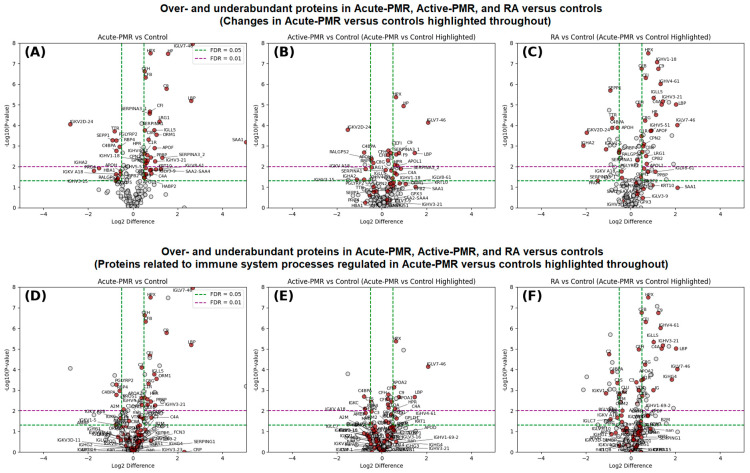 Figure 1
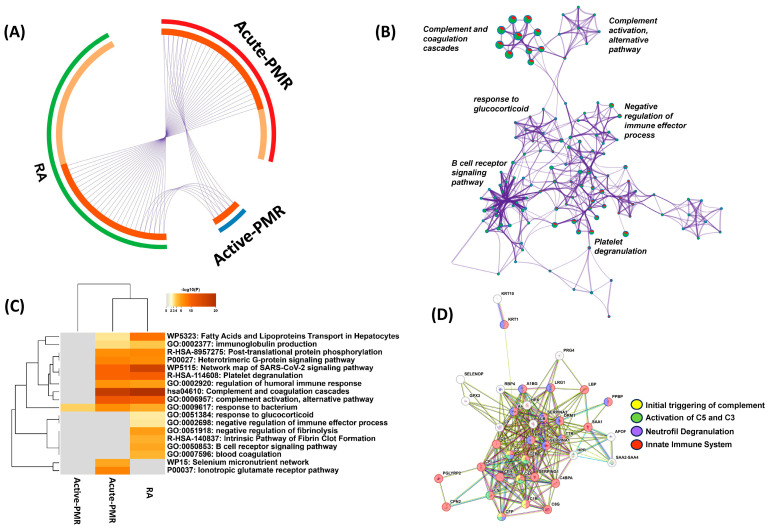 Figure 2
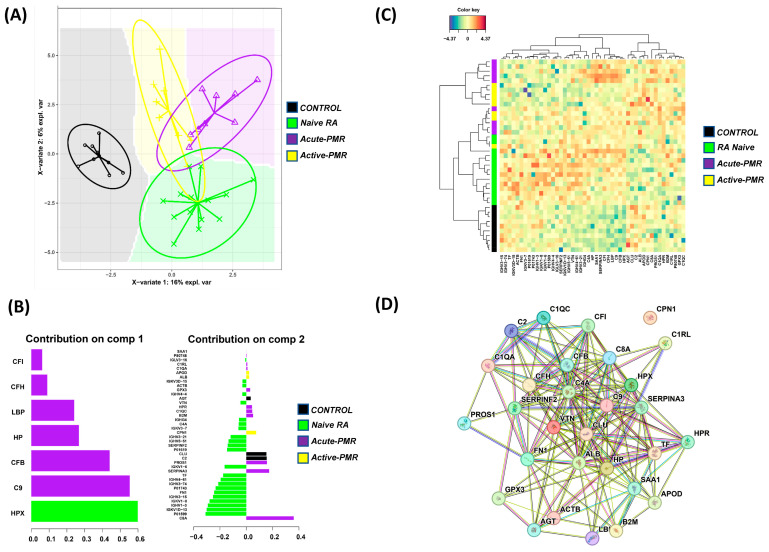 Figure 3
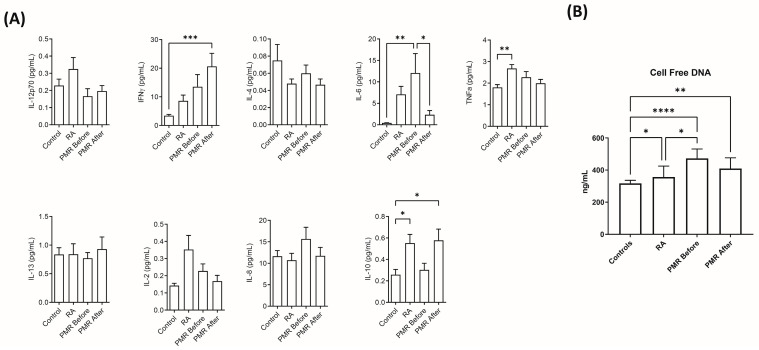 Figure 4
Peer Reviews
No public reviews on file for this paper yet. If you reviewed it on a platform where reviews are public (OpenReview, ICLR, NeurIPS, ICML), you can paste yours below so the community can read it here.
Videos
No videos yet. Explain this paper in a talk, walkthrough, or lecture? Add one.
Taxonomy
TopicsCoagulation, Bradykinin, Polyphosphates, and Angioedema · Mast cells and histamine · Amyloidosis: Diagnosis, Treatment, Outcomes