Normoxic Management during Cardiopulmonary Bypass Does Not Reduce Cerebral Mitochondrial Dysfunction in Neonatal Swine
Danielle I. Aronowitz, Tracy R. Geoffrion, Sarah Piel, Sarah R. Morton, Jonathan Starr, Richard W. Melchior, Hunter A. Gaudio, Rinat Degani, Nicholas J. Widmann, M. Katie Weeks, Nicolina R. Ranieri, Emilie Benson, Tiffany S. Ko, Daniel J. Licht, Marco Hefti, J. William Gaynor

TL;DR
This study found that using normal oxygen levels during heart bypass surgery in baby pigs does not prevent brain mitochondrial damage or oxidative injury.
Contribution
The study shows that normoxic oxygen management during CPB does not reduce cerebral mitochondrial dysfunction in neonatal swine.
Findings
Normoxic oxygen management during CPB did not reduce cortical mitochondrial dysfunction.
There were no significant differences in oxidative injury markers between normoxia and hyperoxia groups.
Hyperoxia led to higher PaO2 but not clinically significant changes in brain bioenergetics.
Abstract
Optimal oxygen management during pediatric cardiopulmonary bypass (CPB) is unknown. We previously demonstrated an increase in cortical mitochondrial reactive oxygen species and decreased mitochondrial function after CPB using hyperoxic oxygen management. This study investigates whether controlled oxygenation (normoxia) during CPB reduces cortical mitochondrial dysfunction and oxidative injury. Ten neonatal swine underwent three hours of continuous CPB at 34 °C (flow > 100 mL/kg/min) via cervical cannulation targeting a partial pressure of arterial oxygen (PaO2) goal < 150 mmHg (normoxia, n = 5) or >300 mmHg (hyperoxia, n = 5). The animals underwent continuous hemodynamic monitoring and serial arterial blood sampling. Cortical microdialysate was serially sampled to quantify the glycerol concentration (represents neuronal injury) and lactate-to-pyruvate ratio (represents bioenergetic…
Genes, proteins, chemicals, diseases, species, mutations and cell lines named across the full text — each resolved to its canonical identifier and authoritative record.
Click any figure to enlarge with its caption.
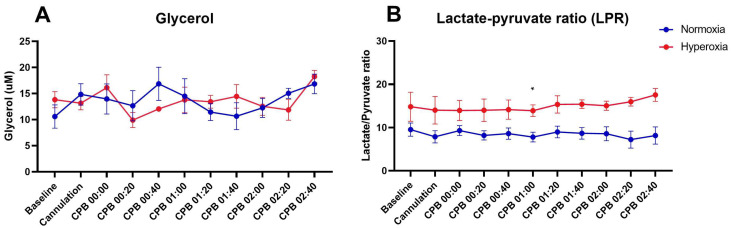 Figure 1
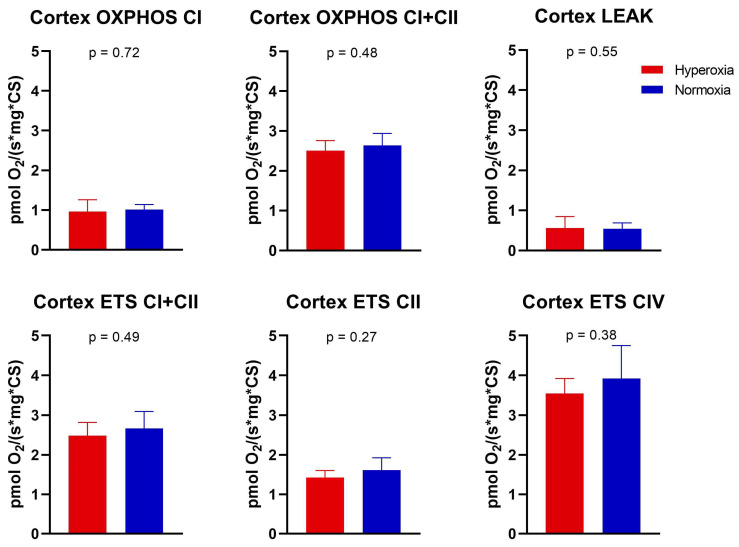 Figure 2
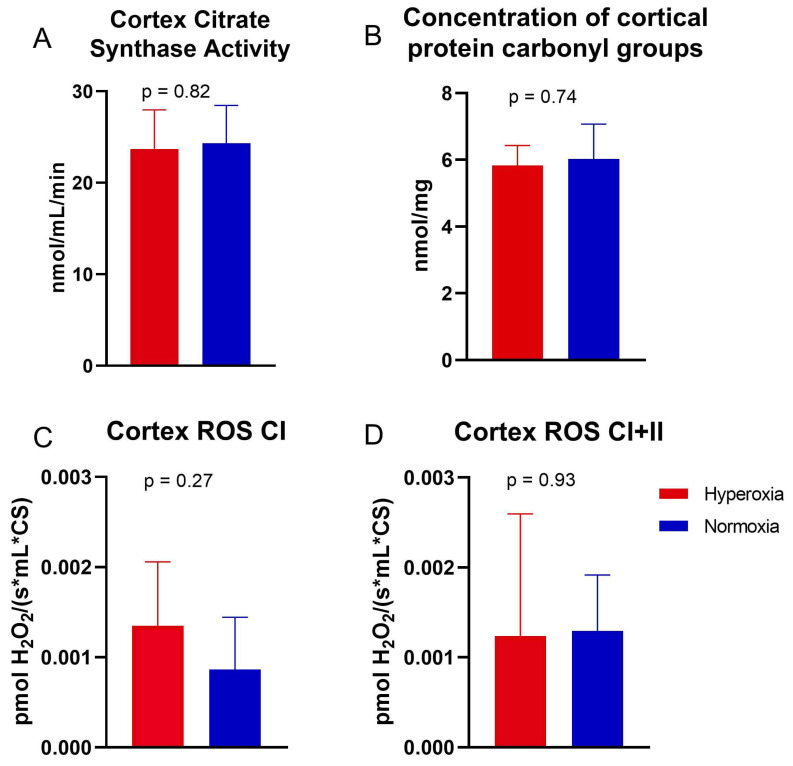 Figure 3
Peer Reviews
No public reviews on file for this paper yet. If you reviewed it on a platform where reviews are public (OpenReview, ICLR, NeurIPS, ICML), you can paste yours below so the community can read it here.
Videos
No videos yet. Explain this paper in a talk, walkthrough, or lecture? Add one.
Taxonomy
TopicsCardiac Arrest and Resuscitation · Traumatic Brain Injury and Neurovascular Disturbances · Anesthesia and Neurotoxicity Research