Docking Proteins Upregulate IL-1β Expression in Lower Esophageal Sphincter Muscle in Esophageal Achalasia
Tsutomu Kanda, Karen Saiki, Hiroki Kurumi, Akira Yoshida, Yuichiro Ikebuchi, Takuki Sakaguchi, Shigetoshi Urabe, Hitomi Minami, Naoyuki Yamaguchi, Kazuhiko Nakao, Haruhiro Inoue, Hajime Isomoto

TL;DR
This study finds that increased DOK1 and DOK2 proteins in the lower esophageal sphincter may lead to IL-1β expression, contributing to esophageal achalasia.
Contribution
The novel finding is the link between upregulated DOK1/DOK2 and IL-1β in achalasia pathogenesis.
Findings
DOK1 and DOK2 mRNA levels are significantly increased in the LES of achalasia patients.
IL-1β expression correlates with DOK1 and DOK2 levels in the LES muscle.
Reduced hsa-miR-377-3p and miR-376a-3p expression is observed in achalasia LES muscle.
Abstract
Background/Objectives: Esophageal achalasia is an archetypal esophageal motility disorder characterized by abnormal peristalsis of the esophageal body and impaired lower esophageal sphincter (LES) relaxation. Methods: In this study, the mRNA expression of docking proteins 1 and 2 (DOK1 and DOK2, respectively) were analyzed and the mechanisms underlying achalasia onset were investigated. Results: DOK1 and DOK2 mRNA levels significantly increased in the LES of patients with achalasia. Moreover, significant correlations were observed between IL-1β and DOK1, IL-1β and DOK2, ATG16L1 and DOK1, and HSV1-miR-H1-3p and DOK2 expression levels. However, a correlation between ATG16L1 and DOK2 or between HSV-miR-H1-3p and DOK1 expression was not observed. In addition, a positive correlation was observed between patient age and DOK1 expression. Microarray analysis revealed a significant decrease in…
Genes, proteins, chemicals, diseases, species, mutations and cell lines named across the full text — each resolved to its canonical identifier and authoritative record.
Click any figure to enlarge with its caption.
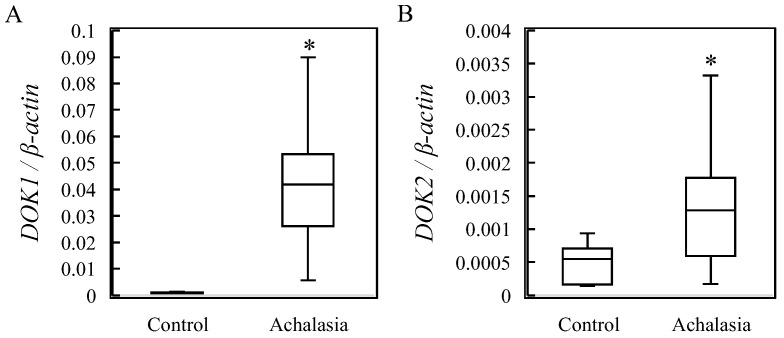 Figure 1
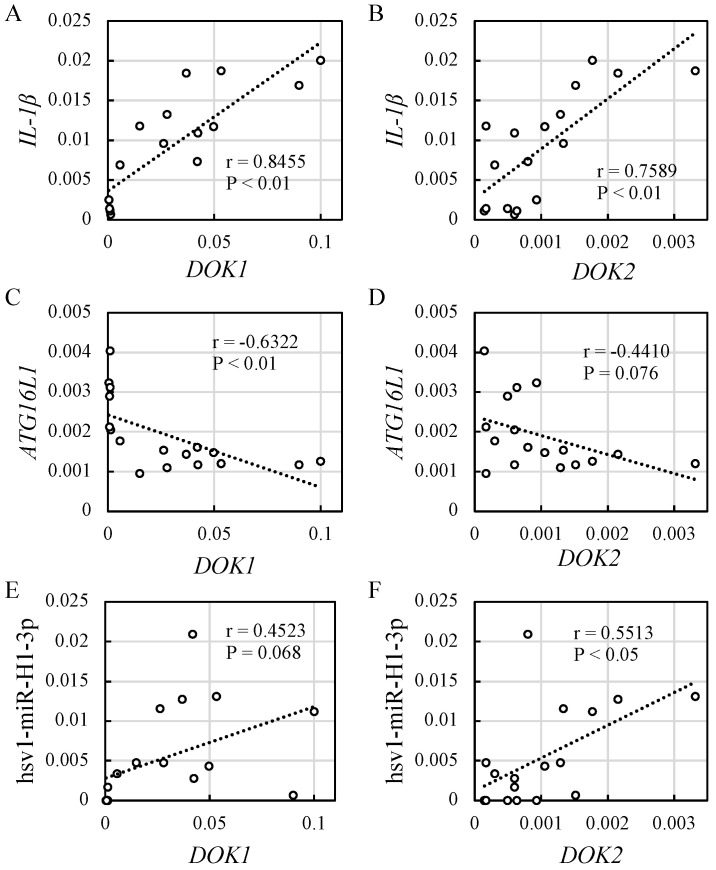 Figure 2
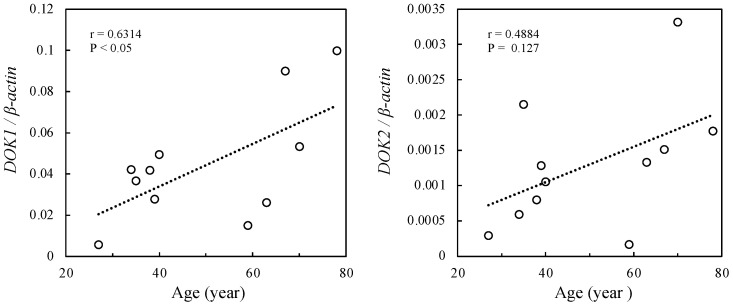 Figure 3
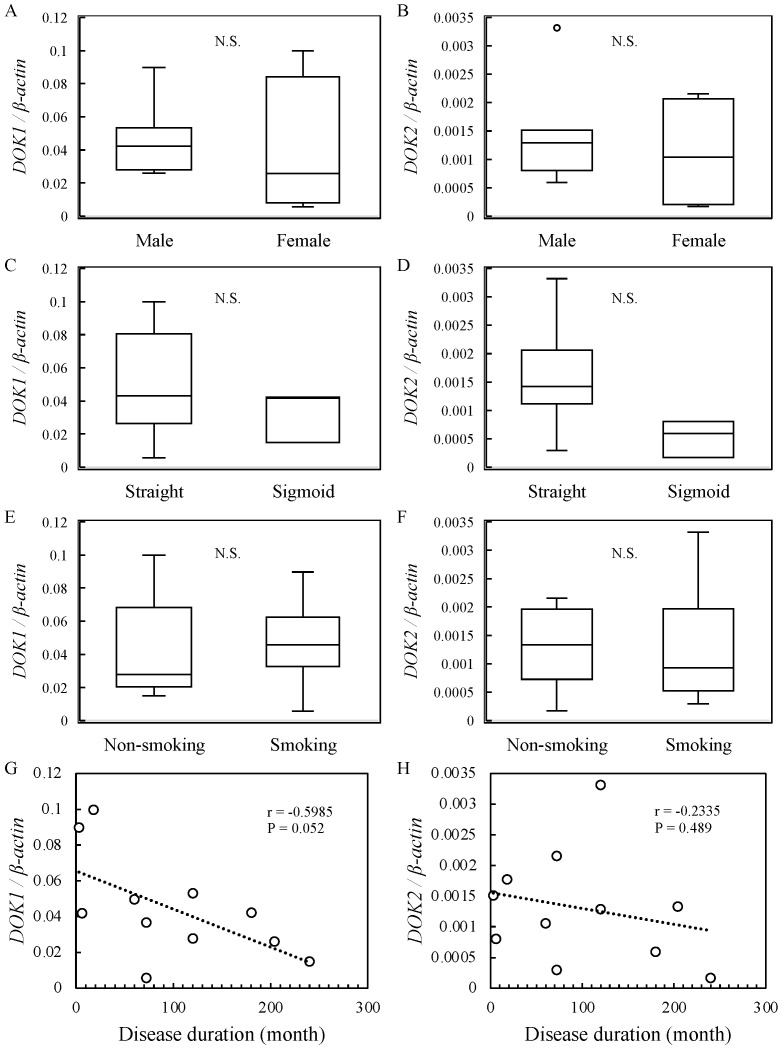 Figure 4
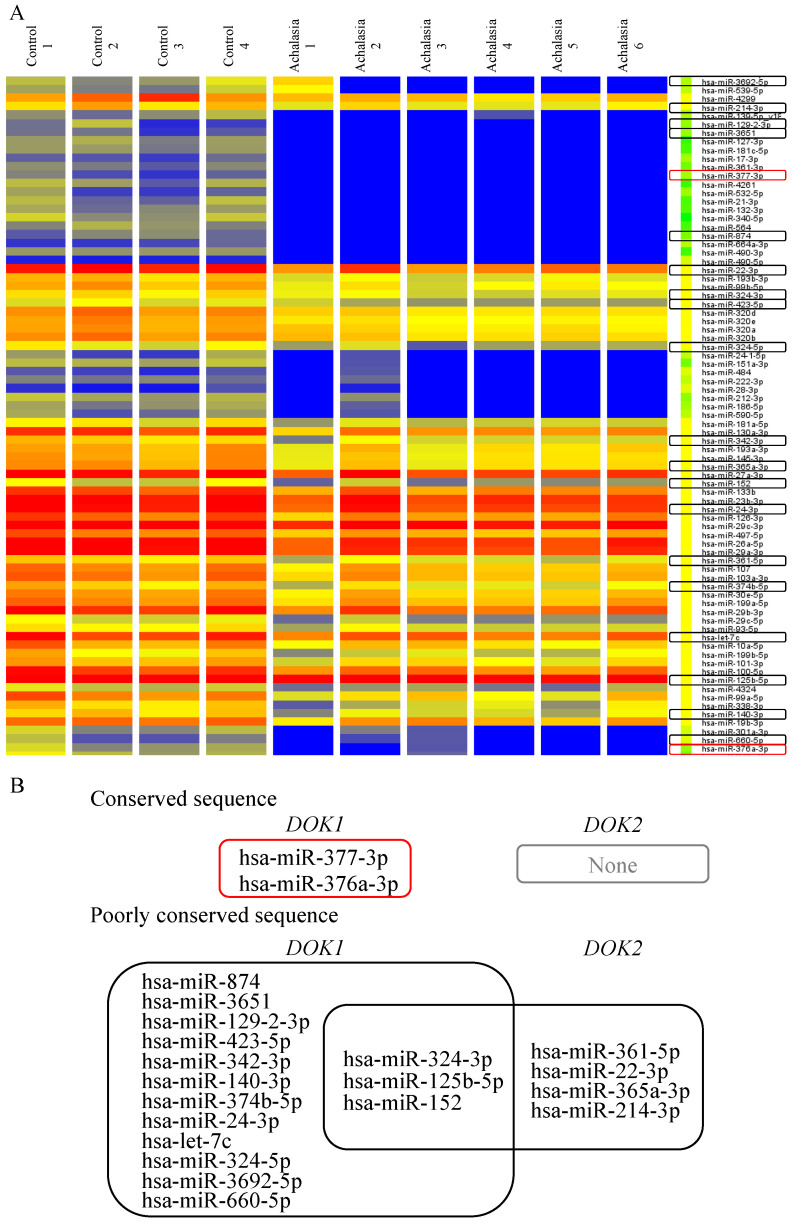 Figure 5
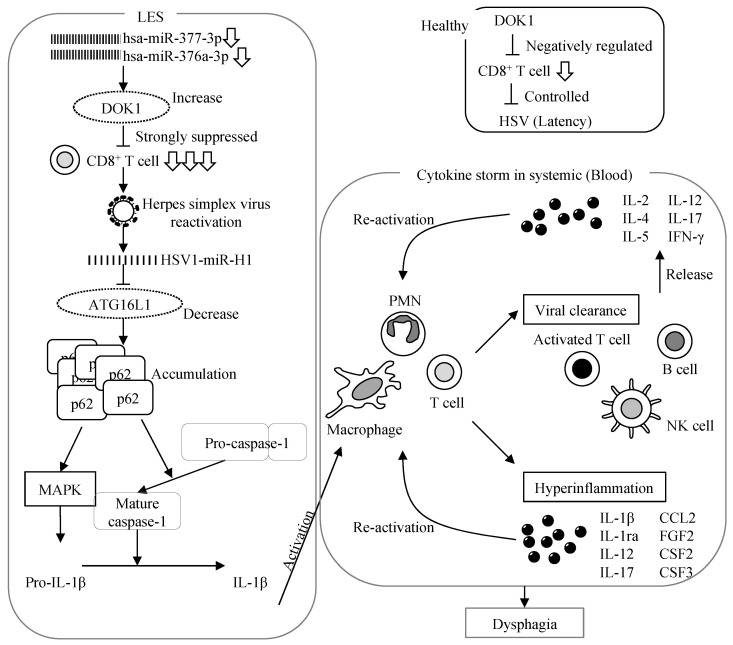 Figure 6
Peer Reviews
No public reviews on file for this paper yet. If you reviewed it on a platform where reviews are public (OpenReview, ICLR, NeurIPS, ICML), you can paste yours below so the community can read it here.
Videos
No videos yet. Explain this paper in a talk, walkthrough, or lecture? Add one.
Taxonomy
TopicsGastroesophageal reflux and treatments · Eosinophilic Esophagitis · Esophageal and GI Pathology