Determination of Triacylglycerol Composition in Mealworm Oil (Tenebrio molitor) via Electrospray Ionization Tandem Mass Spectrometry with Multiple Neutral Loss Scans
Seongeung Lee, Minkyoung Kim, Hyeokjun Cho, Gyeong-Hwen Lee

TL;DR
This study identifies and quantifies triacylglycerols in mealworm oil using advanced mass spectrometry techniques, revealing key fatty acid compositions and their potential health benefits.
Contribution
The study introduces an efficient method using ESI-MS/MS with multiple neutral loss scans for accurate TAG analysis in mealworm oil.
Findings
57 triacylglycerols were identified, with C52:2, C52:3, and C54:4 being the most abundant.
Mealworm oil shows stronger resistance to oxidative stress compared to other vegetable oils.
The oil's composition includes palmitic, oleic, and linoleic acids as major fatty acids.
Abstract
Mealworms are edible insects that are used as food ingredients because nearly all of their edible sections are lipid and protein sources that humans can consume. Triacylglycerols are significant energy sources and the main components of mealworm oil. Due to the composition of triacylglycerol being related in basic properties to oils, the determination of the triacylglycerol composition is important to understand oils. Our study used electrospray ionization tandem mass spectrometry with multiple neutral loss scans to analyze the content and composition of triacylglycerol in mealworm oil. The acquired scan data were deconvoluted to minimize isotopic interference. Additionally, the validation parameters showed relatively good results. The mealworm oil mainly contained triacylglycerol possessing palmitic acid, oleic acid and linoleic acid. The influence of triacylglycerol on mealworm oil is…
Genes, proteins, chemicals, diseases, species, mutations and cell lines named across the full text — each resolved to its canonical identifier and authoritative record.
Click any figure to enlarge with its caption.
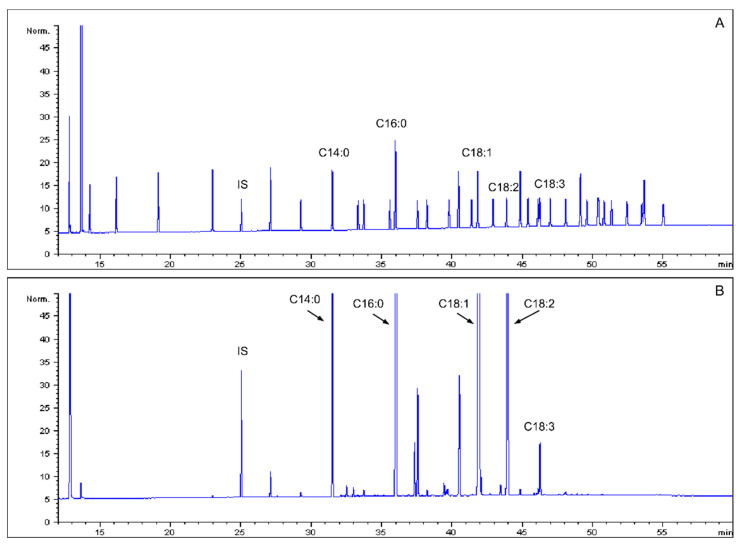 Figure 1
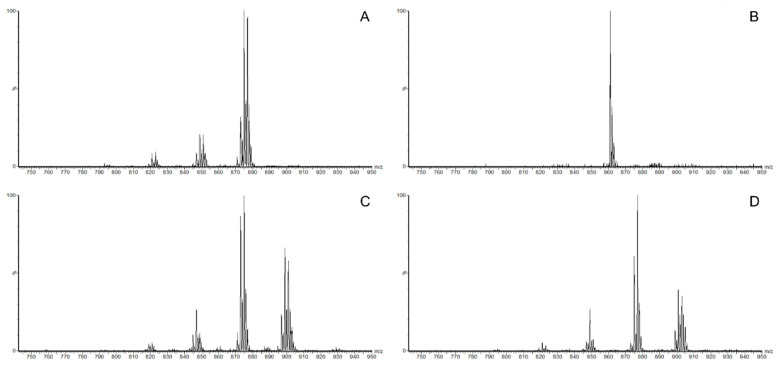 Figure 2
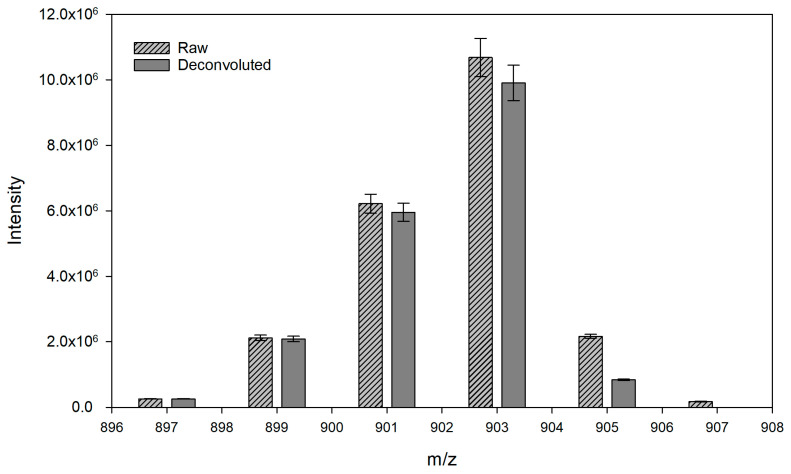 Figure 3
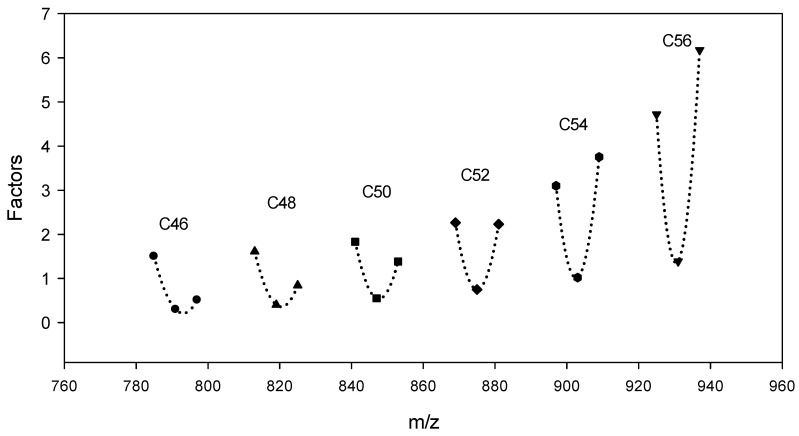 Figure 4
Peer Reviews
No public reviews on file for this paper yet. If you reviewed it on a platform where reviews are public (OpenReview, ICLR, NeurIPS, ICML), you can paste yours below so the community can read it here.
Videos
No videos yet. Explain this paper in a talk, walkthrough, or lecture? Add one.
Taxonomy
TopicsInsect Utilization and Effects · Meat and Animal Product Quality · Protein Hydrolysis and Bioactive Peptides