AKT, p-AKT, ERK1/2 and p-ERK1/2 in Mural Granulosa Cells Are Not Correlated to Different Ovarian Stimulation Protocols in Patients Undergoing Assisted Reproductive Treatment
Giovanni Ruvolo, Domenica Matranga, Maria Magdalena Barreca, Liana Bosco

TL;DR
This study found that certain cell signaling markers in granulosa cells are not affected by different fertility treatment protocols and differ from cumulus cells.
Contribution
The study is the first to show that cumulus and mural granulosa cells have different molecular marker levels in the same follicle.
Findings
No significant differences in AKT, p-AKT, ERK1/2, and p-ERK1/2 levels were found between two ovarian stimulation protocols.
Mural granulosa cells showed different molecular marker levels compared to cumulus cells in the same follicle.
The study suggests that cumulus and granulosa cells should be analyzed separately for oocyte competence.
Abstract
(1) Background: In this paper we aim to study the relationship between the expression levels of molecules involved in apoptotic/survival pathways, considered as molecular markers of oocyte competence (i.e., AKT, p-AKT, ERK1/2, and p-ERK1/2) in mural granulosa cells (MGCs) and the administration of r-FSH alone or combined with exogenous r-LH, in ovarian stimulation protocol. Moreover, we aim to evaluate oocyte competence by comparing normally cleaved embryos that were transferred in the uterus, with embryos that were arrested during in vitro culture. (2) Methods: The study included 34 normo-responder women undergoing ICSI procedures. All subjects were divided into two groups. Group A consisted of 18 women stimulated with r-FSH and used as a control group; Group B consisted of 14 women stimulated with r-FSH combined with r-LH. The MGCs were obtained from individual follicles. Immunoblot…
Genes, proteins, chemicals, diseases, species, mutations and cell lines named across the full text — each resolved to its canonical identifier and authoritative record.
Click any figure to enlarge with its caption.
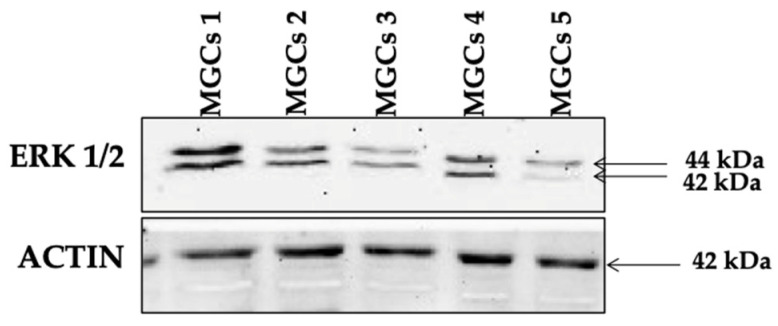 Figure 1
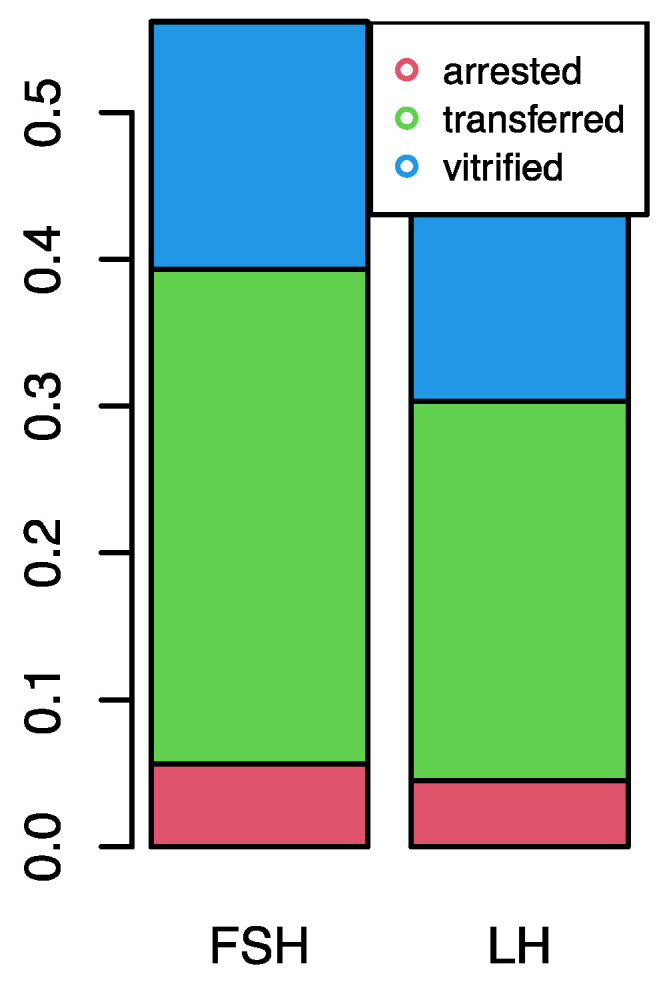 Figure 2
Peer Reviews
No public reviews on file for this paper yet. If you reviewed it on a platform where reviews are public (OpenReview, ICLR, NeurIPS, ICML), you can paste yours below so the community can read it here.
Videos
No videos yet. Explain this paper in a talk, walkthrough, or lecture? Add one.
Taxonomy
TopicsReproductive Biology and Fertility · Ovarian function and disorders · Sperm and Testicular Function