Study on the Characteristics of Coarse Feeding Tolerance of Ding’an Pigs: Phenotypic and Candidate Genes Identification
Yanxia Song, Mingming Xue, Feng Wang, Qiguo Tang, Yabiao Luo, Meili Zheng, Yubei Wang, Pengxiang Xue, Ningqi Dong, Ruiping Sun, Meiying Fang

TL;DR
This study identifies genetic factors that allow Ding’an pigs to tolerate coarse diets better than other pig breeds, potentially aiding in breeding and feed strategies.
Contribution
The study identifies novel candidate genes and pathways associated with coarse feeding tolerance in Ding’an pigs through transcriptomic analysis.
Findings
Ding’an pigs showed no reduction in meat quality traits when fed high crude fiber diets, unlike DLY pigs.
Transcriptomic analysis identified 65 and 482 candidate genes related to coarse feeding tolerance in Ding’an pigs.
Four key candidate genes (LDHB, MLC1, LSG1, ESM1) were highlighted as potentially regulating coarse feeding tolerance.
Abstract
Ding’an (DA) pig, a prominent local breed in Hainan Province, exhibits notable advantages in coarse feeding tolerance and high-quality meat. To explore the potential genetic mechanism of coarse feeding tolerance in DA pigs, 60-day-old full sibling pairs of DA and DLY (Duroc-Landrace-Yorkshire) pigs were subjected to fed normal (5%) and high (10%) crude fiber diets for 56 days, respectively. The findings showed that increasing the crude fiber level had no impact on the apparent digestibility of crude fiber, intramuscular fat, and marbling scores in DA pigs, whereas these factors were significantly reduced in DLY pigs (p < 0.05). Through differential expression analysis and Weighted Gene Co-expression Network Analysis (WGCNA) of the colonic mucosal transcriptome data, 65 and 482 candidate genes with coarse feeding tolerance in DA pigs were identified, respectively. Joint analysis screened…
Genes, proteins, chemicals, diseases, species, mutations and cell lines named across the full text — each resolved to its canonical identifier and authoritative record.
Click any figure to enlarge with its caption.
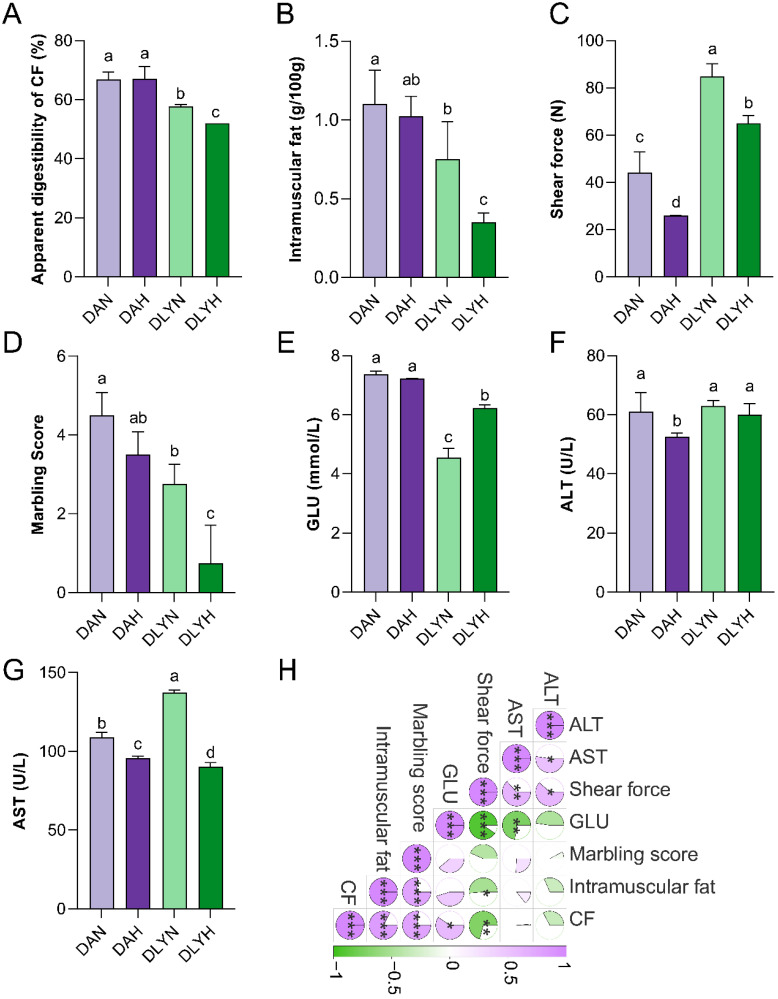 Figure 1
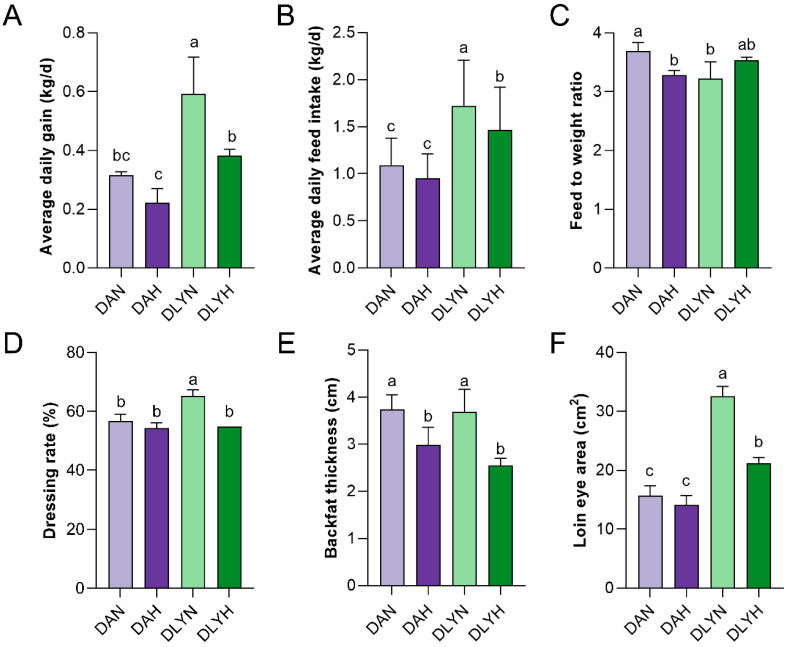 Figure 2
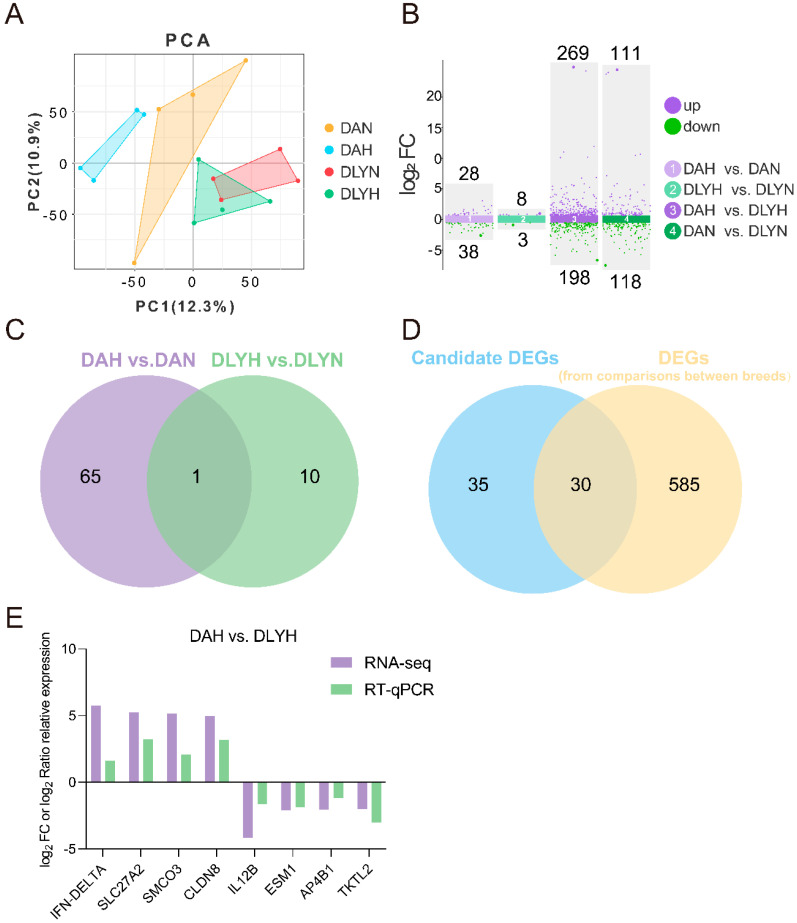 Figure 3
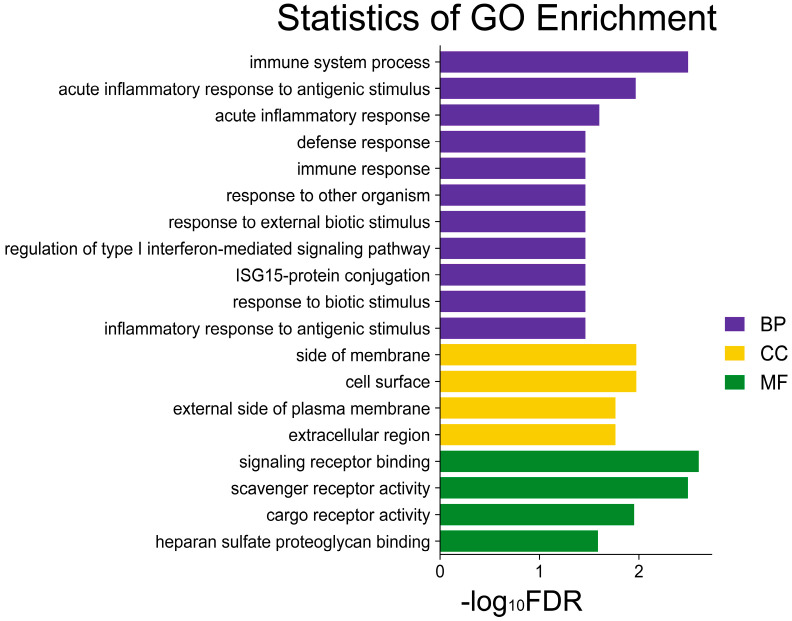 Figure 4
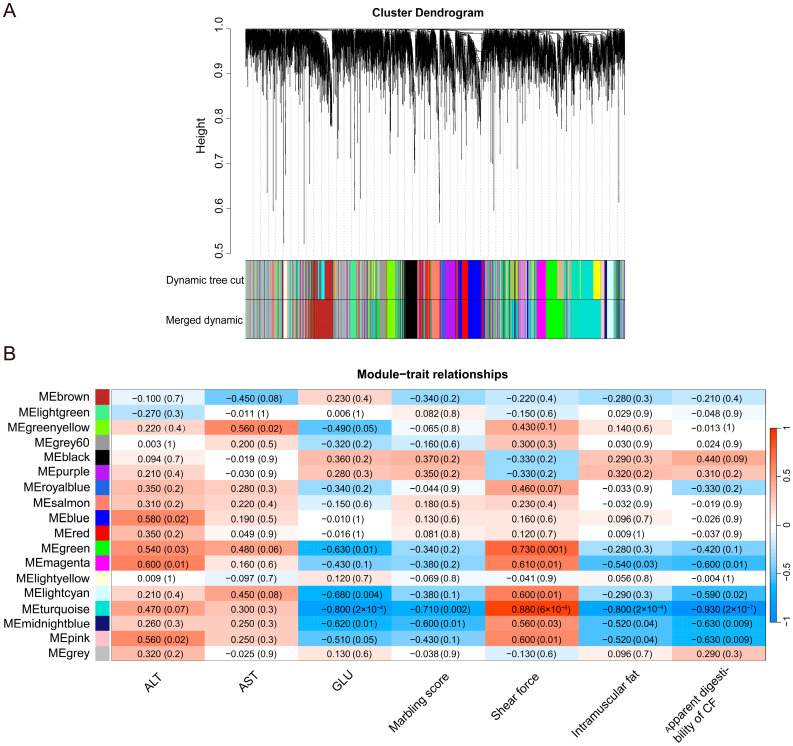 Figure 5
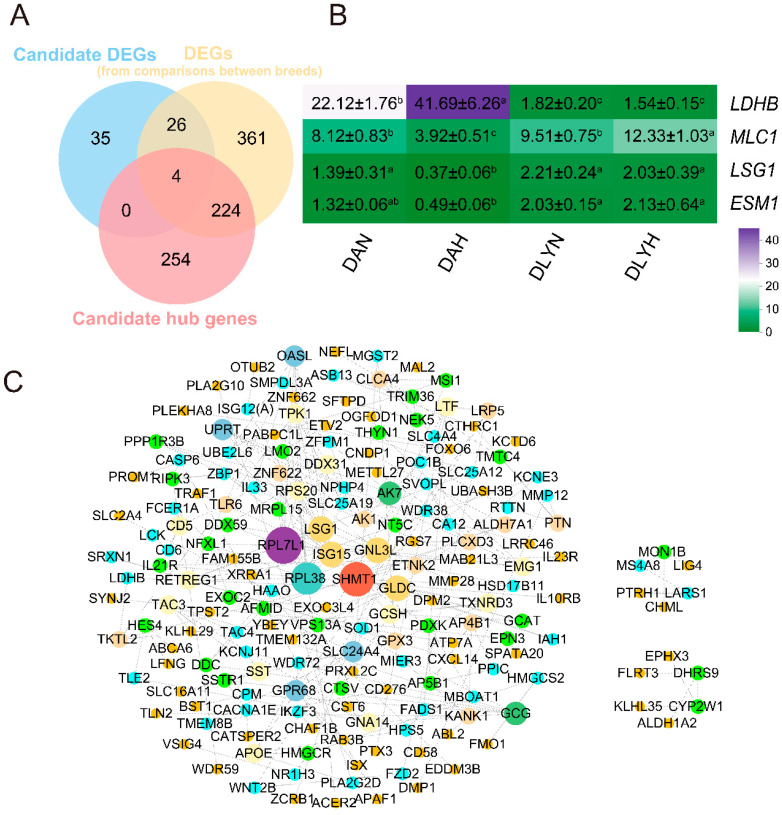 Figure 6
Peer Reviews
No public reviews on file for this paper yet. If you reviewed it on a platform where reviews are public (OpenReview, ICLR, NeurIPS, ICML), you can paste yours below so the community can read it here.
Videos
No videos yet. Explain this paper in a talk, walkthrough, or lecture? Add one.
Taxonomy
TopicsGenetic and phenotypic traits in livestock · Animal Nutrition and Physiology · Genetic Mapping and Diversity in Plants and Animals