Effects of Oxytocin Receptor Agonism on Acquisition and Expression of Pair Bonding in Male Prairie Voles
Andrey Ryabinin, Michael Johnson, Jonathan Zweig, Yangmiao Zhang, Louis Nunez, Olga Ryabinina, Marcel Hibert

TL;DR
This study explores how a specific oxytocin receptor agonist affects the formation and expression of social bonds in male prairie voles.
Contribution
The study introduces a brain-penetrant oxytocin receptor agonist and reveals its phase-dependent effects on pair bonding.
Findings
LIT-001 facilitated the acquisition of partner preference when administered before cohabitation.
LIT-001 inhibited partner preference when administered after a 4-hour cohabitation.
The agonist's effects depend on the phase of social attachment and not on baseline differences.
Abstract
There is much interest in targeting the activity in the oxytocin system to regulate social bonding. However, studies with exogenous administration of oxytocin face the caveats of its low stability, poor brain permeability and insufficient receptor specificity. The use of a small-molecule oxytocin receptor-specific agonist could overcome these caveats. Prior to testing the potential effects of a brain-penetrant oxytocin receptor agonist in clinical settings, it is important to assess how such an agonist would affect social bonds in animal models. The facultatively monogamous prairie voles (Microtus ochrogaster), capable of forming long-term social attachments between adult individuals, are an ideal rodent model for such testing. Therefore, in a series of experiments we investigated the effects of the recently developed oxytocin receptor-specific agonist LIT-001 on the acquisition and…
Genes, proteins, chemicals, diseases, species, mutations and cell lines named across the full text — each resolved to its canonical identifier and authoritative record.
Click any figure to enlarge with its caption.
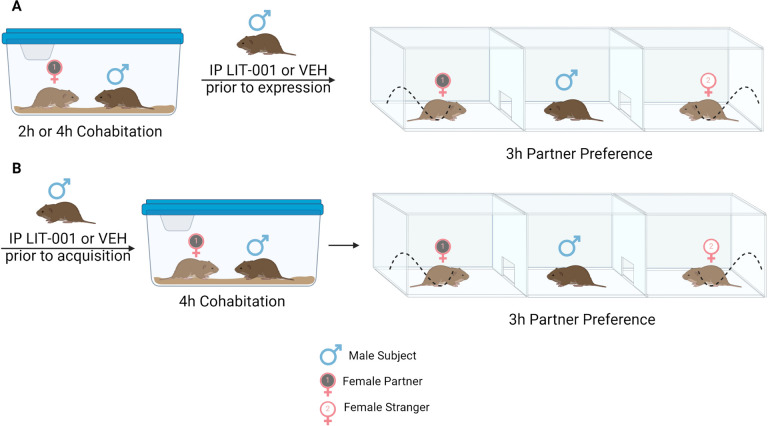 Figure 1
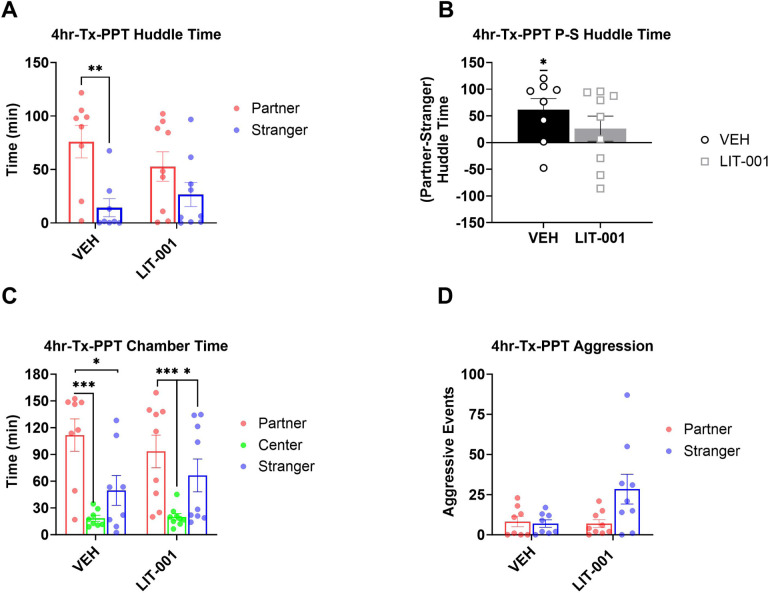 Figure 2
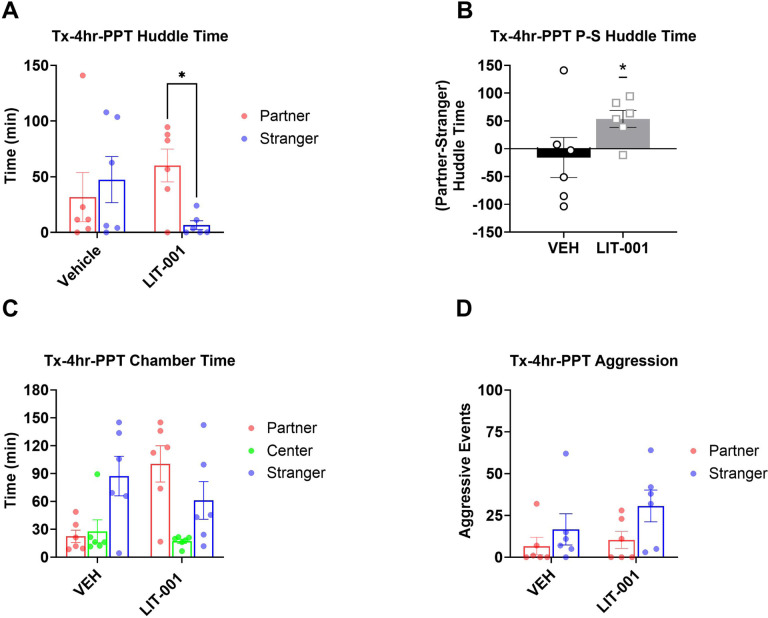 Figure 3
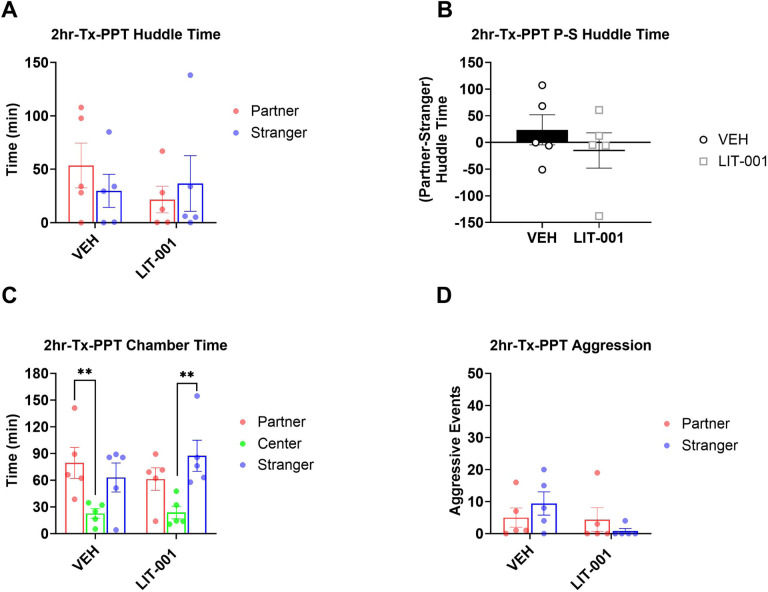 Figure 4
Peer Reviews
No public reviews on file for this paper yet. If you reviewed it on a platform where reviews are public (OpenReview, ICLR, NeurIPS, ICML), you can paste yours below so the community can read it here.
Videos
No videos yet. Explain this paper in a talk, walkthrough, or lecture? Add one.
Taxonomy
TopicsNeuroendocrine regulation and behavior · Evolutionary Psychology and Human Behavior · Attachment and Relationship Dynamics