Towards Early Diagnosis and Screening of Alzheimer’s Disease Using Frequency Locked Whispering Gallery Mode Microtoroid Biosensors
Adley Gin, Phuong-Diem Nguyen, Geidy Serrano, Gene Alexander, Judith Su

TL;DR
This paper introduces a new biosensor that can detect Alzheimer’s disease biomarkers in cerebrospinal fluid with high accuracy, potentially enabling earlier diagnosis.
Contribution
The first demonstration of using FLOWER biosensors for quantifying Aβ42 in CSF with better diagnostic performance than ELISA.
Findings
FLOWER achieved an AUC of 0.92 for detecting Aβ42 in CSF, outperforming ELISA (AUC = 0.82).
FLOWER could distinguish between control and MCI samples, indicating potential for early detection.
The method shows promise for screening CSF for Alzheimer’s pathology with high sensitivity.
Abstract
Alzheimer’s disease (AD) is a progressive form of dementia affecting almost 55 million people worldwide. It is characterized by the abnormal deposition of amyloid plaques and neurofibrillary tangles within the brain, leading to a pathological cascade of neuron degeneration and death as well as memory loss and cognitive decline. Amyloid beta (Aβ) is an AD biomarker present in cerebrospinal fluid and blood serum and correlates with the presence of amyloid plaques and tau tangles in the brain. Measuring the levels of Aβ can help with early diagnosis of AD, which is key for studying novel AD drugs and delaying the symptoms of dementia. However, this goal is difficult to achieve due to the low levels of AD biomarkers in biofluids. Here we demonstrate for the first time the use of FLOWER (frequency locked optical whispering evanescent resonator) for quantifying the levels of post-mortem…
Genes, proteins, chemicals, diseases, species, mutations and cell lines named across the full text — each resolved to its canonical identifier and authoritative record.
Click any figure to enlarge with its caption.
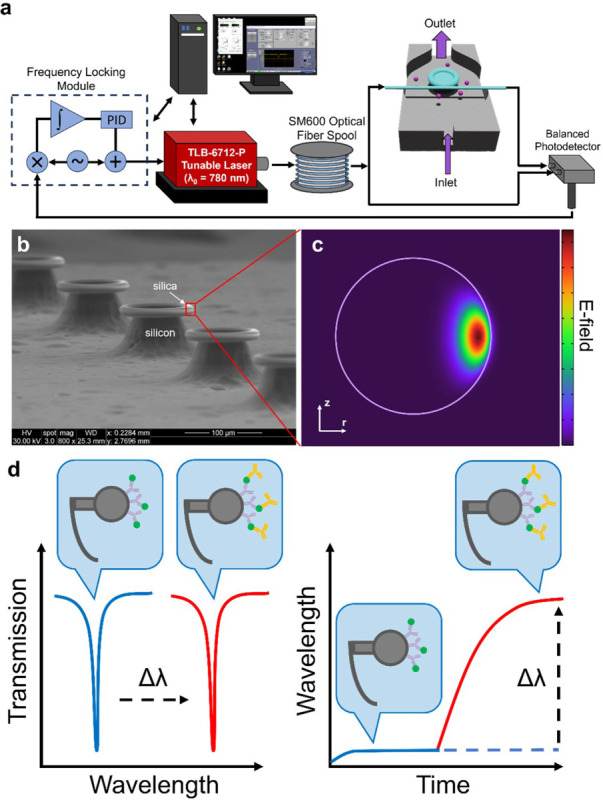 Figure 1
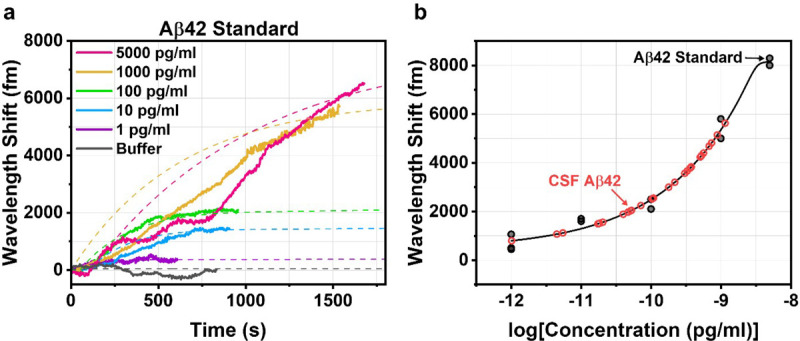 Figure 2
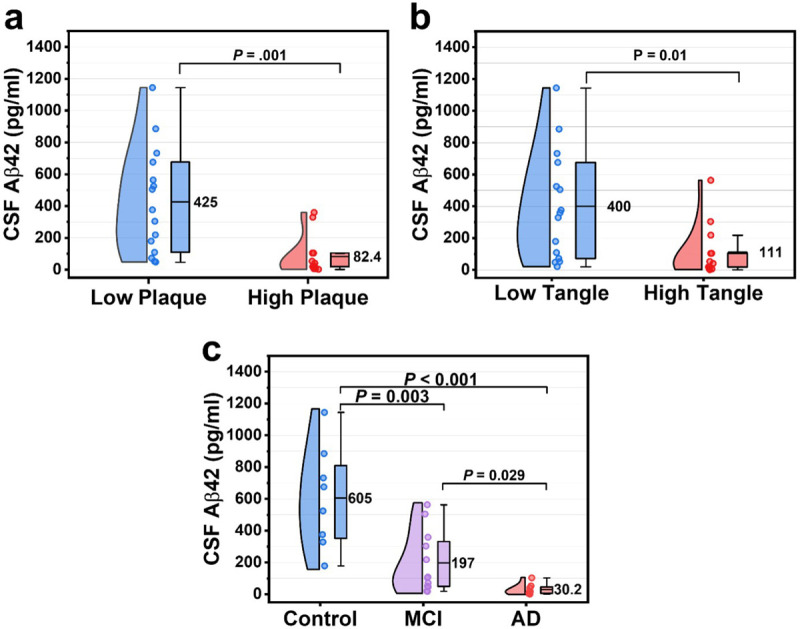 Figure 3
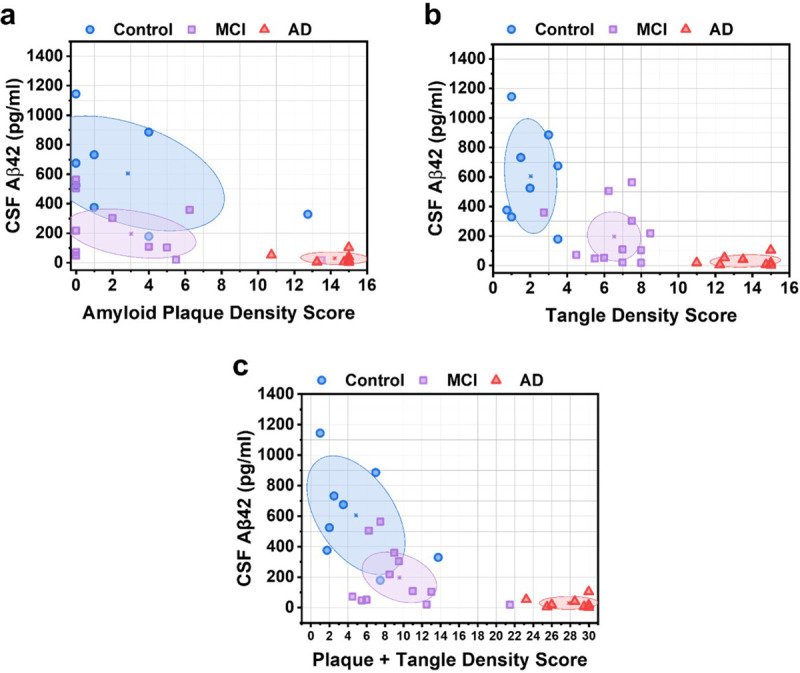 Figure 4
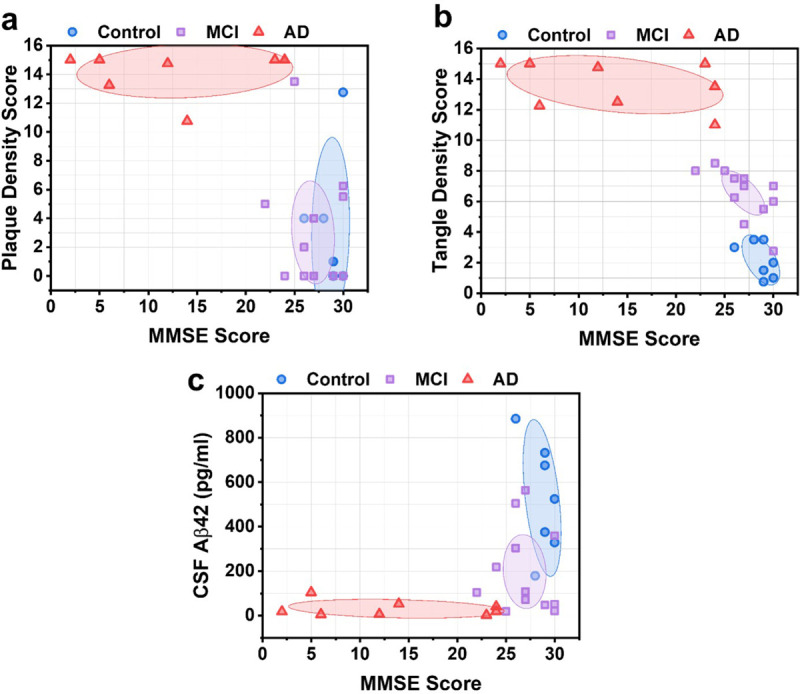 Figure 5
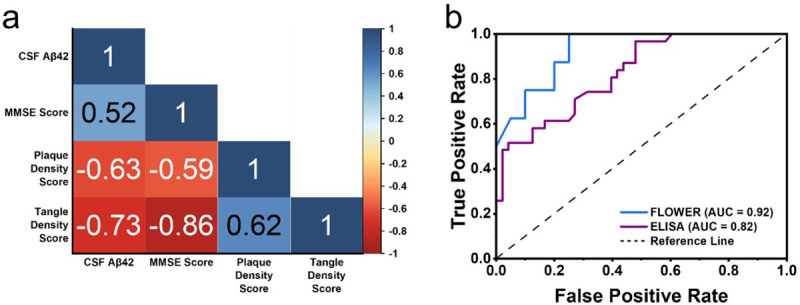 Figure 6
Peer Reviews
No public reviews on file for this paper yet. If you reviewed it on a platform where reviews are public (OpenReview, ICLR, NeurIPS, ICML), you can paste yours below so the community can read it here.
Videos
No videos yet. Explain this paper in a talk, walkthrough, or lecture? Add one.
Taxonomy
TopicsAdvanced Biosensing Techniques and Applications · Alzheimer's disease research and treatments · Fractal and DNA sequence analysis