Eminent Antimicrobial Peptide Resistance in Zymomonas mobilis: A Novel Advantage of Intrinsically Uncoupled Energetics
Reinis Rutkis, Zane Lasa, Marta Rubina, Inese Strazdina, Uldis Kalnenieks

TL;DR
Zymomonas mobilis shows high resistance to antimicrobial peptides due to its unique energy metabolism, offering insights for AMP production and resistance strategies.
Contribution
The study reveals a novel advantage of Z. mobilis's uncoupled energy metabolism in conferring AMP resistance.
Findings
Zymomonas mobilis exhibits elevated resistance to antimicrobial peptides compared to Escherichia coli.
The resistance is attributed to its uncoupled energy metabolism, which is less affected by AMPs.
This resistance could be useful for AMP production and developing resistance strategies in clinical settings.
Abstract
Relative to several model bacteria, the ethanologenic bacterium Zymomonas mobilis is shown here to have elevated resistance to exogenous antimicrobial peptides (AMPs)— with regard to both peptide bulk concentration in the medium and the numbers of peptide molecules per cell. By monitoring the integration of AMPs in the bacterial cell membrane and observing the resulting effect on membrane energy coupling, it is concluded that the membranotropic effects of the tested AMPs in Z. mobilis and in Escherichia coli are comparable. The advantage of Z. mobilis over E. coli apparently results from its uncoupled mode of energy metabolism that, in contrast to E. coli, does not rely on oxidative phosphorylation, and hence, is less vulnerable to the disruption of its energy-coupling membrane by AMPs. It is concluded that the high resistance to antimicrobial peptides (AMPs) observed in Z. mobilis not…
Genes, proteins, chemicals, diseases, species, mutations and cell lines named across the full text — each resolved to its canonical identifier and authoritative record.
Click any figure to enlarge with its caption.
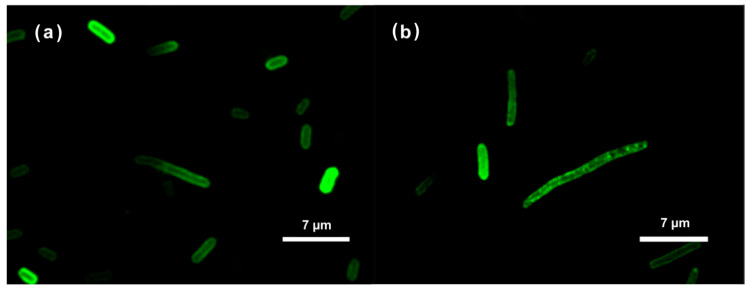 Figure 1
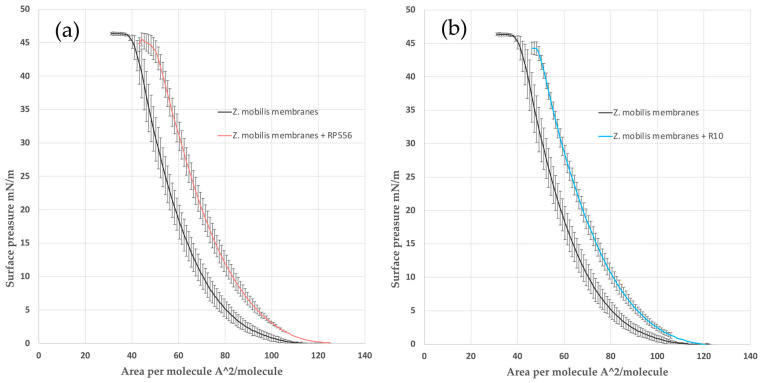 Figure 2
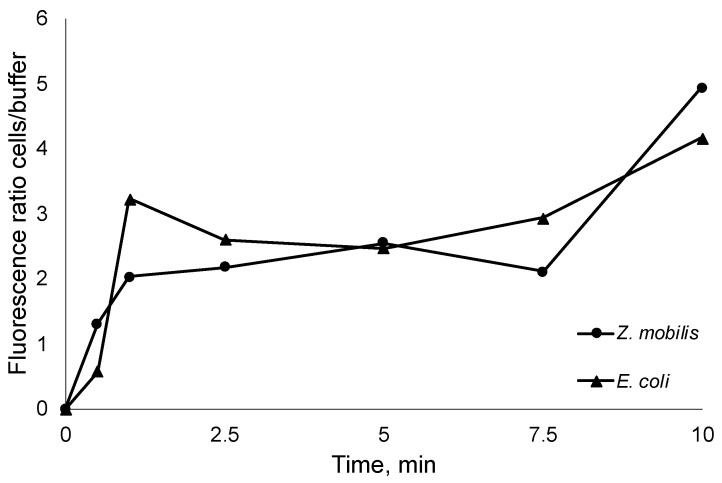 Figure 3
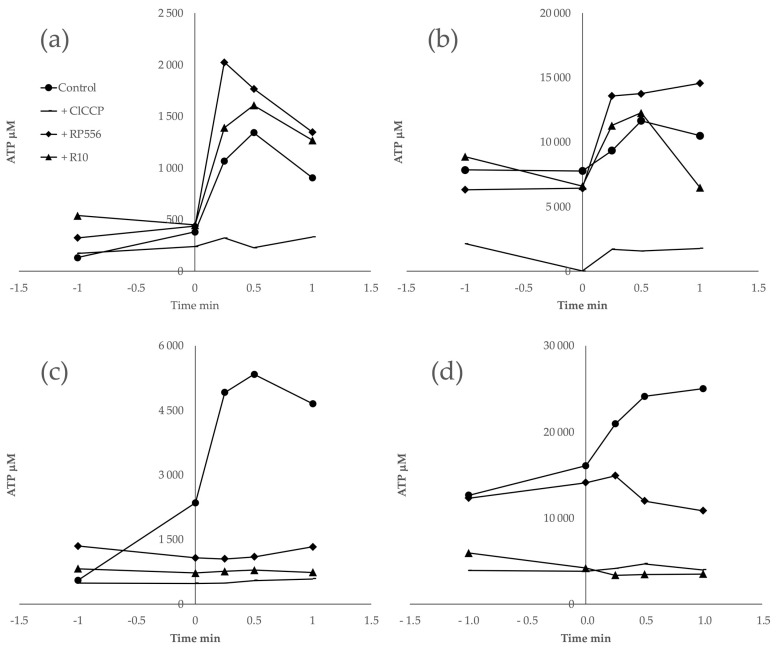 Figure 4
Peer Reviews
No public reviews on file for this paper yet. If you reviewed it on a platform where reviews are public (OpenReview, ICLR, NeurIPS, ICML), you can paste yours below so the community can read it here.
Videos
No videos yet. Explain this paper in a talk, walkthrough, or lecture? Add one.
Taxonomy
TopicsAntimicrobial Peptides and Activities · Protein Hydrolysis and Bioactive Peptides · Aquaculture disease management and microbiota