Efficacy of LSVT LOUD® on Phonatory Control and Voice Quality in Patients with Primary Progressive Apraxia of Speech: Case Studies
Yee Nam Candice Choi, Vincent Martel-Sauvageau, Myriam Breton, Monica Lavoie, Robert Laforce, Liziane Bouvier

TL;DR
This study explores whether LSVT LOUD® therapy can help people with a speech disorder called primary progressive apraxia of speech by improving their voice control and quality.
Contribution
This is the first study to evaluate LSVT LOUD® for phonatory control in patients with primary progressive apraxia of speech.
Findings
LSVT LOUD® therapy was feasible for patients with primary progressive apraxia of speech.
The therapy showed potential to improve voice quality, intensity, and control in some patients.
Results suggest possible generalization of treatment effects over time.
Abstract
Primary progressive apraxia of speech (PPAOS) is a neurodegenerative syndrome characterized by the progressive and initially isolated or predominant onset of difficulties in the planning/programming of movements necessary for speech production and can be accompanied by dysarthria. To date, no study has used an evidence-based treatment to address phonation control in patients with PPAOS. The aim of this study was to evaluate the feasibility and efficacy of LSVT LOUD® as a treatment for phonatory control in speakers with PPAOS. Three speakers with PPAOS received LSVT LOUD® therapy, and changes in phonatory control, voice quality and prosody were measured immediately, and one, four and eight weeks after the end of the treatment. Overall, the results suggest that the treatment is feasible and could improve voice quality, intensity, and control in some patients with PPAOS. The generalization…
Genes, proteins, chemicals, diseases, species, mutations and cell lines named across the full text — each resolved to its canonical identifier and authoritative record.
Click any figure to enlarge with its caption.
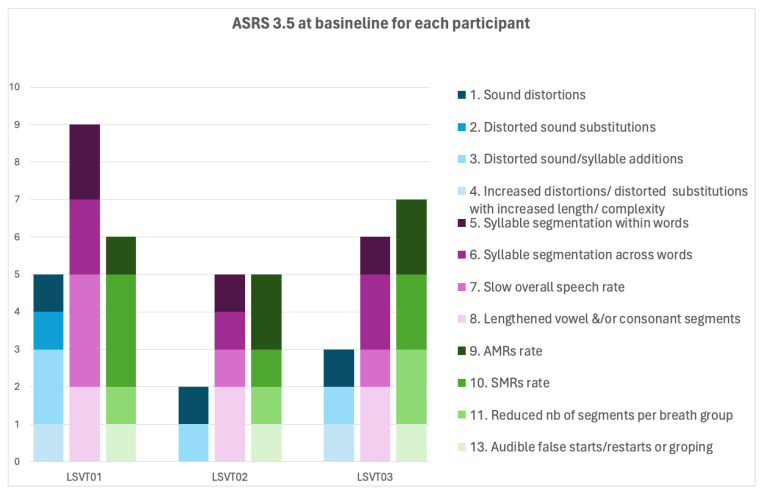 Figure 1
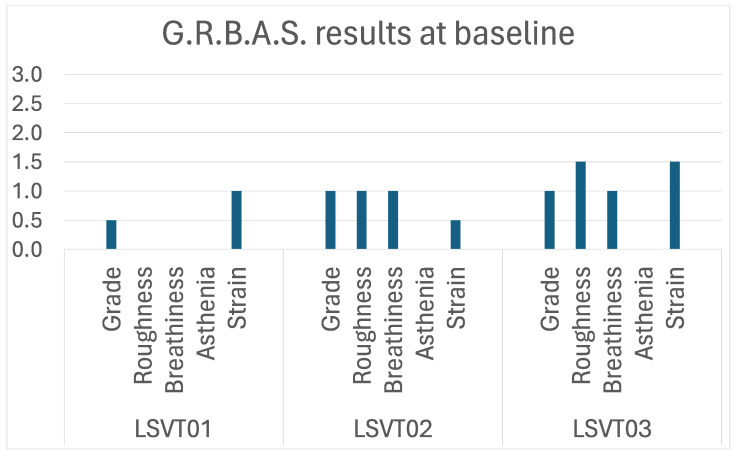 Figure 2
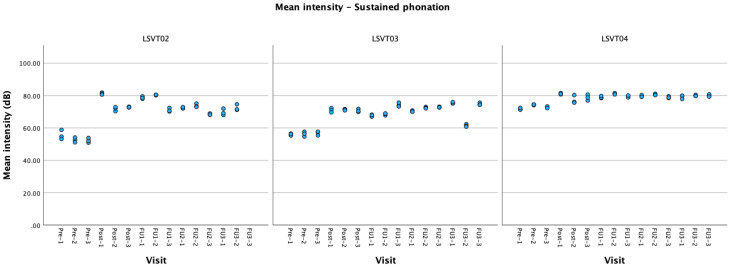 Figure 3
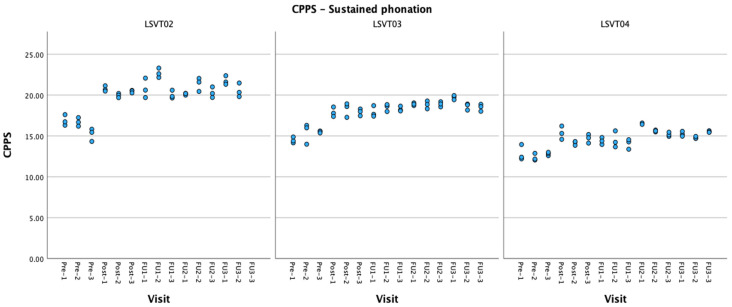 Figure 4
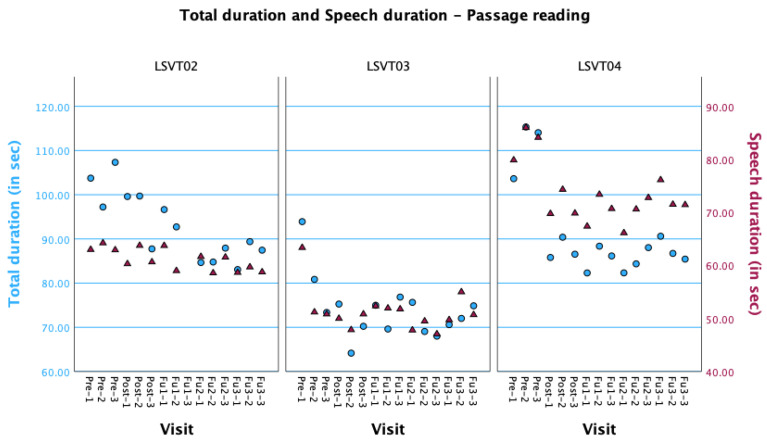 Figure 5
Peer Reviews
No public reviews on file for this paper yet. If you reviewed it on a platform where reviews are public (OpenReview, ICLR, NeurIPS, ICML), you can paste yours below so the community can read it here.
Videos
No videos yet. Explain this paper in a talk, walkthrough, or lecture? Add one.
Taxonomy
TopicsVoice and Speech Disorders · Language Development and Disorders · Stuttering Research and Treatment