Paired Primary and Recurrent Rhabdoid Meningiomas: Cytogenetic Alterations, BAP1 Gene Expression Profile and Patient Outcome
Patricia Alejandra Garrido Ruiz, Álvaro Otero Rodriguez, Luis Antonio Corchete, Victoria Zelaya Huerta, Alejandro Pasco Peña, Cristina Caballero Martínez, Joaquín González-Carreró Fojón, Inmaculada Catalina Fernández, Juan Carlos López Duque, Laura Zaldumbide Dueñas

TL;DR
This study compares genetic and clinical features of recurrent and non-recurrent rhabdoid meningiomas, finding distinct chromosomal patterns and BAP1 expression differences that may influence patient outcomes.
Contribution
The paper identifies specific cytogenetic alterations and BAP1 expression profiles in recurrent rhabdoid meningiomas that distinguish them from non-recurrent cases.
Findings
Recurrent rhabdoid meningiomas show higher genetic instability and chromosomal losses at 1p, 14q, 18, and 22 at diagnosis.
Non-recurrent tumors more frequently exhibit losses at 19p/q and gains at 20 and 21.
BAP1 loss increases from one-third at diagnosis to 100% in recurrences, and 17q22 gains are linked to deceased patients.
Abstract
Rhabdoid meningiomas are a rare subtype of (per definition) grade 3 meningiomas of unknown cause, with a heterogeneous clinical course and higher recurrence rates, even among tumors undergoing complete surgical removal, for whom early postoperative radiotherapy may favor local control of the disease and prolonged survival. Here, we compared the clinical, biological and genetic features (at diagnosis and in sequential tumor recurrences) of recurrent vs. non-recurrent rhabdoid meningiomas in a retrospective series of 15 patients with a long follow-up. Recurrent RM showed a higher genetic instability at diagnosis associated with multiple chromosomal losses involving chromosomes 1p, 14q, 18 and 22. Non-recurrent RM were genetically less complex tumors which more frequently showed extensive losses at chromosome 19p and/or 19q, together with gains of chromosomes 20 and 21. Comparison of…
Genes, proteins, chemicals, diseases, species, mutations and cell lines named across the full text — each resolved to its canonical identifier and authoritative record.
Click any figure to enlarge with its caption.
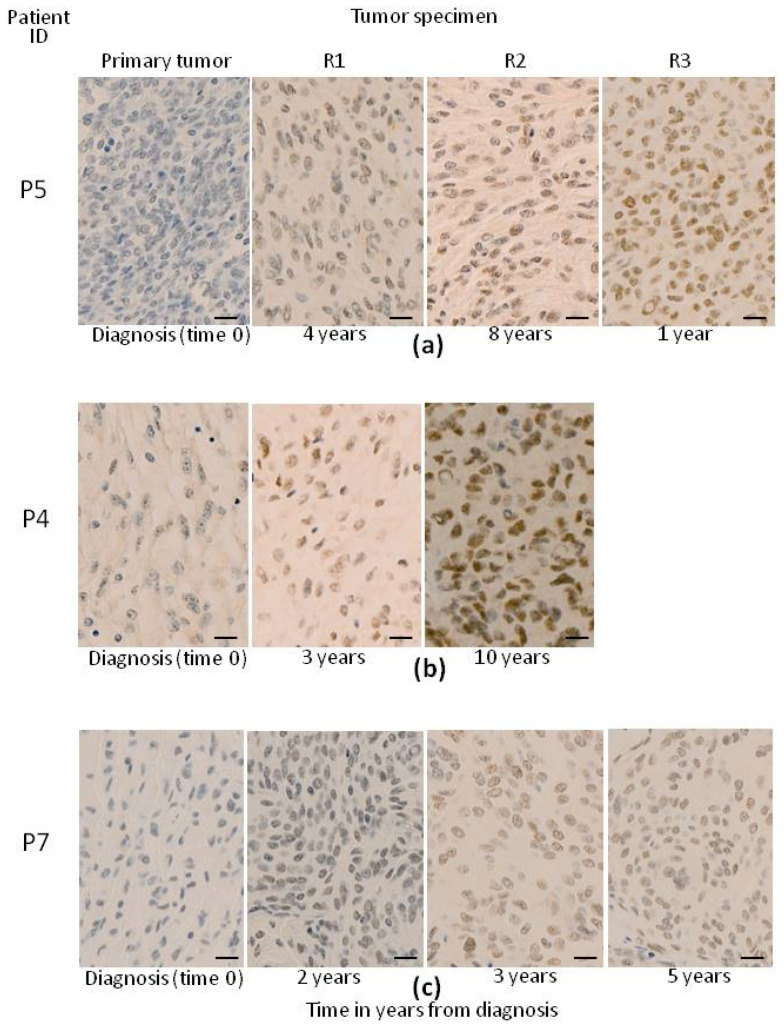 Figure 1
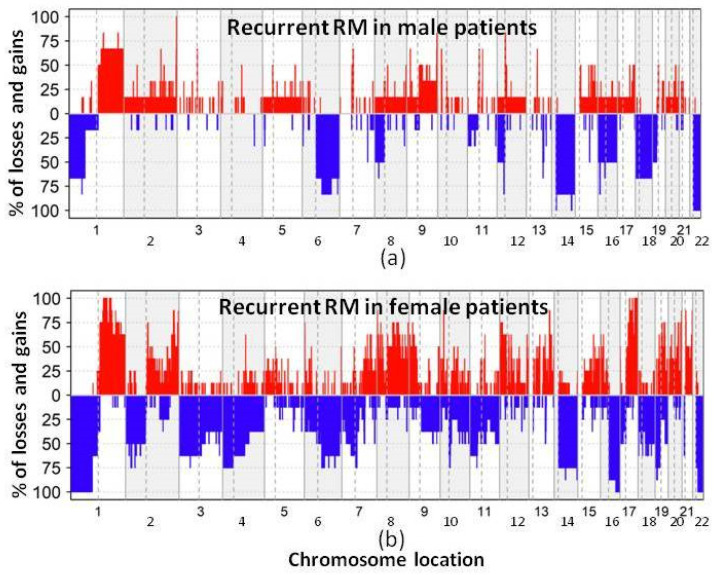 Figure 2
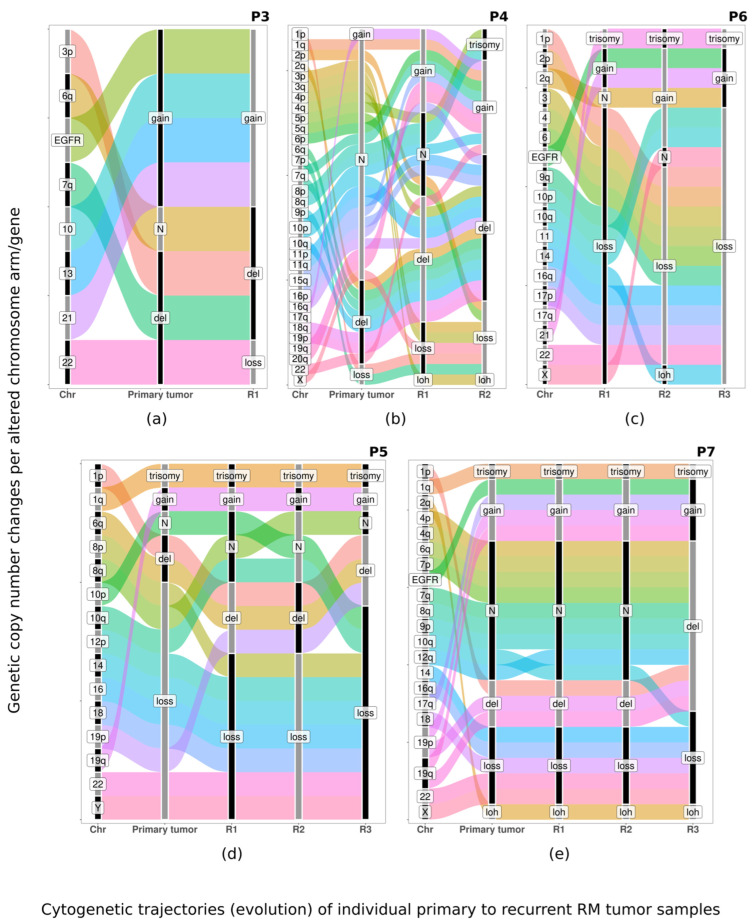 Figure 3
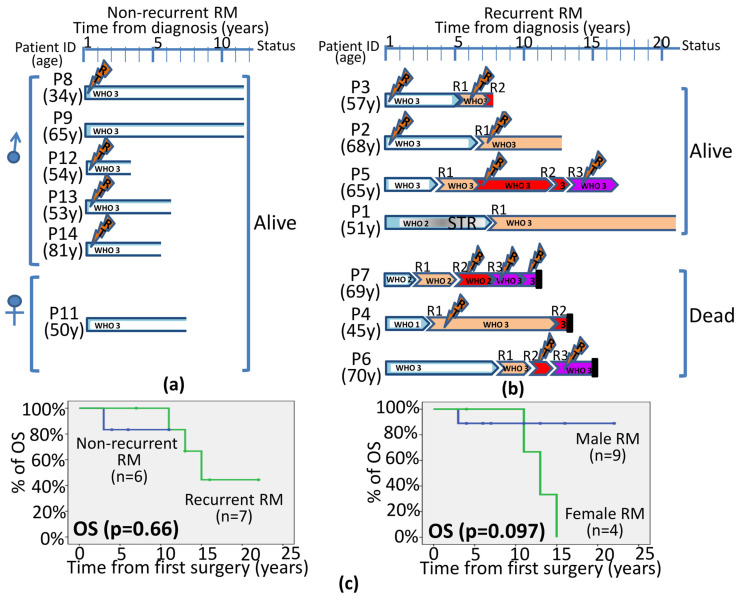 Figure 4
Peer Reviews
No public reviews on file for this paper yet. If you reviewed it on a platform where reviews are public (OpenReview, ICLR, NeurIPS, ICML), you can paste yours below so the community can read it here.
Videos
No videos yet. Explain this paper in a talk, walkthrough, or lecture? Add one.
Taxonomy
TopicsMeningioma and schwannoma management · Neurofibromatosis and Schwannoma Cases · Ocular Oncology and Treatments