SNP-Associated Substitutions of Amino Acid Residues in the dNTP Selection Subdomain Decrease Polβ Polymerase Activity
Olga A. Kladova, Timofey E. Tyugashev, Aleksandr A. Miroshnikov, Daria S. Novopashina, Nikita A. Kuznetsov, Aleksandra A. Kuznetsova

TL;DR
This study shows that certain amino acid changes in DNA polymerase β reduce its activity, potentially leading to increased DNA damage and cancer risk.
Contribution
The study identifies specific SNPs in Polβ that significantly impair its polymerase activity and DNA repair function.
Findings
Polβ variants G274R and R333W nearly eliminate gap-filling and primer elongation activities.
The substitutions reduce deoxynucleotide triphosphate binding and polymerization efficiency.
These variants may contribute to higher levels of unrepaired DNA damage.
Abstract
In the cell, DNA polymerase β (Polβ) is involved in many processes aimed at maintaining genome stability and is considered the main repair DNA polymerase participating in base excision repair (BER). Polβ can fill DNA gaps formed by other DNA repair enzymes. Single-nucleotide polymorphisms (SNPs) in the POLB gene can affect the enzymatic properties of the resulting protein, owing to possible amino acid substitutions. For many SNP-associated Polβ variants, an association with cancer, owing to changes in polymerase activity and fidelity, has been shown. In this work, kinetic analyses and molecular dynamics simulations were used to examine the activity of naturally occurring polymorphic variants G274R, G290C, and R333W. Previously, the amino acid substitutions at these positions have been found in various types of tumors, implying a specific role of Gly-274, Gly-290, and Arg-333 in Polβ…
Genes, proteins, chemicals, diseases, species, mutations and cell lines named across the full text — each resolved to its canonical identifier and authoritative record.
Click any figure to enlarge with its caption.
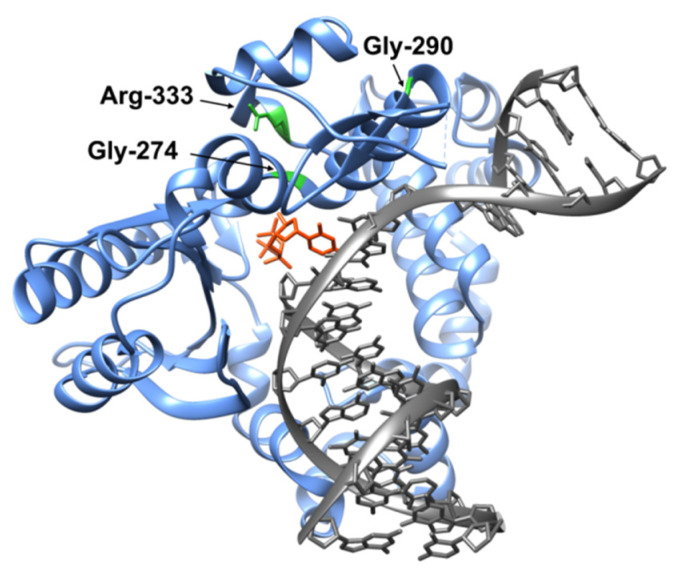 Figure 1
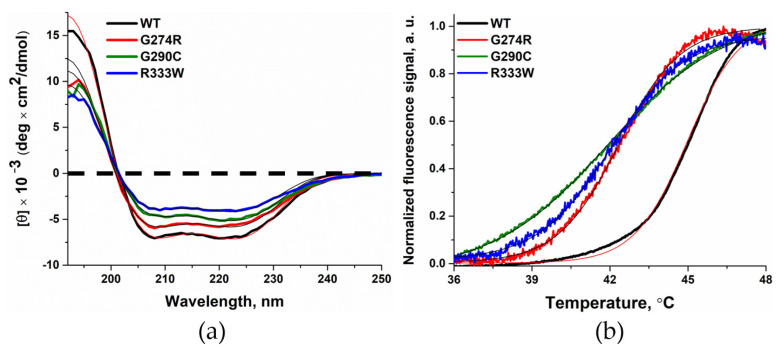 Figure 2
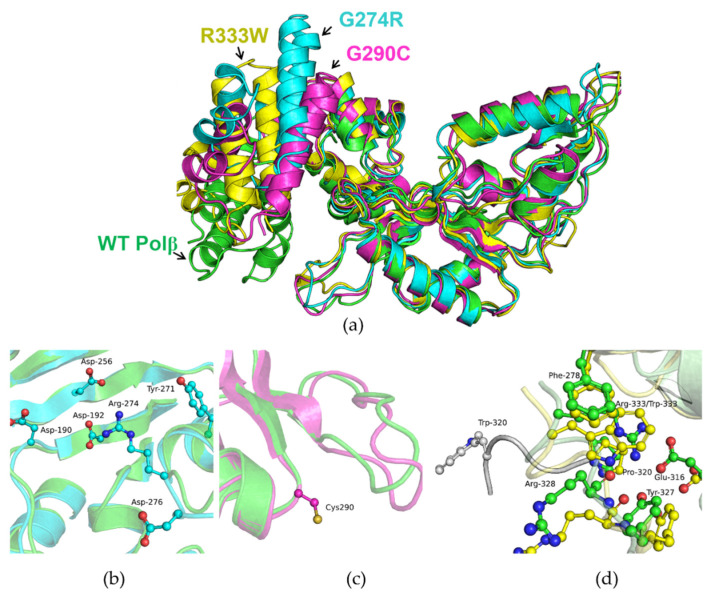 Figure 3
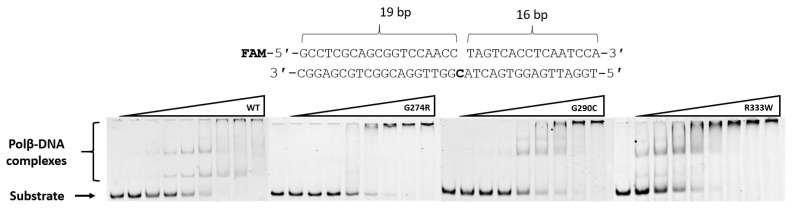 Figure 4
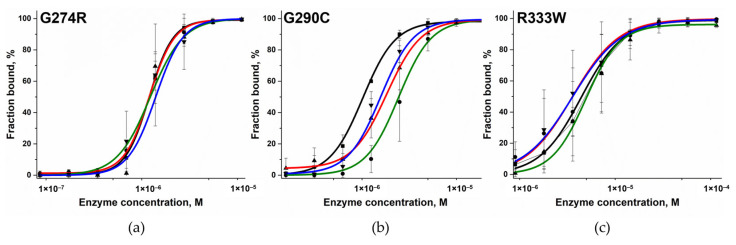 Figure 5
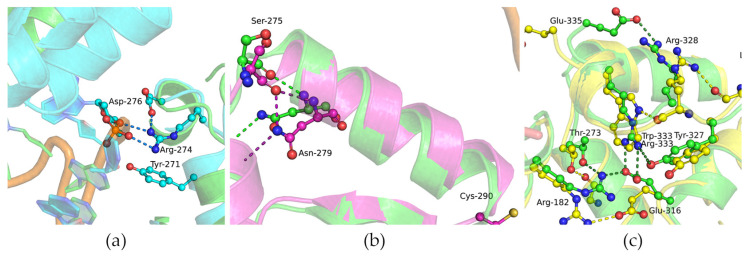 Figure 6
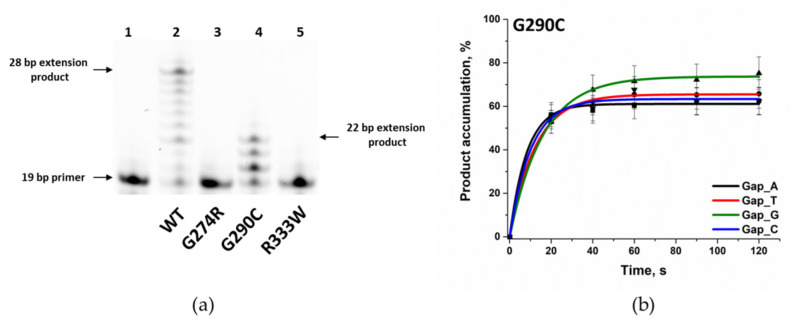 Figure 7
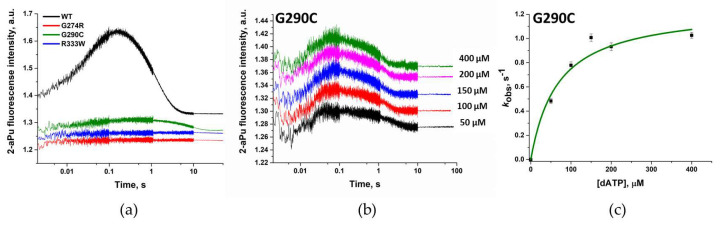 Figure 8
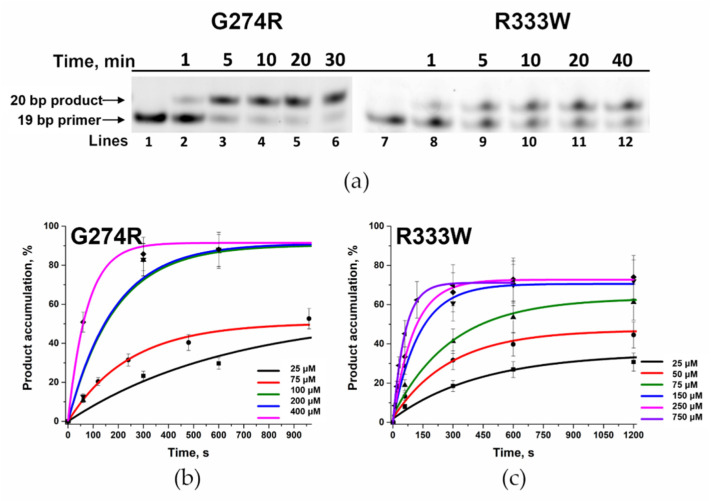 Figure 9
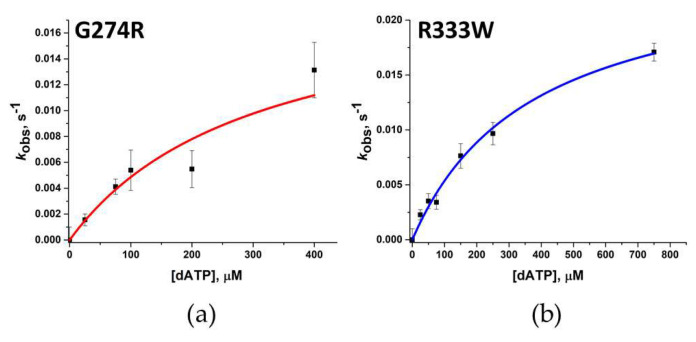 Figure 10
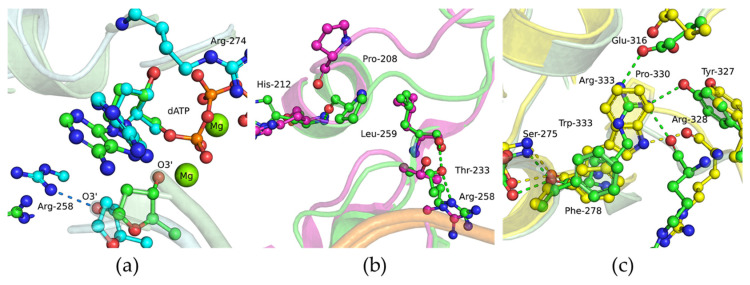 Figure 11
Peer Reviews
No public reviews on file for this paper yet. If you reviewed it on a platform where reviews are public (OpenReview, ICLR, NeurIPS, ICML), you can paste yours below so the community can read it here.
Videos
No videos yet. Explain this paper in a talk, walkthrough, or lecture? Add one.
Taxonomy
TopicsDNA Repair Mechanisms · Genetic factors in colorectal cancer · DNA and Nucleic Acid Chemistry