Sleep-Disordered Breathing, Advanced Age, and Diabetes Mellitus Are Associated with De Novo Atrial Fibrillation after Cardiac Surgery
Maria Tafelmeier, Sabrina Kuettner, Christian Hauck, Bernhard Floerchinger, Daniele Camboni, Marcus Creutzenberg, Florian Zeman, Christof Schmid, Lars Siegfried Maier, Stefan Wagner, Michael Arzt

TL;DR
This study shows that severe sleep-disordered breathing increases the risk of developing atrial fibrillation after heart surgery, especially in older patients with diabetes.
Contribution
The study identifies sleep-disordered breathing as a novel risk factor for postoperative atrial fibrillation after CABG surgery.
Findings
Severe SDB was associated with a 30% in-hospital POAF rate compared to 15% in non-SDB patients.
Age ≥ 65 years and diabetes mellitus were also independently linked to in-hospital POAF.
The association between SDB and POAF was weakened after adjusting for heart failure.
Abstract
Background: Postoperative de novo atrial fibrillation (POAF) is one of the most frequently encountered complications following cardiac surgery. Despite the identification of several risk factors, the link between sleep-disordered breathing (SDB) and POAF has barely been examined. The objective of this prospective observational study was to determine whether severe SDB is associated with POAF in patients after elective coronary artery bypass grafting (CABG) surgery. Study design and methods: The incidence and preoperative predictors of in-hospital POAF were assessed in 272 patients undergoing CABG surgery at the University Medical Center Regensburg (Germany). In-hospital POAF was detected by continuous telemetry-ECG monitoring and 12-lead resting ECGs within the first seven postoperative days. POAF that occurred after hospital discharge within 60 days post CABG surgery was classified as…
Genes, proteins, chemicals, diseases, species, mutations and cell lines named across the full text — each resolved to its canonical identifier and authoritative record.
Click any figure to enlarge with its caption.
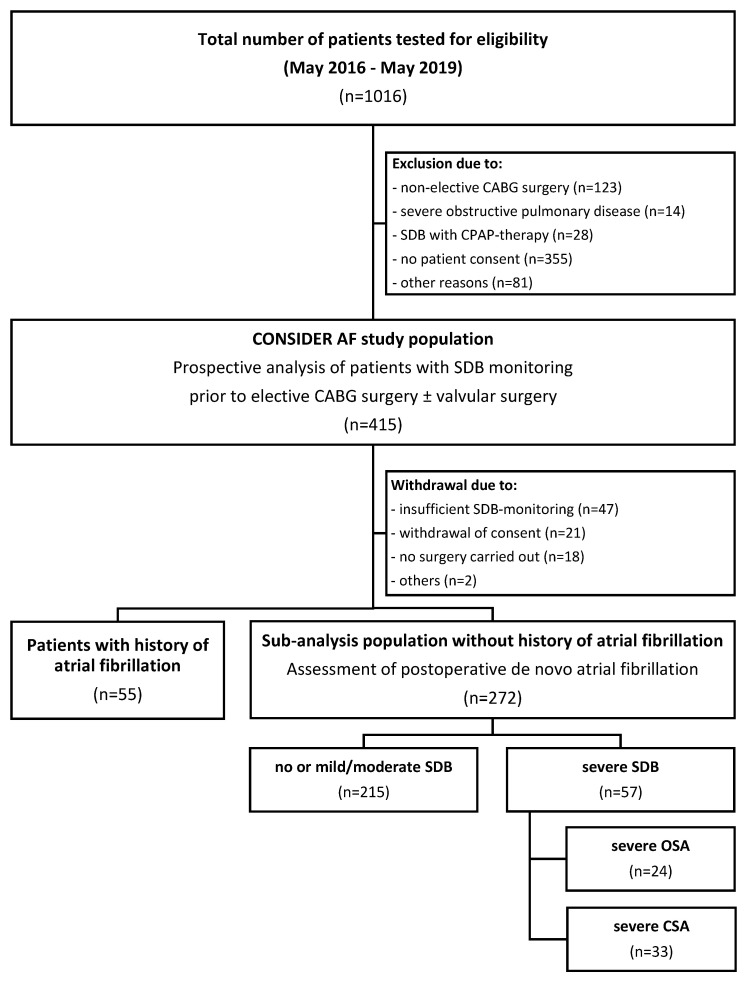 Figure 1
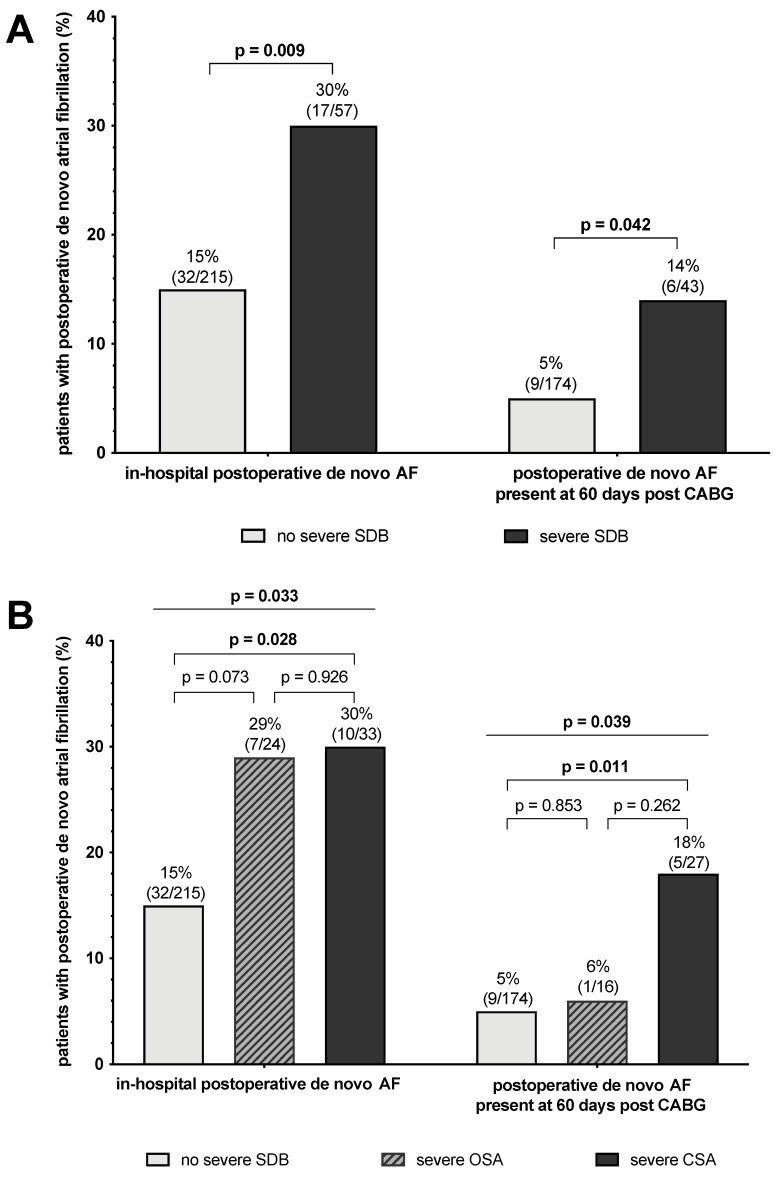 Figure 2
Peer Reviews
No public reviews on file for this paper yet. If you reviewed it on a platform where reviews are public (OpenReview, ICLR, NeurIPS, ICML), you can paste yours below so the community can read it here.
Videos
No videos yet. Explain this paper in a talk, walkthrough, or lecture? Add one.
Taxonomy
TopicsObstructive Sleep Apnea Research · Atrial Fibrillation Management and Outcomes · Cardiovascular and Diving-Related Complications