Evaluating the Use of Chemical Weapons for Capturing Prey by a Venomous Mammal, the Greater Slow Loris (Nycticebus coucang)
Grace Fuller, Wirdateti, K. A. I. Nekaris

TL;DR
This study finds that venom in greater slow lorises is not used to capture prey but likely serves a defensive purpose.
Contribution
The study experimentally tests and refutes the hypothesis that slow loris venom is used for prey capture.
Findings
Venom-related behaviors in greater slow lorises occurred only in defensive contexts.
Slow lorises captured prey using manual grasping, not venom.
The study supports venom's role in intraspecific competition or defense rather than prey capture.
Abstract
Having venom is a rare trait among mammals and even rarer among primates. Slow and pygmy lorises are the only venomous primates, and they possess a unique “two-step” venom system. When threatened, they release a secretion from a gland on their forearm and lick it, activating the venom by mixing it with their saliva. There are several hypotheses for why slow and pygmy lorises evolved this unique trait. Venom can be used to capture prey, to defend against predators or parasites, or for competition with other slow or pygmy lorises. We tested the hypothesis that venom is used to capture prey by experimentally offering various arthropod prey items to 22 wild-caught greater slow lorises living in a rescue center. We observed how their behavior was affected by prey characteristics including size, potential for escape, and toxicity. The few venom-related behaviors we observed only occurred in a…
Genes, proteins, chemicals, diseases, species, mutations and cell lines named across the full text — each resolved to its canonical identifier and authoritative record.
Click any figure to enlarge with its caption.
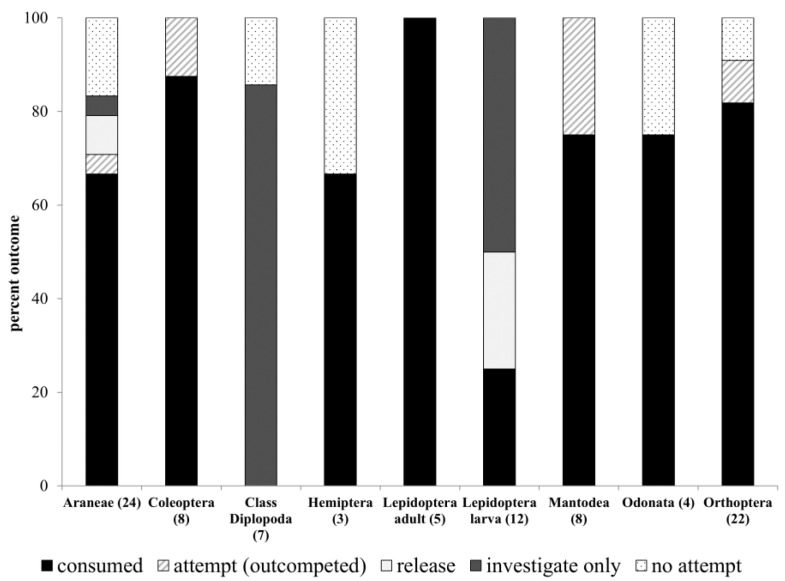 Figure 1
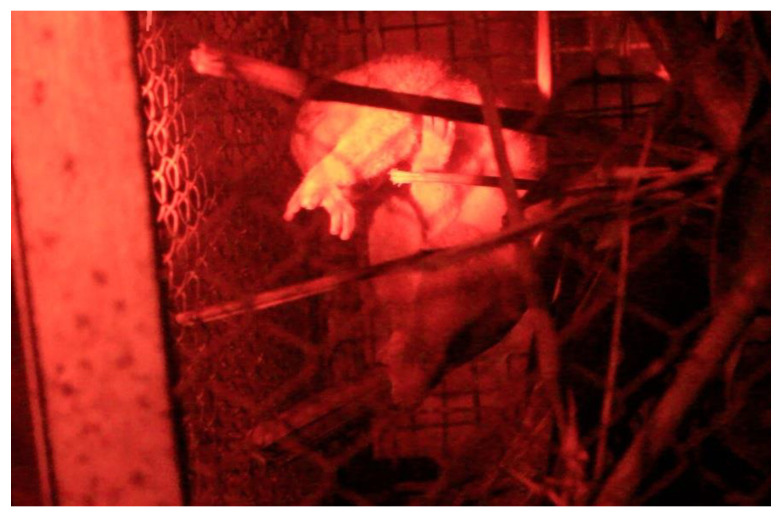 Figure 2
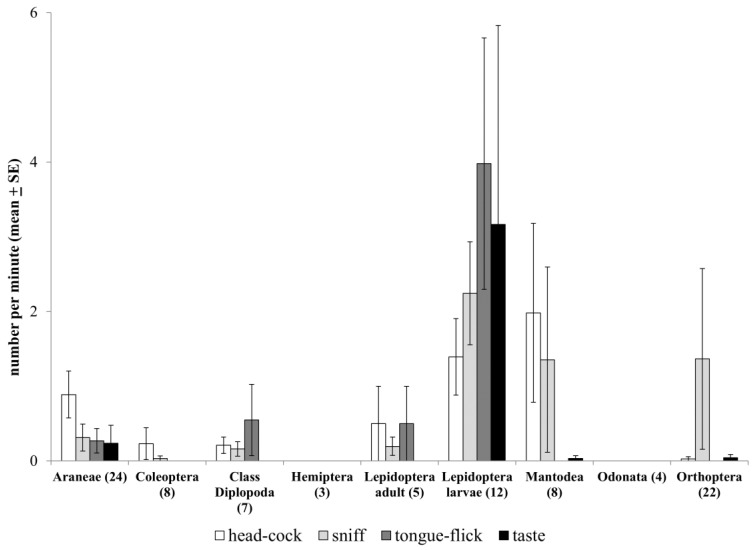 Figure 3
Peer Reviews
No public reviews on file for this paper yet. If you reviewed it on a platform where reviews are public (OpenReview, ICLR, NeurIPS, ICML), you can paste yours below so the community can read it here.
Videos
No videos yet. Explain this paper in a talk, walkthrough, or lecture? Add one.
Taxonomy
TopicsIdentification and Quantification in Food