Assessment of professional competencies of Peruvian physicians: A scoping review of published studies
Cristhian Rojas-Miliano, Shalom Aperrigue-Lira, Fernanda Barriga-Chambi, Edson Huamani-Merma, Alvaro Taype-Rondan

TL;DR
This study reviews published research on the professional competencies of Peruvian physicians, highlighting a focus on medical knowledge and treatment while neglecting behavioral skills.
Contribution
The study provides a comprehensive characterization of competency assessments in Peruvian physicians using ACGME and MINSA frameworks.
Findings
Most studies focused on medical knowledge and treatment competencies, with limited attention to ethics and communication.
Over two-thirds of the studies were conducted in Lima, indicating geographic centralization.
Funding sources were often self-funded, suggesting limited external support for competency research.
Abstract
Evaluating the professional competencies of Peruvian doctors is crucial for proposing necessary improvements. However, there is a lack of knowledge regarding the specific characteristics and competencies that are assessed in these studies. The objective of this study is to characterize published studies focusing on the assessment of professional competencies among physicians in Peru. A comprehensive scoping review was conducted, encompassing scientific journal publications that evaluated the professional competencies of physicians in Peru. The search was performed in PubMed, Google Scholar, Scopus, and SciELO, with the review period extending until 2022. The identified competencies were classified using the Accreditation Council for Graduate Medical Education (ACGME) and the Ministry of Health of Peru (MINSA) frameworks. The findings were presented using absolute and relative…
Genes, proteins, chemicals, diseases, species, mutations and cell lines named across the full text — each resolved to its canonical identifier and authoritative record.
Click any figure to enlarge with its caption.
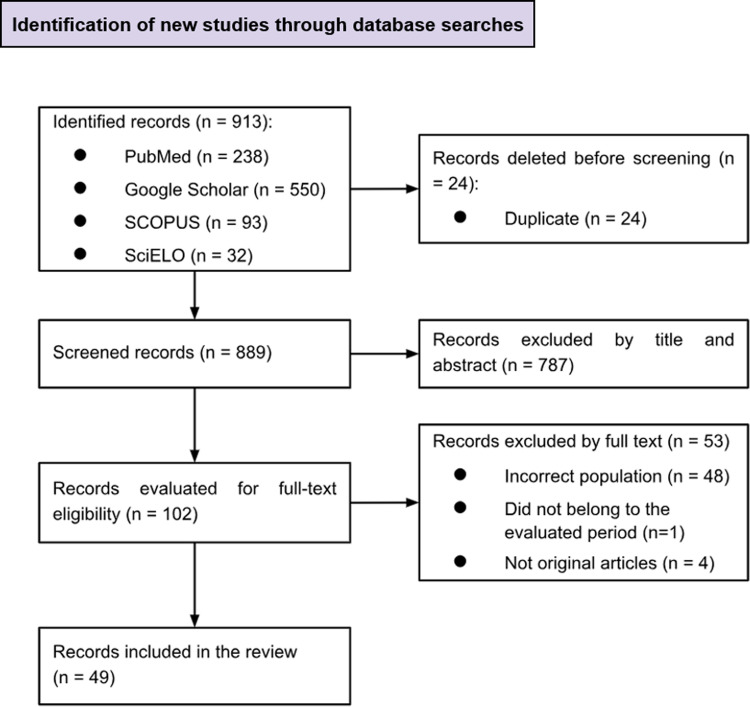 Fig 1
Fig 1Peer Reviews
No public reviews on file for this paper yet. If you reviewed it on a platform where reviews are public (OpenReview, ICLR, NeurIPS, ICML), you can paste yours below so the community can read it here.
Videos
No videos yet. Explain this paper in a talk, walkthrough, or lecture? Add one.
Taxonomy
TopicsInnovations in Medical Education · Healthcare cost, quality, practices · Clinical Reasoning and Diagnostic Skills
Introduction
The medical profession bears significant responsibility for the health attention of the population [1]. To ensure a proficient practice, physicians must acquire the necessary competencies to utilize their knowledge, skills, attitudes, and judgment for effective interventions [2]. Nonetheless, inadequacies have been detected in the medical skills acquisition across numerous countries, Peru included, where shortcomings in areas like knowledge, behavioral aptitudes, research proficiencies, and others have been documented [3–8].
Previous literature reviews have examined the existing research on medical competencies in specific countries. For instance, in the United Kingdom, limited studies have focused on evaluating the interactional and interpersonal aspects, systemic and technological components, and personal training of physicians [9]. Similarly, a systematic review investigated the medical competencies outlined by the Accreditation Council for Graduate Medical Education (ACGME) for medical residents, revealing that patient care and medical knowledge were the most frequently assessed areas [10]. However, there is currently a dearth of reviews that have evaluated Peruvian studies on medical competencies.
Identifying and describing the published studies on professional competencies among physicians and final-year medical students in Peru is crucial for recognizing knowledge gaps and systematizing the existing information. It will provide guidance for the implementation of national strategies aimed at enhancing doctors’ training with the necessary professional skills. With this objective in mind, the present study aims to conduct a comprehensive scoping review that characterizes the published studies on professional competencies in physicians and final-year medical students in Peru.
Methods
Design and eligibility criteria
A scoping review was carried out to evaluate scientific articles reporting original findings (original studies, editorials, or other article types) published in scientific journals until 2022. The review centered on studies that examined the professional competencies of physicians (including general practitioners, residents, and specialists) from Peru. We also included final-year medical students (interns) which are a few weeks away from finishing medical school, as their competencies were expected to be relatively consistent with those of licensed physicians. Language restrictions did not apply.
Intervention studies lacking a baseline measurement of competencies before implementation were excluded. Further, studies that focused on a broader population (such as any-year-medical students or healthcare professionals in general) that did not present data on competencies assessed separately from the target populations (interns or physicians) were also excluded.
Operational definition of competencies
A study was considered to have assessed professional competencies in the field of medicine if it addressed any of the elements outlined by the Accreditation Council for Graduate Medical Education (ACGME) [11] or the Ministry of Health of Peru (MINSA, by its acronym in Spanish) [12].
On the one hand, the ACGME [13] provides a practical and comprehensive classification of competencies (including hard and soft skills) that’s a reference for the development of postgraduate medical education programs (medical residency) [14]. This classification was proposed in collaboration with the American Board of Medical Specialties and other organizations interested in postgraduate medical education in the United States [15]. As a result, the ACGME proposes 25 items [16] divided into six core competencies: 1) patient care, 2) medical knowledge, 3) practice-based learning and improvement, 4) system based-learning, 5) professionalism, and 6) communication and interpersonal skills [11].
Similarly, in Peru, MINSA issued a ministerial resolution in 2020 outlining a set of competencies expected of general practitioners to ensure high-quality higher education provision. The competency framework was developed by analyzing the population’s health needs and the healthcare system characteristics, among other related considerations. Subsequently, these competencies were established through a collaborative process involving educational institutions, healthcare providers, and civil society.
This classification is divided into 13 competencies: 1) Carry out the clinical evaluation and establish a work plan, 2) Carry out the comprehensive treatment of low/high-complexity health problems, 3) Carry out actions for the best recovery of the person with sequelae of physical, mental or social damage, 4) Promote changes in individual, collective, and surroundings; 5) Carry out health interventions to reduce exposure, risks, and damages that affect individual health, and public health; 6) Exercise their profession according to the Peruvian health system, 7) Participate in the training of students and the strengthening of capacities of human resources in health, 8) Generate new knowledge, which contributes to the solution of health problems and decision-making, 9) Apply technology and innovation scientifically founded, 10) Demonstrate commitment to well-being and health, 11) Establish professional relationships with the person, family, and community, 12) Influence and motivate people with respect and equity, 13) Establish cooperative relationships, sharing knowledge and resources. Furthermore, MINSA further categorizes these competencies into technical skills (1 to 9) and behavioral skills (10 to 13). The detailed operational definitions for each competency can be found in S1 Table.
Literature search
The search was conducted from February 5 to March 25, 2023, utilizing PubMed, Scopus, SciELO, and Google Scholar. Detailed search strategies are in S2 Table.
Selection of studies
The articles identified through the search strategies were imported into Rayyan Software, where duplicates were eliminated. Subsequently, three authors (FBC, SAL, EHM) independently evaluated the articles based on their titles and abstracts to identify potentially eligible ones. These selected articles were then thoroughly reviewed in full text, and those that fulfilled the inclusion criteria were chosen. Discrepancies were resolved through consultation with a fourth author (CRM).
Data extraction
The data of interest in the included articles were extracted to a Microsoft Excel sheet in duplicate by fourth authors (FBC, SAL, EHM, CRM). Discrepancies were resolved by another author (ATR).
The following variables were extracted from the studies: author, publication year, article type (original, letter to the editor, other), study design (cross-sectional, descriptive or analytical, longitudinal, intervention), location (city of the study conduction), the sample size of the target population, included population (internists, general practitioners, residents, and specialists), study context (university, health center or hospital, virtual survey, events such as courses, congresses, workshops, information from the National Medical Examination (ENAM, by its acronym in Spanish), journal of publication (Peruvian, foreign), journal indexing in Scopus (yes, no), funding (yes, no), the language of publication (Spanish and English), evaluated competence, the method used to assess the competence and the type of competence evaluated according to the ACGME and MINSA classification. The complete database is located in S3 Table.
Ethics statement
Since this is a scoping review of previously published summary data, ethical approval for this study was not needed.
Summary of results
For the analysis of the results, narrative descriptions were used, as well as absolute and relative frequency measures. Analyzes were performed using the Microsoft Excel program.
Results
A total of 913 records were identified, of which 49 studies that met the selection criteria were finally included (Fig 1).
Flowchart of the article selection process.
Of the included studies, 26 (53.0%) employed a descriptive cross-sectional design, while 19 (38.8%) utilized an analytical cross-sectional approach. In geographical distribution, 32 studies (65.3%) were conducted exclusively in Lima, the capital city of Peru. Furthermore, the sample sizes varied widely, ranging from 14 to 30,750 participants, with a median of 113.
Concerning the assessment tools employed to evaluate competencies, 22 studies (44.9%) utilized surveys developed by the authors. Among these, ten studies did not specify the source of instrument creation; five articles indicated that surveys were previous-research based; and seven were developed according to specific criteria, such as technical standards or official documents. Additionally, seven studies (14.3%) utilized ENAM data. In 42 studies (85.7%), competencies were assessed directly, while in seven studies, the evaluation focused on self-perception or perception by others regarding competence. Detailed characteristics of each study are in Table 1 includes the corresponding references for each study.
Table 1: Characteristics of the included studies (n = 49 studies).
Among the studies included in the analysis, 14 (28.6%) were focused on general practitioners, while 13 (26.5%) were conducted among residents. Furthermore, a significant proportion of the studies, accounting for 26 (53.0%), were published in international journals, indicating a wide dissemination of the findings. Additionally, 35 (71.4%) of the studies were published in journals indexed in Scopus, reflecting their recognition and scholarly impact. It is worth mentioning that financial support was reported in 15 studies (30.6%), indicating external funding sources contributing to the research endeavors (Table 2)
Table 2: Grouped characteristics of the included studies (n = 49 studies).
The assessment of medical competencies revealed a range of 0 to 5 competencies evaluated, following the ACGME classification. Among the included studies, a significant proportion (79.6%) focused on competencies associated with "medical knowledge." The remaining competencies were assessed by varying numbers of studies, with each competency being evaluated by between 2 and 9 studies.
Following the MINSA classification, the evaluated studies encompassed a range of 0 to 9 competencies. Notably, 28 studies (57.1%) focused on competencies associated with dimension 1, which involves clinical assessment and a work plan establishment. Similarly, 28 studies (57.1%) addressed competencies related to dimension 2, which entails the comprehensive treatment of low/high-complexity health issues. The remaining were evaluated by varying numbers of studies, ranging from zero to seven.
Technical competencies were evaluated in 41 studies (83.7%), while behavioral competencies were assessed in eight studies (16.3%). Regarding technical competencies, only one study (2.0%) evaluated dimension 8, which pertains to generating new knowledge to address health issues and aid decision-making. Additionally, just one study (2.0%) assessed dimension 9, which involves applying technology and scientifically grounded innovations. However, none of the studies evaluated dimension 12, which encompasses influencing and motivating individuals with respect and equity, by MINSA (Table 3).
Table 3: Types of competencies assessed in the studies according to the ACGME and MINSA classifications (n = 49 studies).
Discussion
The scientific output concerning medical competencies in Peru demonstrates a notable upward trend, indicating a growing interest in the field, and appears to be accompanying a growing research-publishing culture in Peru [66].
The rise in scholarly publications in this field serves as an encouraging indication that there is a growing emphasis on the assessment and enhancement of medical education in Peru. This trend holds promising prospects for enhancing the quality of healthcare services delivered to the populace. The significance of this development is in light of concerning reports revealing a remarkable failure rate among final-year medical students in the ENAM examination [67] and suboptimal levels of public satisfaction with healthcare [68].
Regarding geographical distribution, the majority of studies were predominantly conducted in Lima, the capital city of Peru, while limited representation from other regions was observed. This centralized pattern has been noted in various research domains [69] and could be attributed to resource constraints, and limited research expertise in those regions [70]. It is imperative to research medical competencies in other areas of the country to assess and enhance the quality of medical education, as well as propose interventions aimed at improving healthcare quality.
The competencies that received the highest level of evaluation in the studies included "medical knowledge" based on the ACGME classification, as well as "perform a clinical evaluation and establish a work plan" and "perform comprehensive treatment" based on the MINSA classification. Similar findings have been reported in other literature reviews, demonstrating that medical knowledge competencies are commonly assessed in various settings, such as among UK physicians [9] Physical Medicine and Rehabilitation residents [10], and during international surgery rotations [71].
The heightened attention given to medical knowledge competencies may stem from a concern for the acquisition of knowledge in comparison to other medical competencies. For instance, research conducted in Peru demonstrated that hospital resident physicians placed slightly greater emphasis on acquiring medical knowledge compared to other ACGME competencies [72]. Moreover, the prevalence and ease of access to assessment tools for these competencies may contribute to their prioritization over more complex clinical competencies, such as communication skills, shared decision-making, teaching, and others [73,74].
The competencies that received the least attention were "learning based on practice and improvement" and "systems-based learning" as per the ACGME classification. Similar findings in other reviews have identified "learning based on practice and improvement" as the least frequently assessed ACGME competency in studies [10,71]. It could be attributed to competence complexity and abstract nature, which presents challenges in its evaluation [75].
The competencies with the lowest level of evaluation based on the MINSA classification encompassed the areas related to generating new knowledge, applying technology and innovation, establishing cooperative relationships, and influencing and motivating individuals. The scarcity of research focusing on these proficiencies could be attributed to the belief that they are outlying from the practical aspects of medicine. Nevertheless, the ability to generate new knowledge, apply technology and innovation play a critical role in tackling health challenges in Peru [76]. Similarly, the capacity to establish cooperative relationships is fundamental for effective teamwork and collaborative decision-making within the medical context [77].
Regarding the assessment tools employed to evaluate competencies, most studies utilized surveys or exams. The advantage of these instruments lies in their ease of use, rapid administration, and cost-effectiveness. However, these instruments may not comprehensively assess medical competencies, as they rely on self-reports or specific knowledge [78]. Only four studies employed clinical scenarios like OSCE, Mini-CEX, or clinical simulation, for a competency evaluation. These methods are increasingly being adopted in various medical schools in Peru to assess clinical competencies [79,80]. Future studies should investigate the feasibility and accuracy of alternative instruments that may offer enhanced reliability, such as direct observation, simulated scenarios, or a combination of assessment tools [78]. Furthermore, there is a need to promote further research on the instruments’ development and adaptation to assess non-clinical competencies among Peruvian physicians.
Regarding funding, nearly one-third of the studies mentioned receiving funding from an institution. This finding is consistent with another study conducted at a Peruvian university, where one-sixth of scientific articles on medical education reported having funding [81]. However, medical education research in Peru and other Latin American countries still receives limited funding [82]. It could be attributed to medical education not being a priority within Peru’s biomedical research agenda [83], leading to reduced interest from funding agencies and medical researchers.
Among the 38 funded studies, six mentioned receiving funding from government entities and five from universities. Differently, a study analyzing 1822 articles found that governments and universities were the primary funding sources for medical education research published in high-impact scientific journals [84]. Exploring the role of these actors becomes important in promoting research on medical competencies.
It is recommended that medical education evaluative institutions in Peru, such as ASPEFAM (an institution assessing the theoretical knowledge of medical students in their final year of studies) and CONAREME (an institution conducting the entrance exam for resident physicians), incorporate the medical competencies addressed in this study into their assessments. Additionally, the evaluation of these competencies could be considered within undergraduate and postgraduate academic programs. This approach could enhance interest in this area, as researchers might seek to assess factors associated with the acquisition of such competencies and/or develop new measurement methods. Moreover, scientific output on medical competencies could be increased by employing alternative assessment methods, including those considering the perspective of patients. This could be achieved through the use of simple and reliable instruments such as surveys assessing communicative and interpersonal skills [85].
This study exclusively incorporated articles published in scientific journals, potentially neglecting pertinent unpublished studies. Furthermore, it concentrated on two standards, ACGME and MINSA, which are recognized as relevant to international and national contexts. Nevertheless, to our knowledge, this is the first study to map the scientific production of medical competencies in Peru. It allows the identification of existing gaps in the evaluation of medical competencies in Peru and further directs the strategies implemented to strengthen competency-based medical education, particularly in less evaluated competencies in practice. The use of the ACGME classification for medical competencies can be replicated in studies conducted in other countries. The obtained results reveal a scarcity of studies on certain medical competencies in Peru. This finding may reflect that the country is experiencing a delayed development in medical education compared to other countries, even within South America [86], a situation that might be similar to what occurs in countries with similar contexts.
Conclusion
In conclusion, this scoping review characterized the published studies on professional competencies in physicians and final-year medical students in Peru. The studies primarily evaluated competencies related to medical knowledge (diagnosis, treatment), while behavioral competencies were less frequently assessed (ethics, professionalism, communication). Most studies were self-funded, conducted in Lima, and relied on questionnaires. It may be attributed to a scarcity of interest and resources dedicated to researching this topic. The results obtained reveal a scarcity of studies on specific medical competencies in Peru. This finding may reflect a similar situation in countries with comparable contexts.
Supporting information
S1 ChecklistPreferred Reporting Items for Systematic reviews and Meta-Analyses extension for Scoping Reviews (PRISMA-ScR) checklist.(DOCX)
S1 TableOperational definitions of each competence according to ACGME and MINSA.(DOCX)
S2 TableSearch strategies used.(DOCX)
S3 TableComplete database.(XLSX)
The reference list from the paper itself. Each links out to its DOI / PubMed record.
- 1Brett AS. Physicians have a responsibility to meet the health care needs of society. Journal of Law, Medicine & Ethics. 2012;40(3):526–32. doi: 10.1111/j.1748-720X.2012.00685.x 23061580 · doi ↗ · pubmed ↗
- 2Gómez-Rojas JP. Las competencias profesionales. Rev Mex Anest. 2015;38(1):49–55. Available at: https://www.medigraphic.com/cgi-bin/new/resumen.cgi?IDARTICULO=55675.
- 3Díaz Vélez C, Manrique González LM, Galán Rodas E, Apolaya Segura M. Conocimientos, actitudes y prácticas en investigación de los estudiantes de pregrado de facultades de medicina del Perú. Acta Médica Peruana. 2008;25(1):9–15. Available at: http://www.scielo.org.pe/scielo.php?pid=S 1728-59172008000100003&script=sci_abstract.
- 4Des Roches CM, Rao SR, Fromson JA, Birnbaum RJ, Iezzoni L, Vogeli C, et al. Physicians’ Perceptions, Preparedness for Reporting, and Experiences Related to Impaired and Incompetent Colleagues. JAMA. 2010;304(2):187–93. doi: 10.1001/jama.2010.921 20628132 · doi ↗ · pubmed ↗
- 5Brinkman DJ, Tichelaar J, Graaf S, Otten RHJ, Richir MC, van Agtmael MA. Do final‐year medical students have sufficient prescribing competencies? A systematic literature review. Br J Clin Pharmacol. 2018;84(4):615–35. doi: 10.1111/bcp.13491 29315721 PMC 5867102 · doi ↗ · pubmed ↗
- 6Yagui Moscoso M, Vidal Anzardo M, Rojas Mezarina L, Sanabria Rojas HA. Prevención de infecciones asociadas a la atención de salud:: conocimientos y prácticas en médicos residentes. Anales de la Facultad de Medicina. 2021;82(2):131–9. doi: 10.15381/anales.v 82i 2.19839 · doi ↗
- 7Pedreros DET, Rojas RE. Factors associated with the level of knowledge about palliative care among medical students at a University in lima, Peru. Revista de la Facultad de Medicina Humana [Internet]. 2021 May 10 [cited 2023 Mar 20];21(3). doi: 10.25176/RFMH.v 21i 3.3768 · doi ↗
- 8Ticse R, Vásquez NE, Cárcamo HA, Ticse R, Vásquez NE, Cárcamo HA. Percepción sobre el profesionalismo médico en estudiantes del último año de medicina en una universidad peruana. Revista de Neuro-Psiquiatría. 2021;84(1):3–10. doi: 10.20453/rnp.v 84i 1.3931 · doi ↗