Pest categorisation of Calepitrimerus baileyi
Claude Bragard, Paula Baptista, Elisavet Chatzivassiliou, Francesco Di Serio, Paolo Gonthier, Josep Anton Jaques Miret, Annemarie Fejer Justesen, Christer Sven Magnusson, Panagiotis Milonas, Juan A. Navas‐Cortes, Stephen Parnell, Roel Potting, Philippe Lucien Reignault

TL;DR
This paper assesses the risk of Calepitrimerus baileyi, a mite, becoming a pest in the EU, focusing on its potential entry and impact on apple plants.
Contribution
The paper provides a pest categorisation of Calepitrimerus baileyi for the EU, highlighting its potential as a quarantine pest.
Findings
Calepitrimerus baileyi is not listed in EU regulations but could enter via imports from Serbia.
The mite is present in Greece but has not caused reported damage there.
Climatic and host conditions in the EU support its potential establishment.
Abstract
The EFSA Panel on Plant Health performed a pest categorisation of Bailey's rust mite, Calepitrimerus baileyi Keifer (Acariformes: Eriophyidae), following the commodity risk assessment of Malus domestica plants from Türkiye performed by EFSA, in which C. baileyi was identified as a pest of possible concern to the European Union. This mite is not listed in Annex II of Commission Implementing Regulation (EU) 2019/2072. The eriophyid is known to occur in Africa, America, Asia, Europe (Greece and Serbia) and Oceania on Malus spp., which is the only confirmed host genus for C. baileyi. Plants for planting of Malus spp. are the main potential pathway for entry into the EU. However, plants for planting of the genus Malus Mill. are considered as high‐risk plants (EU 2018/2019) and therefore prohibited from entering the EU unless granted a country‐specific derogation. This is the case for the…
Genes, proteins, chemicals, diseases, species, mutations and cell lines named across the full text — each resolved to its canonical identifier and authoritative record.
Click any figure to enlarge with its caption.
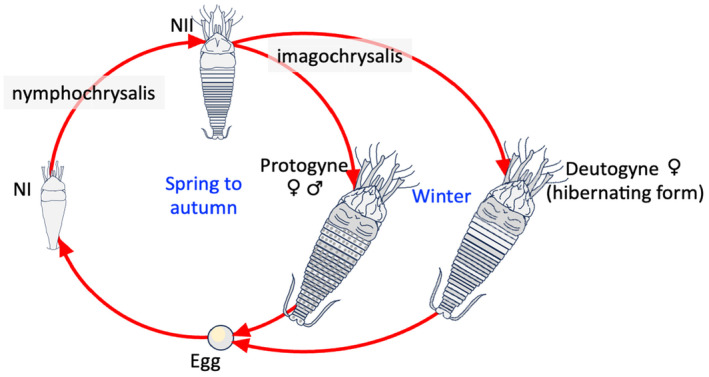 FIGURE 1
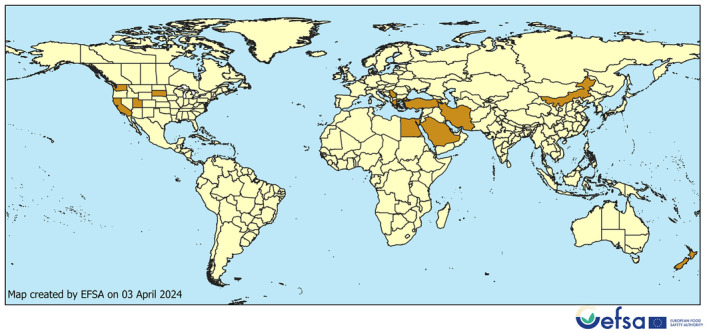 FIGURE 2
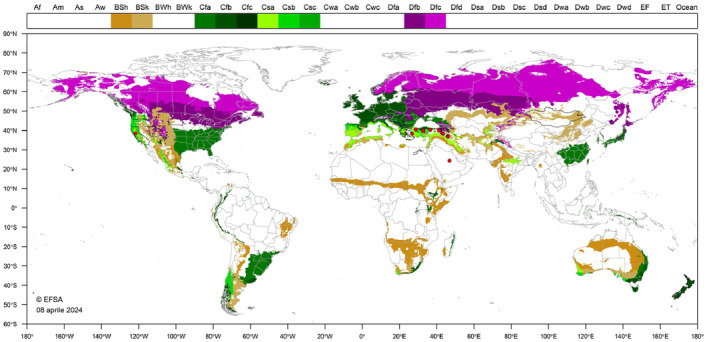 FIGURE 3
| Criterion of pest categorisation | Criterion in regulation (EU) 2016/2031 regarding union quarantine pest (article 3) |
|---|---|
|
| Is the identity of the pest clearly defined, or has it been shown to produce consistent symptoms and to be transmissible? |
|
|
Is the pest present in the EU territory? If present, is the pest in a limited part of the EU or is it scarce, irregular, isolated or present infrequently? If so, the pest is considered to be not widely distributed |
|
| Is the pest able to enter into, become established in, and spread within, the EU territory? If yes, briefly list the pathways for entry and spread |
|
| Would the pests' introduction have an economic or environmental impact on the EU territory? |
|
| Are there measures available to prevent pest entry, establishment, spread or impacts? |
|
| A statement as to whether (1) all criteria assessed by EFSA above for consideration as a potential quarantine pest were met and (2) if not, which one(s) were not met |
| Life stage | Phenology and relation to host | Other relevant information |
|---|---|---|
| Adult | Female deutogynes start egg‐laying at the beginning of the apple growing season (April in Egypt). These eggs produce protogyne females and males, which can be found on the leaves until the end of the season (November in Egypt). In spring, between the bud burst and the pink bud stages (phenological stages C3 through E2), they move into fruit and vegetative buds as they begin to swell. At early September deutogynes look for a hibernation site under loose bark of spurs and 1‐year‐old shoots |
In laboratory experiments, adult activity ceased at temperatures beyond the range 7–36° C and subsequently the mite died. Successful development occurred between 23° and 35°C and 65% RH, and it took 9.7 and 5.3 days to complete development at these temperatures, respectively Females lived on average 34.9 and 25.5 days at 23°C and 35°C, respectively. During that period, they laid 12.5 and 23.09 eggs, respectively |
| Egg | In a laboratory experiment using apple leaf discs, eggs were laid along the midrib | Egg hatching took 5.3 and 2.9 days at 23°C and 35°C, respectively |
| Nymph | Two nymphal stages (protonymph and deutonymph) with a quiescent stage in between these two stages (protochrysalis) and another one between deutonymph and adult (deutochrysalis) |
From April to November immature stages represented about 50% of the population Immature development took about 4.4 and 2.54 days at 23°C and 35°C, respectively |
|
| |||
|---|---|---|---|
| Description | CN code | Third country, group of third countries or specific area of third country | |
| 8. | Plants for planting of […]., |
ex 0602 10 90 ex 0602 20 20 ex 0602 20 80 ex 0602 40 00 ex 0602 90 41 ex 0602 90 45 ex 0602 90 46 ex 0602 90 47 ex 0602 90 48 ex 0602 90 50 ex 0602 90 70 ex 0602 90 91 ex 0602 90 99 | Third countries other than Albania, Andorra, Armenia, Azerbaijan, Belarus, Bosnia and Herzegovina, Canary Islands, Faeroe Islands, Georgia, Iceland, Liechtenstein, Moldova, Monaco, Montenegro, North Macedonia, Norway, Russia (only the following parts: Central Federal District (Tsentralny federalny okrug), Northwestern Federal District (Severo‐ Zapadny federalny okrug), Southern Federal District (Yuzhny federalny okrug), North Caucasian Federal District (Severo‐Kavkazsky federalny okrug) and Volga Federal District (Privolzhsky federalny okrug)), San Marino, Serbia, Switzerland, Türkiye, Ukraine and the United Kingdom |
| 9. | Plants for planting of […] |
ex 0602 10 90 ex 0602 20 20 ex 0602 90 30 ex 0602 90 41 ex 0602 90 45 ex 0602 90 46 ex 0602 90 48 ex 0602 90 50 ex 0602 90 70 ex 0602 90 91 ex 0602 90 99 | Third countries other than Albania, Algeria, Andorra, Armenia, Australia, Azerbaijan, Belarus, Bosnia and Herzegovina, Canada, Canary Islands, Egypt, Faeroe Islands, Georgia, Iceland, Israel, Jordan, Lebanon, Libya, Liechtenstein, Moldova, Monaco, Montenegro, Morocco, New Zealand, North Macedonia, Norway, Russia (only the following parts: Central Federal District (Tsentralny federalny okrug), Northwestern Federal District (Severo‐Zapadny federalny okrug), Southern Federal District (Yuzhny federalny okrug), North Caucasian Federal District (Severo‐ Kavkazsky federalny okrug) and Volga Federal District (Privolzhsky federalny okrug)), San Marino, Serbia, Switzerland, Syria, Tunisia, Türkiye, Ukraine, the United Kingdom (1) and United States other than Hawaii |
| Pathways (e.g. host/intended use/source) | Life stage | Relevant mitigations within Implementing Regulation 2019/2072 and relevant high‐risk plants Regulations |
|---|---|---|
| Host plants for planting with leaves | All life stages (egg, NI, NII, protogynes and deutogynes) |
Annex VI prohibitions apply. However, Armenia, Serbia and Türkiye, where Prohibitions on high‐risk plants (EU 2018/2019) apply |
| Dormant host plants for planting (without leaves) | Deutogynes (hibernating females) |
Annex VI prohibitions apply. However, Armenia, Serbia and Türkiye, where Prohibitions on high‐risk plants (EU 2018/2019) apply A derogation for 1‐ to 2‐year‐old bare‐rooted, dormant, free of leaves, grafted plants for planting of |
| Fruit | Vagrants (free‐living forms: NI, NII, adults) | Fruits, vegetables and cut flowers from third countries require a phytosanitary certificate to import into the EU (2019/2072, Annex XI, Part A) |
| Year | 2015 | 2016 | 2017 | 2018 | 2019 | 2020 | 2021 | 2022 |
|---|---|---|---|---|---|---|---|---|
|
| – | – | – | 2.3 | 0.6 | |||
|
| 93,746 | 101,445 | 98,794 | 109,750 | 107,081 | 99,570 | 76,208 | 56,405 |
| 2018 | 2019 | 2020 | 2021 | 2022 | |
|---|---|---|---|---|---|
|
| 522.47 | 506.98 | 489.18 | 492.54 | 477.98 |
| Control measure/risk reduction option | RRO summary | Risk element targeted (entry/establishment/spread/impact) |
|---|---|---|
| Require pest freedom | Source host plants from a pest free area, pest free place of production or pest free production site | Entry/Spread |
|
| Nursery plants could be grown in dedicated structures such as glass or plastic greenhouses with eriophyoid mite‐proof screens | Entry (reduce infestation)/Spread |
| Managed growing conditions | Plants collected directly from natural habitats, have been grown, held and trained for at least two consecutive years prior to dispatch in officially registered nurseries, which are subject to an officially supervised control regime | Entry (reduce infestation)/Spread |
|
| Roguing is defined as the removal of infested plants and/or uninfested host plants in a delimited area, whereas pruning is defined as the removal of infested plant parts only without affecting the viability of the plant | Spread/Impact |
| Biological control and behavioural manipulation |
Keifer ( Fahim and Momen ( | Impact |
| Chemical treatments on crops including reproductive material | Sulfur is a common pesticide against eriophyoid mites. Sulfur (and other contact insecticides/acaricides) is expected to have a low efficacy on hibernating deutogynes, which are hidden in the bark | Spread/Impact |
|
| According to Navia et al. ( | Entry/Spread |
|
|
Navia et al. ( Brushing and washing of the fruit in the packing house might be a measure although no literature found on this aspect | Entry/Spread |
|
| The physical and chemical cleaning and disinfection of facilities, tools, machinery, transport means, facilities and other accessories (e.g. boxes, pots, pallets, palox, supports, hand tools). The measures addressed in this information sheet are: washing, sweeping and fumigation | Entry/Spread |
|
| If roguing is applied, the removed parts should be destroyed (e.g. burned/deep burial) | Establishment/Spread |
|
| Specific requirements for mode and timing of transport of commodities to prevent escape of the pest and/or contamination
physical protection of consignment | Entry/Spread |
|
| Navia et al. ( | Entry/Spread (via commodity) |
| Post‐entry quarantine and other restrictions of movement in the importing country |
This measure covers post‐entry quarantine (PEQ) of relevant commodities; temporal, spatial and end‐use restrictions in the importing country for import of relevant commodities; Prohibition of import of relevant commodities into the domestic country ‘Relevant commodities’ are plants, plant parts and other materials that may carry pests, either as infection, infestation, or contamination | Establishment/Spread |
| Supporting measure | Summary | Risk element targeted (entry/establishment/spread/impact) |
|---|---|---|
|
|
ISPM 5 (FAO, The effectiveness of sampling and subsequent inspection to detect pests may be enhanced by including trapping and luring techniques | Establishment/Spread |
|
| Examination, other than visual, to determine if pests are present using official diagnostic protocols. Diagnostic protocols describe the minimum requirements for reliable diagnosis of regulated pests | Establishment/Spread |
| Sampling |
According to ISPM 31 (FAO, For inspection, testing and/or surveillance purposes the sample may be taken according to a statistically based or a non‐statistical sampling methodology | Establishment/Spread |
| Phytosanitary certificate and plant passport |
According to ISPM 5 (FAO, a) export certificate (import) b) plant passport (EU internal trade) | Entry/Establishment/Spread |
|
| Mandatory/voluntary certification/approval of premises is a process including a set of procedures and of actions implemented by producers, conditioners and traders contributing to ensure the phytosanitary compliance of consignments. It can be a part of a larger system maintained by the NPPO in order to guarantee the fulfilment of plant health requirements of plants and plant products intended for trade. Key property of certified or approved premises is the traceability of activities and tasks (and their components) inherent the pursued phytosanitary objective. Traceability aims to provide access to all trustful pieces of information that may help to prove the compliance of consignments with phytosanitary requirements of importing countries | Establishment/Spread |
| Certification of reproductive material (voluntary/official) | Used to mitigate pests that are included in a certification scheme. Plants come from within an approved propagation scheme and are certified pest free (level of infestation) following testing | Establishment/Spread |
|
| ISPM 5 (FAO, | Spread |
| Surveillance | Surveillance to guarantee that plants and produce originate from a Pest Free Area could be an option | Entry/Spread |
| Criterion of pest categorisation | Panel's conclusions against criterion in regulation (EU) 2016/2031 regarding union quarantine pest | Key uncertainties |
|---|---|---|
|
|
| None |
|
|
| This mite could be more widespread than reported in the EU |
|
| Due to their small size, eriophyoid mites are easily moved around with plant material, with plants for planting being the most important pathway for entry and subsequent spread. This mite has successfully established in at least one EU MS: Greece | None |
|
| Although | The lack of evidence on impact could be the result of |
|
| There are measures to prevent pest entry (e.g. pest free areas), establishment (e.g. post‐quarantine requirements), spread (e.g. pruning) and impact (e.g. biological control) | None |
|
|
| |
| Aspects of assessment to focus on/scenarios to address in future if appropriate | A survey of mite species (especially eriophyids) occurring in EU apple orchards and their impact on apple production could help refine the conclusions of this categorisation | |
Peer Reviews
No public reviews on file for this paper yet. If you reviewed it on a platform where reviews are public (OpenReview, ICLR, NeurIPS, ICML), you can paste yours below so the community can read it here.
Videos
No videos yet. Explain this paper in a talk, walkthrough, or lecture? Add one.
Taxonomy
TopicsResearch on scale insects · Insect-Plant Interactions and Control · Insect Pest Control Strategies
INTRODUCTION
1
Background and Terms of Reference as provided by the requestor
1.1
Background
1.1.1
The new Plant Health Regulation (EU) 2016/2031, on the protective measures against pests of plants, is applying from 14 December 2019. Conditions are laid down in this legislation in order for pests to qualify for listing as Union quarantine pests, protected zone quarantine pests or Union regulated non‐quarantine pests. The lists of the EU regulated pests together with the associated import or internal movement requirements of commodities are included in Commission Implementing Regulation (EU) 2019/2072. Additionally, as stipulated in the Commission Implementing Regulation 2018/2019, certain commodities are provisionally prohibited to enter in the EU (high risk plants, HRP). EFSA is performing the risk assessment of the dossiers submitted by exporting to the EU countries of the HRP commodities, as stipulated in Commission Implementing Regulation 2018/2018. Furthermore, EFSA has evaluated a number of requests from exporting to the EU countries for derogations from specific EU import requirements.
In line with the principles of the new plant health law, the European Commission with the Member States are discussing monthly the reports of the interceptions and the outbreaks of pests notified by the Member States. Notifications of an imminent danger from pests that may fulfil the conditions for inclusion in the list of the Union quarantine pest are included. Furthermore, EFSA has been performing horizon scanning of media and literature.
As a follow‐up of the above‐mentioned activities (reporting of interceptions and outbreaks, HRP, derogation requests and horizon scanning), a number of pests of concern have been identified. EFSA is requested to provide scientific opinions for these pests, in view of their potential inclusion by the risk manager in the lists of Commission Implementing Regulation (EU) 2019/2072 and the inclusion of specific import requirements for relevant host commodities, when deemed necessary by the risk manager.
Terms of Reference
1.1.2
EFSA is requested, pursuant to Article 29(1) of Regulation (EC) No 178/2002, to provide scientific opinions in the field of plant health.
EFSA is requested to deliver 53 pest categorisations for the pests listed in Annex 1A, 1B, 1D and 1E (for more details see mandate M‐2021‐00027 on the Open.EFSA portal). Additionally, EFSA is requested to perform pest categorisations for the pests so far not regulated in the EU, identified as pests potentially associated with a commodity in the commodity risk assessments of the HRP dossiers (Annex 1C; for more details see mandate M‐2021‐00027 on the Open.EFSA portal). Such pest categorisations are needed in the case where there are not available risk assessments for the EU.
When the pests of Annex 1A are qualifying as potential Union quarantine pests, EFSA should proceed to phase 2 risk assessment. The opinions should address entry pathways, spread, establishment, impact and include a risk reduction options analysis.
Additionally, EFSA is requested to develop further the quantitative methodology currently followed for risk assessment, in order to have the possibility to deliver an express risk assessment methodology. Such methodological development should take into account the EFSA Plant Health Panel Guidance on quantitative pest risk assessment and the experience obtained during its implementation for the Union candidate priority pests and for the likelihood of pest freedom at entry for the commodity risk assessment of high‐risk plants.
Interpretation of the Terms of Reference
1.2
Calepitrimerus baileyi is one of a number of pests relevant to Annex 1C of the Terms of Reference (ToR) to be subject to pest categorisation to determine whether it fulfils the criteria of a potential Union quarantine pest (QP) for the area of the EU excluding Ceuta, Melilla and the outermost regions of Member States referred to in Article 355(1) of the Treaty on the Functioning of the European Union (TFEU), other than Madeira and the Azores, and so inform EU decision making as to its appropriateness for potential inclusion in the lists of pests of Commission Implementing Regulation (EU) 2019/2072. If a pest fulfils the criteria to be potentially listed as a Union QP, risk reduction options will be identified.
Additional information
1.3
This pest categorisation was initiated following the commodity risk assessment of Malus domestica plants from Türkiye performed by EFSA (EFSA PLH Panel, 2022), in which C. baileyi was identified as a relevant non‐regulated EU pest which could potentially enter the EU on M. domestica plants.
DATA AND METHODOLOGIES
2
Data
2.1
Information on pest status from NPPOs
2.1.1
In the context of the current mandate, EFSA is preparing pest categorisations for new/emerging pests that are not yet regulated in the EU. When official pest status is not available in the European and Mediterranean Plant Protection Organization (EPPO) Global Database (EPPO, online), EFSA consults the NPPOs of the relevant MSs. To obtain information on the official pest status for Calepitrimrus baileyi, EFSA has consulted the NPPOs of Greece and Poland. The results of this consultation are presented in Section 3.2.2.
Literature search
2.1.2
A literature search on C. baileyi was conducted at the beginning of the categorisation in the ISI Web of Science bibliographic database, using the scientific name of the pest as search term. Papers relevant for the pest categorisation were reviewed, and further references and information were obtained from experts, as well as from citations within the references and grey literature.
Database search
2.1.3
Data about the import of commodity types that could potentially provide a pathway for the pest to enter the EU and about the area of hosts grown in the EU were obtained from EUROSTAT (Statistical Office of the European Communities).
The Europhyt and TRACES databases were consulted for pest‐specific notifications on interceptions and outbreaks. Europhyt is a web‐based network run by the Directorate General for Health and Food Safety (DG SANTÉ) of the European Commission as a subproject of PHYSAN (Phyto‐Sanitary Controls) specifically concerned with plant health information. TRACES is the European Commission's multilingual online platform for sanitary and phytosanitary certification required for the importation of animals, animal products, food and feed of non‐animal origin and plants into the European Union, and the intra‐EU trade and EU exports of animals and certain animal products. Up until May 2020, the Europhyt database managed notifications of interceptions of plants or plant products that do not comply with EU legislation, as well as notifications of plant pests detected in the territory of the Member States and the phytosanitary measures taken to eradicate or avoid their spread. The recording of interceptions switched from Europhyt to TRACES in May 2020.
GenBank was searched to determine whether it contained any nucleotide sequences for C. baileyi which could be used as reference material for molecular diagnosis. GenBank® (www.ncbi.nlm.nih.gov/genbank/) is a comprehensive publicly available database that as of August 2019 (release version 227) contained over 6.25 trillion base pairs from over 1.6 billion nucleotide sequences for 450,000 formally described species (Sayers et al., 2020).
Methodologies
2.2
The Panel performed the pest categorisation for C. baileyi, following guiding principles and steps presented in the EFSA guidance on quantitative pest risk assessment (EFSA PLH Panel, 2018), the EFSA guidance on the use of the weight of evidence approach in scientific assessments (EFSA Scientific Committee, 2017) and the International Standards for Phytosanitary Measures No. 11 (FAO, 2013).
The criteria to be considered when categorising a pest as a potential Union QP is given in Regulation (EU) 2016/2031 Article 3 and Annex I, Section 1 of the Regulation. Table 1 presents the Regulation (EU) 2016/2031 pest categorisation criteria on which the Panel bases its conclusions. In judging whether a criterion is met the Panel uses its best professional judgement (EFSA Scientific Committee, 2017) by integrating a range of evidence from a variety of sources (as presented above in Section 2.1) to reach an informed conclusion as to whether or not a criterion is satisfied.
The Panel's conclusions are formulated respecting its remit and particularly with regard to the principle of separation between risk assessment and risk management (EFSA founding regulation (EU) No 178/2002); therefore, instead of determining whether the pest is likely to have an unacceptable impact, deemed to be a risk management decision, the Panel will present a summary of the observed impacts in the areas where the pest occurs, and make a judgement about potential likely impacts in the EU. Whilst the Panel may quote impacts reported from areas where the pest occurs in monetary terms, the Panel will seek to express potential EU impacts in terms of yield and quality losses and not in monetary terms, in agreement with the EFSA guidance on quantitative pest risk assessment (EFSA PLH Panel, 2018). Article 3 (d) of Regulation (EU) 2016/2031 refers to unacceptable social impact as a criterion for QP status. Assessing social impact is outside the remit of the Panel.
PEST CATEGORISATION
3
Identity and biology of the pest
3.1
Identity and taxonomy
3.1.1
Is the identity of the pest clearly defined, or has it been shown to produce consistent symptoms and/or to be transmissible?
Yes, Calepitrimerus baileyi Keifer (Acariformes: Eriophyidae) is a clearly defined species of mite.
Calepitrimerus baileyi Keifer (Acariformes: Eriophyidae) is an eriophyid mite described by H.H. Keifer in 1938 from protogyne females (the active female stage of eriophyid mites, Figure 1) found on apple leaves in the USA (California and South Dakota) (Keifer, 1938). Deutogyne females (the hibernating female forms of eriophyid mites, Figure 1) had been mistakenly identified as a different species and received the name of Phyllocoptes aphrastus Keifer when first described in 1940 (Jeppson et al., 1975). This mite is commonly known as Bailey's rust mite or apple rust mite; however, the latter name can refer to another eriophyid feeding on apples in Europe: Aculus schlectendali (Nalepa).
Life cycle of Calepitrimerus baileyi. The mite can complete several generations (egg‐NI‐NII‐protogyne adult) on apple leaves during the growing season (spring through autumn). When winter approaches female deutogynes, which are morphologically different from protogynes, look for shelter under loose bark of spurs and 1‐year‐old shoots to hibernate. Deutogynes re‐start the cycle the following spring (Source: J.A. Jaques).
The EPPO code1 (EPPO, 2019; Griessinger & Roy, 2015) for this species is: CALEBA (EPPO, online).
Biology of the pest
3.1.2
Mites within the Eriophyoidea superfamily (eriophyoids) are not closely related to any other group of mites, and their morphology and biology are unique. They are minute vermiform arthropods, not visible to the naked eye, with two pairs of legs in all active stages (first and second instar nymphs, NI and NII, and adult), which look similar to each other. In addition to the sessile egg stage, they have two additional quiescent stages, the nymphochrysalis and the imagochrysalis in between NI and NII and NII and adult, respectively (Figure 1). Eriophyoid mites are usually quite specific to the host plant on which they feed, or they are often restricted to one plant genus, or, at most, one family. These mites cannot survive for long periods away from a host plant, and thus, most of the plant species on which they feed are perennials (EFSA PLH Panel, 2023; Jeppson et al., 1975). The main features of the life history of C. baileyi, obtained from lab and field experiments carried out in Egypt (Abou‐Awad et al., 2011) are summarised in Table 2. Populations of C. baileyi are female biased (2:1) and can have about 11 generations per year. On apple in Egypt, population density increased from April until July, when maximum densities around 60 motiles per leaf were reached. Then, the density gradually decreased until November and no vagrant (= free living) mites could be found from December through April (Abou‐Awad et al., 2011).
Host range/species affected
3.1.3
Eriophyoid mites are usually quite host‐specific (monophagous or oligophagous) and C. baileyi has been regularly associated with the genus Malus [M. domestica Borkh. (= M. pumilla Mill.), M. communis and M. sylvestris (L.) Mill.] (Keifer, 1938; Kozlowski, 1979; Manson, 1984; Baker et al., 1996; Easterbrook, 1996; Shi & Boczek, 2001; Skoracka et al., 2005; Xue et al., 2009; Denizhan & Çobanoğlu, 2010; Abou‐Awad et al., 2011; Al‐Atawi & Halawa, 2011; Vidović et al., 2014). However, based on the Eriophyioidea Database (De Lillo & Amrine, 1998) it has also been reported on a few additional Rosaceae: Cydonia oblonga Mill. (Lotfollahi et al., 2014), Malus kirghisorum (Xue et al., 2009) and Mespilus germanica L. (Bagdasarian, 1981). This could mean that this mite is either oligophagous or just that these reports correspond to accidental collections of vagrant (= free‐living protogyne) mites, which is the most likely explanation as there are no assays where the role of these three other plant species as true hosts of C. baileyi has been verified. This eriophyid mite is free‐living on leaves during the vegetative season of these deciduous plants and could be passively moved by air currents, animals, or agricultural tools/gear, including workers' clothes. Indeed, the passive movement with air currents is also the most plausible explanation for the identification of this mite on many plant species in Iran (Mehri et al., 2020). These authors reported C. baileyi on apricots, Prunus armeniaca L., peaches, Prunus persica (L.) Batsch, damascene roses, Rosa × damascena Herrm., cherry‐plums, Prunus cerasifera Ehrh., almonds, Prunus dulcis (Mill.) D.A.Webb, sweet cherries, Prunus avium (L.) L. and Pyrus anatolica Browicz (Rosaceae), as well as on 43 additional unspecified hosts, which these authors related to the spreading effect of the windy weather in the sampling area. Without further supporting data, these plant species (some of them unspecified) cannot be considered as true hosts (i.e. plants where the mite can complete development and reproduce). As a consequence, there is some uncertainty about the host range of C. baileyi and we cannot be conclusive about it.
Intraspecific diversity
3.1.4
No intraspecific variation has been described for C. baileyi.
Detection and identification of the pest
3.1.5
Are detection and identification methods available for the pest?
Yes, infestations of C. baileyi cause browning on the underside of apple leaves. A morphological description of the species is available to allow taxonomic identification under microscopic examination.
Detection: symptoms
Eriophyid mites can only penetrate epidermal cells with their stylets. As a consequence, C. baileyi populations cause a light browning on the undersides of the apple leaves where they thrive (Keifer, 1938). Additionally, partial defoliation, russet on fruit, and delayed or inhibited apical growth has been reported in Egypt (Abou‐Awad et al., 2011). These symptoms are similar to those produced by the apple rust mite, A. schlechtendali, often considered as a secondary pest of apples (EPPO, online), where outbreaks have been associated with the use of non‐selective pesticides towards predatory mites which usually keep A. schlechtendali populations under biological control (Duso et al., 2010).
Description
The egg of C. baileyi is circular and translucent when first laid, then turns to light amber and opaque. It is 45–51 μm in diameter (Abou‐Awad et al., 2011).
According to Keifer (1952), the adult protogyne females are 130–140 μm long, 45 μm wide, 40 μm thick and pinkish amber. The forelegs are 29 μm long and the hindlegs 26.15 μm long. The abdomen has 65–70 tergites, with obscure microtubercles except on the central carina, which runs to the 35th tergite. Sternites are little more numerous than tergites and strongly microtuberculated. The caudal seta is 47 μm long. Male protogynes are smaller than females (125 μm long, 40 μm wide, 40 μm thick).
Identification
The two conspecific morphs (deutogyne and protogynes) have been wrongly assigned to different species or even genera (Jeppson et al., 1975), although the forms can generally be correctly associated with each other with experience and good sample sizes (Beaulieu et al., 2014). Keifer (1952) produced a key for the eriophyid mites of California, including C. baileyi.
There is one single sequence in GenBank of a specimen collected on M. domestica (Calepitrimerus baileyi voucher MAL91.3 large subunit ribosomal RNA gene, partial sequence, ACCESSION MW633874), which could help with diagnosis (checked on 26 March 2024).
Pest distribution
3.2
Pest distribution outside the EU
3.2.1
The global distribution of C. baileyi based mostly on information retrieved from the Eriophyioidea Database (De Lillo & Amrine, 1998) is shown in Figure 2. This mite has been reported from several countries (Appendix B).
Global distribution of Calepitrimerus baileyi (Source: literature; for details see Appendix B).
Pest distribution in the EU
3.2.2
Is the pest present in the EU territory? If present, is the pest in a limited part of the EU or is it scarce, irregular, isolated or present infrequently? If so, the pest is considered to be not widely distributed. Yes, C. baileyi has been reported in Greece. It was also reported in Poland in the 1970s, but not again since. Therefore, C. baileyi is not considered to be widely distributed in the EU.
Based on information retrieved from the Eriophyioidea Database (De Lillo & Armine, 1998), C. baileyi has been reported in two EU countries: Greece (Hatzinikolis, 1978; Kapaxidi, 2013; Malandraki, 2012) and Poland (Kozlowski, 1977, 1979; Shi & Boczek, 2001; Skoracka et al., 2005). According to Milonas (Benaki Phytopathological Institute, personal communication in email on 14 March 2024), C. baileyi is currently believed to be present in apple growing areas in Greece.
According to the NPPO of Poland, Kozlowski (1979) provides the original finding of C. baileyi in Poland during studies performed in 1972–1975. Later reports for Poland just refer to that first finding and C. baileyi has not been further found. Therefore, the NPPO of Poland concludes that the status of this pest is likely 'pest no longer present'.
Since, in addition to these two EU MS: (a) this mite has also been reported recently in Serbia and repeatedly in Türkiye (see Section 3.2.1), (b) Malus spp. is widely distributed in Europe, and (c) the impact of this mite is generally considered as low (see Section 3.5), this eriophyid could be more widespread than reported in the EU. This is a key uncertainty that limits the confidence in the conclusions of this categorisation.
Regulatory status
3.3
Commission Implementing Regulation 2019/2072
3.3.1
C. baileyi is not listed in Annex II of Commission Implementing Regulation (EU) 2019/2072, an implementing act of Regulation (EU) 2016/2031, or in any emergency plant health legislation.
Hosts or species affected that are prohibited from entering the union from third countries
3.3.2
The list of plants that are C. baileyi hosts whose introduction into the EU is prohibited is shown in Table 3.
Malus Mill. is the host genus of C. baileyi. Although plants for planting of Malus Mill. other than dormant plants free from leaves, flowers, fruits and seeds, are prohibited from entering into the EU from most third countries, Armenia, Serbia and Türkiye, where C. baileyi has been reported, are excluded from the prohibition. However, as Malus Mill. is listed in Commission implementing regulation (EU) 2018/2019 as high‐risk plants for planting, whose introduction into the Union other than as seeds, in vitro material, or naturally or artificially dwarfed woody plants, is prohibited pending risk assessment, these pathways can be considered as closed. Of note, a derogation for 1‐ to 2‐year‐old bare‐rooted, dormant, free of leaves, grafted plants for planting of M. domestica originating in Serbia exists ((EU) 2020/1361 corrected by (EU) 2022/1309). Because C. baileyi is not associated with Malus Mill. seeds, this pathway is not relevant for this mite.
Entry, establishment and spread in the EU
3.4
Entry
3.4.1
Is the pest able to enter into the EU territory? If yes, identify and list the pathways. Comment on plants for planting as a pathway. Yes, C. baileyi could enter the EU. The main pathway is plants for planting of the genus Malus from countries where this mite is reported. Fruit can also be a pathway. However, the plants for planting pathway is mostly prohibited as Malus Mill. is considered a high‐risk plant. A derogation for Serbia, where C. baileyi is known to occur, exists ((EU) 2020/1361).
Eriophyoids have a high potential as adventive mite species, therefore with the ability to establish themselves in regions that do not correspond to their area of origin, because their small size makes them difficult to detect and easy to be distributed via trade of plants for planting (Navia et al., 2010). Table 4 lists potential entry pathways.
Table 5 presents the number of Malus spp. (a) plants for planting imported from Serbia in 2018 and 2019 based on the information provided in the Commodity Risk Assessment of M. domestica originating from Serbia (EFSA PLH Panel, 2020), and (b) fruits imported to the EU from 2015 to 2022 from third countries where C. baileyi has been reported.
Notifications of interceptions of harmful organisms began to be compiled in Europhyt in May 1994 and in TRACES in May 2020. As at 19.3.2024, there were no records of interception of C. baileyi in the Europhyt and TRACES databases.
Unless moved with plants for planting, there are uncertainties over the ability of C. baileyi to transfer to a suitable host following arrival into the EU. Uncertainties also include its ability to find a mate and other Allee effects (effects causing reduced survival of new colonies with a small number of individuals) (Tobin et al., 2011) as well as the impact of natural enemies in the EU.
Establishment
3.4.2
Is the pest able to become established in the EU territory?
Yes, C. baileyi is able to establish in the EU. It has been found in Greece and in Poland and is established in Greece.
Climatic mapping is the principal method for identifying areas that could provide suitable conditions for the establishment of a pest taking key abiotic factors into account (Baker, 2002). Availability of hosts is considered in Section 3.4.2.1. Climatic factors are considered in Section 3.4.2.2
EU distribution of main host plants
3.4.2.1
Malus spp., the only certain host of C. baileyi (see Section 3.1.3), is a widespread species across the EU, either as a cultivated species or in the wild (Europe‐native M. sylvestris (L.) Mill.) (EUFORGEN, online). Table 6 shows the harvested area of apples in the EU.
Climatic conditions affecting establishment
3.4.2.2
There are 10 different climate types (Kottek et al., 2006), occurring in the countries where C. baileyi has been reported matching those occurring in the EU. These are: BSh (hot semi‐arid), BSk (cold semi‐arid), Cfa (humid subtropical climate), Cfb (oceanic), Cfc (subpolar oceanic), Csa (hot‐summer Mediterranean), Csb (warm‐summer Mediterranean), Csc (cold‐summer Mediterranean), Dfb (warm‐summer humid continental climate) and Dfc (subarctic) (Figure 3). From these, exact locations (red dots in Figure 3) where the mite has been found correspond mostly to BSk, Csa, Csb, Cfb, and Dfb. As a consequence, most of EU MS offer climates conducive for establishment of C. baileyi, including Greece and Poland, where this mite has been reported and proven as established in Greece.
World distribution of the 10 Köppen–Geiger climate types that occur in the EU and in countries where Calepitrimerus baileyi has been reported.
Spread
3.4.3
Describe how the pest would be able to spread within the EU territory following establishment?
C. baileyi depends mostly on passive dispersal by wind and especially on human‐assisted movement of infested plant material for spread. Comment on plants for planting as a mechanism of spread.Because of the intimate relationship between eriophyoid mites and their host plants, plants for planting are the main spread pathway of C. baileyi.
The main possible natural ways of eriophyoid mite dispersal are by wind, pollinators (phoresy) and rain (Lindquist et al., 1996). Mechanisms of human‐assisted dispersal include irrigation (Lindquist et al., 1996), pruning (NVWA, 2020), and trade on propagation material, fresh fruits, cut flowers, buds and in some cases seeds (Navia et al., 2010). Although there are examples of eriophyoid species developing inside seeds, which could use these seeds as a pathway, seeds are not likely to be used as a means of spread for eriophyoid species not developing inside the seeds (Navia et al., 2010), like C. baileyi.
Impacts
3.5
Would the pests' introduction have an economic or environmental impact on the EU territory? Although C. baileyi has been reported as a pest of apples elsewhere, no evidence of impact exists for the EU (Greece), where this mite might be maintained below damaging levels by the same guild of predatory mites controlling the sympatric apple rust mite, A. schlechtendali, commonly found in EU apple orchards and considered a secondary pest.
According to EFSA PLH Panel (2022), C. baileyi feeding causes browning on the underside of apple leaves, partial defoliation, rolled and distorted leaves, russet on fruit, and delays or inhibition of plant apical growth (Abou‐Awad et al., 2011; Briones & McDaniel, 1976; Creelman, 1971). Partial defoliation can reduce the productivity of the plants (Abou‐Awad et al., 2011; Creelman, 1971). However, Kapaxidi (2013), in their revision of eriophyoid mites in Greek orchards and grapevines, considered that the browning on the underside of apple leaves caused by C. baileyi had 'no importance'. This statement was further confirmed by Milonas (Benaki Phytopathological Institute, personal communication in email on 14 March 2024). The lack of impact of C. baileyi in Greek apple orchards could be the result of co‐occurring predatory mites effectively controlling this eriophyid, similar to the sympatric species A. schlechtendali, the apple rust mite, which in Europe is usually regulated below economic levels by predatory mites including Typhlodromus pyri Scheuten, Amblyseius andersoni (Chant) and Euseius finlandicus (Oudemans) (Parasitiformes: Phytoseiidae) (Duso & Pasini, 2003; Easterbrook, 1996; Fitzgerald et al., 2003). Outbreaks of this rust mite in apple orchards had been recorded when broad‐spectrum pesticides decimating predatory mite populations had been used in the past (Duso et al., 2010).
Available measures and their limitations
3.6
Are there measures available to prevent pest entry, establishment, spread or impacts such that the risk becomes mitigated?
Yes, see Section 3.3.2 on current measures inhibiting entry. Additional measures are also available to inhibit entry and spread.
Identification of potential additional measures
3.6.1
Phytosanitary measures (prohibitions) are currently applied to some host plants for planting (see Section 3.3.2).
Additional potential risk reduction options and supporting measures are shown in Sections 3.6.1.1 and 3.6.1.2.
Additional potential risk reduction options
3.6.1.1
Potential additional control measures are listed in Table 7.
Additional supporting measures
3.6.1.2
Potential additional supporting measures are listed in Table 8.
Biological or technical factors limiting the effectiveness of measures
3.6.1.3
Minute eggs and motiles are difficult to detect, especially at low mite densities.
Uncertainty
3.7
There are two key uncertainties that affect the conclusions of this categorisation. On the one hand, as pointed out in Section 3.2.2 (distribution), C. baileyi could be more widespread than reported in the EU and this is directly related to the fact that the impact of this mite in the EU (at least in Greece, where this mite has been reported since 1978) is considered as 'not important' and could therefore have been overlooked in other EU MS. On the other hand, as pointed out in Section 3.5 (impacts), although C. baileyi has been reported as a pest of apples elsewhere, no evidence of impact exists for the EU (Greece), where this mite might be maintained under damaging levels by the same guild of predatory mites controlling the sympatric apple rust mite, A. schlechtendali, commonly found in EU apple orchards and considered a secondary pest.
CONCLUSIONS
4
C. baileyi satisfies all the criteria that are within the remit of EFSA to assess for it to be regarded as a potential Union QP (Table 9). However, uncertainties about the distribution of C. baileyi within the EU and its impact on apples in the EU are considered key and lower the confidence of the conclusions of this categorisation.
ABBREVIATIONSEPPOEuropean and Mediterranean Plant Protection OrganizationFAOFood and Agriculture OrganizationIPPCInternational Plant Protection ConventionISPMInternational Standards for Phytosanitary MeasuresMSMember StatePLHEFSA Panel on Plant HealthPZProtected ZoneQPquarantine pestTFEUTreaty on the Functioning of the European UnionToRTerms of Reference
GLOSSARYContainment (of a pest)Application of phytosanitary measures in and around an infested area to prevent spread of a pest (FAO, 2023).Control (of a pest)Suppression, containment or eradication of a pest population (FAO, 2023).Entry (of a pest)Movement of a pest into an area where it is not yet present, or present but not widely distributed and being officially controlled (FAO, 2023).Eradication (of a pest)Application of phytosanitary measures to eliminate a pest from an area (FAO, 2023).Establishment (of a pest)Perpetuation, for the foreseeable future, of a pest within an area after entry (FAO, 2023).GreenhouseA walk‐in, static, closed place of crop production with a usually translucent outer shell, which allows controlled exchange of material and energy with the surroundings and prevents release of plant protection products (PPPs) into the environment.HitchhikerAn organism sheltering or transported accidentally via inanimate pathways including with machinery, shipping containers and vehicles; such organisms are also known as contaminating pests or stowaways (Toy & Newfield, 2010).Impact (of a pest)The impact of the pest on the crop output and quality and on the environment in the occupied spatial units.Introduction (of a pest)The entry of a pest resulting in its establishment (FAO, 2023).PathwayAny means that allows the entry or spread of a pest (FAO, 2023).Phytosanitary measuresAny legislation, regulation or official procedure having the purpose to prevent the introduction or spread of quarantine pests, or to limit the economic impact of regulated non‐quarantine pests (FAO, 2023).Quarantine pestA pest of potential economic importance to the area endangered thereby and not yet present there, or present but not widely distributed and being officially controlled (FAO, 2023).Risk reduction option (RRO)A measure acting on pest introduction and/or pest spread and/or the magnitude of the biological impact of the pest should the pest be present. A RRO may become a phytosanitary measure, action or procedure according to the decision of the risk manager.Spread (of a pest)Expansion of the geographical distribution of a pest within an area (FAO, 2023).
CONFLICT OF INTEREST
If you wish to access the declaration of interests of any expert contributing to an EFSA scientific assessment, please contact [email protected].
REQUESTOR
European Commission
QUESTION NUMBER
EFSA‐Q‐2024‐00045
COPYRIGHT FOR NON‐EFSA CONTENT
EFSA may include images or other content for which it does not hold copyright. In such cases, EFSA indicates the copyright holder and users should seek permission to reproduce the content from the original source
PANEL MEMBERS
Claude Bragard, Paula Baptista, Elisavet Chatzivassiliou, Francesco Di Serio, Paolo Gonthier, Josep Anton Jaques Miret, Annemarie Fejer Justesen, Alan MacLeod, Christer Sven Magnusson, Panagiotis Milonas, Juan A. Navas‐Cortes, Stephen Parnell, Roel Potting, Philippe L. Reignault, Emilio Stefani, Hans‐Hermann Thulke, Wopke Van der Werf, Antonio Vicent Civera, Jonathan Yuen, and Lucia Zappalà.
MAP DISCLAIMER
The designations employed and the presentation of material on any maps included in this scientific output do not imply the expression of any opinion whatsoever on the part of the European Food Safety Authority concerning the legal status of any country, territory, city or area or of its authorities, or concerning the delimitation of its frontiers or boundaries.
The reference list from the paper itself. Each links out to its DOI / PubMed record.
- 1Abou‐Awad, B. A. , Afia, S. I. , & Al‐Azzazy, M. M. (2011). The life‐history and bionomics of the apple rust mite Calepitrimerus baileyi (Acari: Eriophyidae). Acarines, 5(1), 57–63.
- 2Al‐Atawi, F. J. , & Halawa, A. M. (2011). New records of Eriophyoid mites (Acari: Prostigmata. Eriophyoidea) from Saudi Arabia. Pakistan Journal of Biological Sciences, 14(2), 112–117.21916261 10.3923/pjbs.2011.112.117 · doi ↗ · pubmed ↗
- 3Bagdasarian, A. T. (1967). Cetyrechnogije Klesi semiachkovych plodovych Armenii (Acarina, Eriophyidae). Biol. Zh. Armenii, 20, 71–81.
- 4Bagdasarian A.T. 1981). Eriofioidnyje kleshchi plododovikh derev'ev i kystarnikov Armenii. [the eriophyid mites of fruit trees and shrubs of Armenia]. Akad. Nauk. Arm. SSR [Acad. Sci., Armenian SSR]. 199 pp.
- 5Baker, E. W. , Kono, T. , Amrine, J. W. J. , Delfinado‐Baker, M. , & Stasny, T. A. (1996). Eriophyoid mites of the United States. Indira Publishing House, West Bloomfield. 394 pp. + i–viii.
- 6Baker, R. H. A. (2002). Predicting the limits to the potential distribution of alien crop pests. In G. J. Hallman & C. P. Schwalbe (Eds.), Invasive arthropods in agriculture: Problems and solutions (pp. 207–241). Science Publishers Inc.
- 7Beaulieu, F. , Knee, W. , Carcamo, H. , & Giberson, D. (2014). Plant‐feeding mites of the Canadian Prairies. Arthropods of Canadian Grasslands, 3, 29–72.
- 8Briones, M. L. , & Mc Daniel, B. (1976). Eriophyid plant mites of South Dakota. So. Dakota Agr. Exp. Stn. Tech. Bull., 43, 1–123.