Pest categorisation of Shirahoshizo flavonotatus
Claude Bragard, Paula Baptista, Elisavet Chatzivassiliou, Francesco Di Serio, Paolo Gonthier, Josep Anton Jaques Miret, Annemarie Fejer Justesen, Christer Sven Magnusson, Panagiotis Milonas, Juan A. Navas‐Cortes, Stephen Parnell, Roel Potting, Philippe Lucien Reignault

TL;DR
This paper assesses the risk of a weevil species, Shirahoshizo flavonotatus, to the EU, highlighting its potential to damage pine trees and the need for phytosanitary measures.
Contribution
The paper provides a pest categorisation of S. flavonotatus, confirming its potential as a quarantine pest in the EU.
Findings
S. flavonotatus is native to China and has not been recorded in the EU.
The weevil can complete 2 to 3 generations per year and overwinters under bark.
It poses a potential threat to Pinus species in the EU due to its host adaptability.
Abstract
The EFSA Panel on Plant Health performed a pest categorisation of Shirahoshizo patruelis (Voss, 1937) (Coleoptera: Curculionidae), following the commodity risk assessment of bonsai plants from China consisting of Pinus parviflora grafted on P. thunbergii, in which S. patruelis was identified as a pest of possible concern to the European Union (EU). This categorisation refers to S. flavonotatus, which is the pest's current valid scientific name. It is native to China and has never been recorded in the EU. It completes from 2 to 3 generations per year. Eggs are laid in cracks and crevices of trunks and branches with bark thickness of approximately 0.6–1.2 cm. The pest overwinters as an adult or as a mature larva under the bark. Plants for planting, wood with bark and wood products provide pathways for entry. Although the weevil has been reported to carry the nematode Bursaphelenchus…
Genes, proteins, chemicals, diseases, species, mutations and cell lines named across the full text — each resolved to its canonical identifier and authoritative record.
Click any figure to enlarge with its caption.
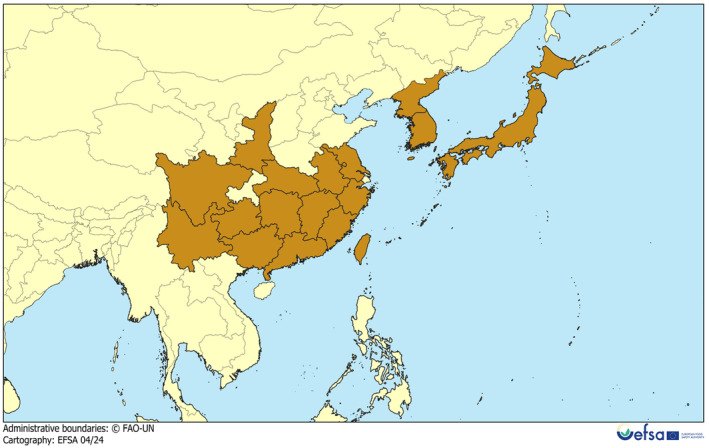 FIGURE 1
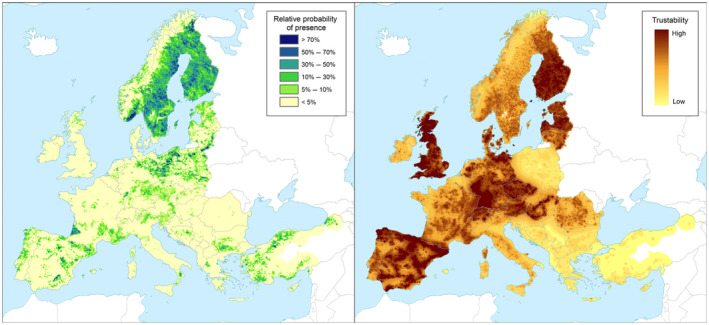 FIGURE 2
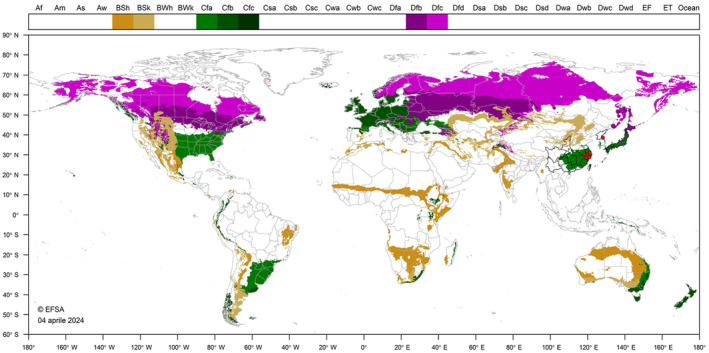 FIGURE 3
| Criterion of pest categorisation | Criterion in Regulation (EU) 2016/2031 regarding Union quarantine pest (article 3) |
|---|---|
|
| Is the identity of the pest clearly defined, or has it been shown to produce consistent symptoms and to be transmissible? |
|
|
Is the pest present in the EU territory? If present, is the pest in a limited part of the EU or is it scarce, irregular, isolated or present infrequently? If so, the pest is considered to be not widely distributed |
|
| Is the pest able to enter into, become established in, and spread within, the EU territory? If yes, briefly list the pathways for entry and spread |
|
| Would the pests' introduction have an economic or environmental impact on the EU territory? |
|
| Are there measures available to prevent pest entry, establishment, spread or impacts? |
|
| A statement as to whether (1) all criteria assessed by EFSA above for consideration as a potential quarantine pest were met and (2) if not, which one(s) were not met |
| List of plants, plant products and other objects whose introduction into the union from certain third countries is prohibited | |||
|---|---|---|---|
| Description | CN code | Third country, group of third countries or specific area of third country | |
| 1. | Plants of […] | ex 0602 20 20 | Third countries other than Albania, Andorra, Armenia, Azerbaijan, Belarus, Bosnia and Herzegovina, Canary Islands, Faeroe Islands, Georgia, Iceland, Liechtenstein, Moldova, Monaco, Montenegro, North Macedonia, Norway, Russia (only the following parts: Central Federal District (Tsentralny federalny okrug), Northwestern Federal District (Severo‐ Zapadny federalny okrug), Southern Federal District (Yuzhny federalny okrug), North Caucasian Federal District (Severo‐Kavkazsky federalny okrug) and Volga Federal District (Privolzhsky federalny okrug)), San Marino, Serbia, Switzerland, Türkiye, Ukraine and the United Kingdom |
| ex 0602 20 80 | |||
| ex 0602 90 41 | |||
| ex 0602 90 45 | |||
| ex 0602 90 46 | |||
| ex 0602 90 47 | |||
| ex 0602 90 50 | |||
| ex 0602 90 70 | |||
| ex 0602 90 99 | |||
| ex 0604 20 20 | |||
| ex 0604 20 40 | |||
| Pathways (e.g. host/intended use/source) | Life stage | Relevant mitigations [e.g. prohibitions (Annex VI), special requirements (Annex VII) or phytosanitary certificates (Annex XI) within Implementing Regulation 2019/2072] |
|---|---|---|
|
| Eggs, larvae, pupae, adults | A list of plants for planting that are hosts of |
|
| Eggs, larvae, pupae, adults | ISPM 15; Implementing Regulation 2019/2072 |
|
| Eggs, larvae, pupae, adults | EU 2018/2019 (High risk plants prohibition), phytosanitary certificate |
|
| Eggs, larvae, pupae, adults | Implementing Regulation 2019/2072, Annex XI, part A |
|
| Eggs, larvae, pupae, adults | Implementing Regulation 2019/2072, Annex VII, e.g. points 76, 79 and 80 |
| Control measure/risk reduction option | RRO summary | Risk element targeted (entry/establishment/spread/impact) |
|---|---|---|
|
| Pest free place of production (e.g. place of production and its immediate vicinity is free from pest over an appropriate time period, e.g. since the beginning of the last complete cycle of vegetation, or past two or three cycles). Pest free production site | Entry/spread/impact |
|
| Some host plants (e.g. for the production of bonsai plants) could be grown in dedicated structures such as glass or plastic greenhouses with insect‐proof screens, taking into consideration though that adults of | Entry/spread/impact |
|
| Used to mitigate likelihood of infestation at origin. Plants collected directly from natural habitats, have been grown, held and trained for at least two consecutive years prior to dispatch in officially registered nurseries, which are subject to an officially supervised control regime | Entry/spread |
|
| Different | Entry/establishment/impact |
|
| By removing infested plants and infested plant parts it can reduce infestation | Entry/spread/impact |
|
|
Pest control such as:
Biological control Larval ( Mass trapping Traps, with attractive substances, such as terpenes, acetaldehyde and acetone as main components, are available to capture adults (Lianqin et al., | Entry/establishment/impact |
|
|
Spray of contact insecticides can kill adult beetles that are present on the plants at the time of spraying Uncertainties:
– Insects are not killed when they are in egg and in larval stage – Insects cannot be reached by the insecticide when they are hidden in bark crevices | Entry/establishment/impact |
|
|
Use of chemical compounds that may be applied to plants or to plant products after harvest, during process or packaging operations and storage The treatments addressed in this information sheet are:
fumigation; spraying/dipping pesticides; surface disinfectants; process additives; protective compounds The measure is expected to have an effect although specific info for the pest is not available | Entry/spread |
|
|
This measure deals with the following categories of physical treatments: irradiation/ionisation; mechanical cleaning (brushing, washing); sorting and grading; and removal of plant parts (e.g. debarking wood). This information sheet does not address: heat and cold treatment (information sheet 1.14); roguing and pruning (information sheet 1.12) The measure is expected to have an effect although specific info for the pest is not available | Entry/spread |
|
|
Controlled temperature treatments aimed to kill or inactivate pests without causing any unacceptable prejudice to the treated material itself, including: autoclaving; steam; hot water; hot air; cold treatment The measure is expected to have an effect although specific info for the pest is not available | Entry/spread |
|
|
Treatment of plants by storage in a modified atmosphere (including modified humidity, O2, CO2, temperature, pressure) The measure is expected to have an effect although specific info for the pest is not available | Entry/spread (via commodity) |
|
|
This measure covers post‐entry quarantine (PEQ) of relevant commodities; temporal, spatial and end‐use restrictions in the importing country for import of relevant commodities; Prohibition of import of relevant commodities into the domestic country ‘Relevant commodities’ are plants, plant parts and other materials that may carry pests, either as infection, infestation, or contamination | Establishment/spread |
| Supporting measure | Summary | Risk element targeted (entry/establishment/spread/impact) |
|---|---|---|
|
|
ISPM 5 (FAO, The effectiveness of sampling and subsequent inspection to detect pests may be enhanced by including trapping and luring techniques | Establishment/spread |
|
| Examination, other than visual, to determine if pests are present using official diagnostic protocols. Diagnostic protocols describe the minimum requirements for reliable diagnosis of regulated pests | Entry/establishment |
|
|
According to ISPM 31 (FAO, For inspection, testing and/or surveillance purposes the sample may be taken according to a statistically based or a non‐statistical sampling methodology | Entry/establishment |
|
| According to ISPM 5 (FAO, export certificate (import) plant passport (EU internal trade) | Entry/establishment |
|
| Mandatory/voluntary certification/approval of premises is a process including a set of procedures and of actions implemented by producers, conditioners and traders contributing to ensure the phytosanitary compliance of consignments. It can be a part of a larger system maintained by the NPPO in order to guarantee the fulfilment of plant health requirements of plants and plant products intended for trade. Key property of certified or approved premises is the traceability of activities and tasks (and their components) inherent the pursued phytosanitary objective. Traceability aims to provide access to all trustful pieces of information that may help to prove the compliance of consignments with phytosanitary requirements of importing countries | Entry/establishment |
|
| Plants come from within an approved propagation scheme and are certified pest free (level of infestation) following testing; Used to mitigate against pests that are included in a certification scheme | Entry/establishment/spread |
|
| ISPM 5 (FAO, | Spread |
|
| Surveillance to guarantee that plants and produce originate from a Pest Free Area could be an option | Entry/spread |
| Criterion of pest categorisation | Panel's conclusions against criterion in Regulation (EU) 2016/2031 regarding Union quarantine pest | Key uncertainties |
|---|---|---|
|
| The identity of | None |
|
|
| None |
|
|
| None |
|
| The introduction of the pest could cause damage to | None |
|
| There are measures available to prevent entry, establishment and spread of | None |
|
|
| None |
| Aspects of assessment to focus on/scenarios to address in future if appropriate | ||
Peer Reviews
No public reviews on file for this paper yet. If you reviewed it on a platform where reviews are public (OpenReview, ICLR, NeurIPS, ICML), you can paste yours below so the community can read it here.
Videos
No videos yet. Explain this paper in a talk, walkthrough, or lecture? Add one.
Taxonomy
TopicsInsect-Plant Interactions and Control · Research on scale insects · Insect Pest Control Strategies
INTRODUCTION
1
Background and Terms of Reference as provided by the requestor
1.1
Background
1.1.1
The new Plant Health Regulation (EU) 2016/2031, on the protective measures against pests of plants, is applying from 14 December 2019. Conditions are laid down in this legislation in order for pests to qualify for listing as Union quarantine pests, protected zone quarantine pests or Union regulated non‐quarantine pests. The lists of the EU regulated pests together with the associated import or internal movement requirements of commodities are included in Commission Implementing Regulation (EU) 2019/2072. Additionally, as stipulated in the Commission Implementing Regulation 2018/2019, certain commodities are provisionally prohibited to enter in the EU (high risk plants, HRP). EFSA is performing the risk assessment of the dossiers submitted by exporting to the EU countries of the HRP commodities, as stipulated in Commission Implementing Regulation 2018/2018. Furthermore, EFSA has evaluated a number of requests from exporting to the EU countries for derogations from specific EU import requirements.
In line with the principles of the new plant health law, the European Commission with the Member States are discussing monthly the reports of the interceptions and the outbreaks of pests notified by the Member States. Notifications of an imminent danger from pests that may fulfil the conditions for inclusion in the list of the Union quarantine pest are included. Furthermore, EFSA has been performing horizon scanning of media and literature.
As a follow‐up of the above‐mentioned activities (reporting of interceptions and outbreaks, HRP, derogation requests and horizon scanning), a number of pests of concern have been identified. EFSA is requested to provide scientific opinions for these pests, in view of their potential inclusion by the risk manager in the lists of Commission Implementing Regulation (EU) 2019/2072 and the inclusion of specific import requirements for relevant host commodities, when deemed necessary by the risk manager.
Terms of Reference
1.1.2
EFSA is requested, pursuant to Article 29(1) of Regulation (EC) No 178/2002, to provide scientific opinions in the field of plant health.
EFSA is requested to deliver 53 pest categorisations for the pests listed in Annex 1A, 1B, 1D and 1E (for more details see mandate M‐2021‐00027 on the Open.EFSA portal). Additionally, EFSA is requested to perform pest categorisations for the pests so far not regulated in the EU, identified as pests potentially associated with a commodity in the commodity risk assessments of the HRP dossiers (Annex 1C; for more details see mandate M‐2021‐00027 on the Open.EFSA portal). Such pest categorisations are needed in the case where there are not available risk assessments for the EU.
When the pests of Annex 1A are qualifying as potential Union quarantine pests, EFSA should proceed to phase 2 risk assessment. The opinions should address entry pathways, spread, establishment, impact and include a risk reduction options analysis.
Additionally, EFSA is requested to develop further the quantitative methodology currently followed for risk assessment, in order to have the possibility to deliver an express risk assessment methodology. Such methodological development should take into account the EFSA Plant Health Panel Guidance on quantitative pest risk assessment and the experience obtained during its implementation for the Union candidate priority pests and for the likelihood of pest freedom at entry for the commodity risk assessment of High Risk Plants.
Interpretation of the Terms of Reference
1.2
Shirahoshizo flavonotatus is one of a number of pests relevant to Annex 1C of the Terms of Reference (ToR) to be subject to pest categorisation to determine whether it fulfils the criteria of a potential Union quarantine pest (QP) for the area of the EU excluding Ceuta, Melilla and the outermost regions of Member States referred to in Article 355(1) of the Treaty on the Functioning of the European Union (TFEU), other than Madeira and the Azores, and so inform EU decision making as to its appropriateness for potential inclusion in the lists of pests of Commission Implementing Regulation (EU) 2019/2072. If a pest fulfils the criteria to be potentially listed as a Union QP, risk reduction options will be identified.
Additional information
1.3
This pest categorisation was initiated following the commodity risk assessment of bonsai plants from China consisting of Pinus parviflora grafted on P. thunbergii performed by EFSA (EFSA PLH Panel, 2022). Information provided by China for the assessment referred to S. patruelis, whose current valid name is S. flavonotatus. This species was identified as a relevant non‐regulated EU pest which could potentially enter the EU on bonsai plants.
DATA AND METHODOLOGIES
2
Data
2.1
Literature search
2.1.1
A literature search on S. flavonotatus was conducted at the beginning of the categorisation in the ISI Web of Science bibliographic database, using the scientific name of the pest as search term. Papers relevant for the pest categorisation were reviewed, and further references and information were obtained from experts, as well as from citations within the references and grey literature.
Database search
2.1.2
The Europhyt and TRACES databases were consulted for pest‐specific notifications on interceptions and outbreaks. Europhyt is a web‐based network run by the Directorate General for Health and Food Safety (DG SANTÉ) of the European Commission as a subproject of PHYSAN (Phyto‐Sanitary Controls) specifically concerned with plant health information. TRACES is the European Commission's multilingual online platform for sanitary and phytosanitary certification required for the importation of animals, animal products, food and feed of non‐animal origin and plants into the European Union, and the intra‐EU trade and EU exports of animals and certain animal products. Up until May 2020, the Europhyt database managed notifications of interceptions of plants or plant products that do not comply with EU legislation, as well as notifications of plant pests detected in the territory of the Member States and the phytosanitary measures taken to eradicate or avoid their spread. The recording of interceptions switched from Europhyt to TRACES in May 2020.
GenBank was searched to determine whether it contained any nucleotide sequences for S. flavonotatus which could be used as a reference material for molecular diagnosis. GenBank® (www.ncbi.nlm.nih.gov/genbank/) is a comprehensive publicly available database that as of August 2019 (release version 227) contained over 6.25 trillion base pairs from over 1.6 billion nucleotide sequences for 450,000 formally described species (Sayers et al., 2020).
Methodologies
2.2
The Panel performed the pest categorisation for S. flavonotatus, following guiding principles and steps presented in the EFSA guidance on quantitative pest risk assessment (EFSA PLH Panel, 2018), the EFSA guidance on the use of the weight of evidence approach in scientific assessments (EFSA Scientific Committee et al., 2017) and the International Standards for Phytosanitary Measures No. 11 (FAO, 2013).
The criteria to be considered when categorising a pest as a potential Union QP is given in Regulation (EU) 2016/2031 Article 3 and Annex I, Section 1 of the Regulation. Table 1 presents the Regulation (EU) 2016/2031 pest categorisation criteria on which the Panel bases its conclusions. In judging whether a criterion is met the Panel uses its best professional judgement (EFSA Scientific Committee et al., 2017) by integrating a range of evidence from a variety of sources (as presented above in Section 2.1) to reach an informed conclusion as to whether or not a criterion is satisfied.
The Panel's conclusions are formulated respecting its remit and particularly with regard to the principle of separation between risk assessment and risk management (EFSA founding regulation (EU) No 178/2002); therefore, instead of determining whether the pest is likely to have an unacceptable impact, deemed to be a risk management decision, the Panel will present a summary of the observed impacts in the areas where the pest occurs, and make a judgement about potential likely impacts in the EU. Whilst the Panel may quote impacts reported from areas where the pest occurs in monetary terms, the Panel will seek to express potential EU impacts in terms of yield and quality losses and not in monetary terms, in agreement with the EFSA guidance on quantitative pest risk assessment (EFSA PLH Panel, 2018). Article 3 (d) of Regulation (EU) 2016/2031 refers to unacceptable social impact as a criterion for quarantine pest status. Assessing social impact is outside the remit of the Panel.
PEST CATEGORISATION
3
Identity and biology of the pest
3.1
Identity and taxonomy
3.1.1
Is the identity of the pest clearly defined, or has it been shown to produce consistent symptoms and/or to be transmissible?
Yes, the identity of the pest is established and Shirahoshizo flavonotatus (Voss) is the accepted name.
Shirahoshizo flavonotatus (Voss, 1937) is an insect within the order Coleoptera, family Curculionidae, subfamily Cryptorhynchinae. Voss (1937) described Cryptorhynchidius flavonotatus and C. patruelis as two different species. Morimoto (1962) described the new genus Shirahoshizo to include some species, already previously grouped under Cryptorhynchus or Cryptorhynchidius, including the two species described by Voss. The synonymy between S. patruelis and S. flavonotatus was established by Chen (1991) and S. flavonotatus is the current valid name for this weevil (Alonso‐Zarazaga et al., 2017; Chen, 1991).
The EPPO code1 (EPPO, 2019; Griessinger & Roy, 2015) for this species is: SHIRPA (EPPO, online).
Biology of the pest
3.1.2
Very little information is available on the biological traits of this species; however, some elements can be extrapolated from the studies carried out by Yoshikawa (1977, 1981, 1983) and Yoshikawa et al. (1986) on three congenerics: Shirahoshizo insidiosus, S. pini and S. rufescens in Japan. Shirahoshizo is a genus of weevils belonging to the tribe Cryptorhynchini, including 18 species, all distributed in Asia (China, Korea and Japan) (Alonso‐Zarazaga et al., 2017), many of which feed on conifers, mostly Pinus spp. Shirahoshizo spp., similarly to Pissodes spp. (Coleoptera: Curculionidae), develop under the bark of weakened trees at the larval stage (Hagihara & Nakashima, 1970). However, Cui et al. (2008) and Chen et al. (2013) report S. flavonotatus attacking healthy trees. No information is available on the adult feeding habits. Pissodes and Shirahoshizo frequently attack the same trees, but they have different preferences for bark thickness, as Shirahoshizo attack the thickest bark (from 0.58 to 1.22 cm, as seen in bait logs) preferably along the trunk and near the ground, laying their eggs in cracks and crevices; for this reason, they do not oviposit on the top part where the bark is too thin (Yoshikawa, 1977, 1981, 1983). Furthermore, Shirahoshizo also need larger subcortical areas than Pissodes for larval development and the formation of pupal cells, which are dispersed and isolated (Yoshikawa, 1977). S. flavonotatus has four development stages: egg, larva (six instars), pupa, adult, and completes 2 to 3 generations/year, overwintering as an adult in the case of two generations and as a mature larva in the case of three generations (Chen et al., 2013). Flight distance of the adults of the Shirahoshizo species studied by Yoshikawa (1983) has been estimated to be about 50 m from release‐recapture experiments. Adults are nocturnal. In Japan, three flight peaks were observed, (i) in early spring (overwintering adults), (ii) after the rainy season (June to mid‐July) (adults developed from overwintering larvae) and (iii) in early autumn (new adults) (Hagihara & Nakashima, 1970).
S. flavonotatus has also been reported as able to carry the pine wood nematode (PWN) Bursaphelenchus xylophilus (Steiner & Bührer) Nickle (Chen et al., 2013; Cui et al., 2008), although, no B. xylophilus was isolated from S. flavonotatus collected on PWN infested trees (Chu et al., 2021).
According to Linit (1988), the nematode is transmitted almost exclusively by cerambycid beetles in the genus Monochamus. Other families of beetles have been shown to carry PWN, but none has been shown to transmit it (Akbulut & Stamps, 2011; Kobayashi et al., 1984; Linit et al., 1983).
Host range/species affected
3.1.3
The hosts of S. flavonotatus include Pinus massoniana Lamb., P. taiwanensis Hayata, P. thunbergii Parl., P. armandii Franch., P. elliottii Engelm., P. taeda L., P. kesiya var. langbianensis (Chen et al., 2013; Duan et al., 2007).
Intraspecific diversity
3.1.4
No intraspecific diversity is known.
Detection and identification of the pest
3.1.5
Are detection and identification methods available for the pest?
Yes, detection is possible, and a morphological description of the adult is available to allow identification. No specific molecular ID method has been developed yet.
Detection
S. flavonotatus larvae tunnel into the bark of the host's trunks and branches. Shirahoshizo spp. colonise the thickest bark (bark thickness in bait logs from 0.58 to 1.22 cm) preferably along the stem and near the ground, laying their eggs in crevices; for this reason, they do not oviposit, and the larvae do not develop on the top part of the trees where the bark is too thin (EFSA PLH Panel, 2022).
Traps, with attractive substances, including terpenes, acetaldehyde and acetone as the main components, are available to catch adults (Lianqin et al., 1992; Zhou et al., 2013), besides, bait logs can also be used (Yoshikawa, 1977, 1981, 1983).
Symptoms
Little specific information on symptoms caused by S. flavonotatus is available. Due to the feeding activity of larvae into the bark of the host trunks and branches, the flow of sap may be affected, leading in case of high infestation to withering and death of the host.
These symptoms are similar to those caused by other weevils (e.g. Pissodes spp.) and cannot be considered as diagnostic. However, although Pissodes and Shirahoshizo frequently attack the same trees, they have different preferences for bark thickness (see Section 3.1.2 above).
Identification
Detailed adult morphological description of S. flavonotatus is available (Hong et al., 2011). No specific protocol has been developed for molecular identification, and only one DNA sequence is available in GenBank (COX1 gene).
Description
No data are available for juveniles.
Adult—6.2 mm long (excl. rostrum). Body black with rostrum and antennae reddish brown. Elytra with a long spot before the middle and one behind the middle. Underside of body and partially on femora with brownish grey scales (Hong et al., 2011).
Pest distribution
3.2
Pest distribution outside the EU
3.2.1
S. flavonotatus is present in China (Fujian, Guandong, Guizhou, Guangxi, Hubei, Hunan, Jiangsu, Jiangxi, Sichuan, Shaanxi, Shandong, Shanghai, Yunnan and Zhejiang), Japan, Taiwan and Korea (e.g. Gangwon‐do) (Figure 1) (Alonso‐Zarazaga et al., 2017; EFSA PLH Panel, 2022; Hong et al., 2011; Schoch et al., 2020).
Global distribution of Shirahoshizo flavonotatus (Source: literature; for details see Appendix B).
Pest distribution in the EU
3.2.2
Is the pest present in the EU territory? If present, is the pest in a limited part of the EU or is it scarce, irregular, isolated or present infrequently? If so, the pest is considered to be not widely distributed. No, Shirahoshizo flavonotatus is not known to be present in the EU territory.
Regulatory status
3.3
Commission Implementing Regulation 2019/2072
3.3.1
S. flavonotatus is not listed in Annex II of Commission Implementing Regulation (EU) 2019/2072, an implementing act of Regulation (EU) 2016/2031, or in any emergency plant health legislation.
Hosts or species affected that are prohibited from entering the Union from third countries
3.3.2
According to the Commission Implementing Regulation (EU) 2019/2072, Annex VI, introduction of plants of Pinus, host of S. flavonotatus, in the Union from certain third countries is prohibited (Table 2).
Legislation addressing the organisms vectored by S. flavonotatus (Commission Implementing Regulation 2019/2072)
3.3.3
S. flavonotatus has been reported by Cui et al. (2008) and Chen et al. (2013) to carry B. xylophilus, which is listed in Annex II, part B of the Commission Implementing Regulation 2019/2072. However, S. flavonotatus is not known to vector B. xylophilus.
Entry, establishment and spread in the EU
3.4
Entry
3.4.1
Is the pest able to enter into the EU territory? If yes, identify and list the pathways. Yes, S. flavonotatus could enter the EU territory. Possible pathways of entry are plants for planting, cut branches, solid wood packaging and wood with bark. Comment on plants for planting as a pathway.The pest could enter the EU territory with plants for planting. Although Pinus spp. from third countries where S. flavonotatus is present are prohibited (Table 2), potential derogations might occur, e.g., from Japan (Commission Implementing regulation (EU) 2020/1217).
Potential pathways for S. flavonotatus are presented in Table 3.
There is an uncertainty about the listed commodities being pathway for S. flavonotatus because of the thickness of the bark required for oviposition and pupation (see Section 3.1.2).
A commodity risk assessment for bonsai plants from China consisting of Pinus parviflora grafted on P. thunbergii, indicated with 95% certainty, that between 99.33% and 100% of imported plants would be free from S. flavonotatus (EFSA PLH Panel, 2022). No derogation for this commodity from China is in place, however a derogation exists for artificially dwarfed plants for planting of Chamaecyparis, Juniperus and certain species of Pinus, originating in Japan where the weevil is present.
Notifications of interceptions of harmful organisms began to be compiled in Europhyt in May 1994 and in TRACES in May 2020. As at 19 March 2024, there were no records of interception of S. flavonotatus in the Europhyt and TRACES databases.
Establishment
3.4.2
Is the pest able to become established in the EU territory?
Yes. Following entry on plants for planting, S. flavonotatus could become established in the EU as the hosts are available and the climate is suitable.
Climatic mapping is the principal method for identifying areas that could provide suitable conditions for the establishment of a pest taking key abiotic factors into account (Baker, 2002). Availability of hosts is considered in Section 3.4.2.1. Climatic factors are considered in Section 3.4.2.2.
EU distribution of main host plants
3.4.2.1
S. flavonotatus is an oligophagous species feeding on Pinus spp. The presence of the hosts in the EU is reported in Figure 2.
Left panel: Relative probability of the presence (RPP) of the genus Pinus in Europe, mapped at 100 km2 resolution. The underlying data are from European‐wide forest monitoring data sets and from national forestry inventories based on standard observation plots measuring in the order of hundreds m2. RPP represents the probability of finding at least one individual of the taxon in a standard plot placed randomly within the grid cell. For details, see Appendix C (courtesy of JRC, 2017). Right panel: Trustability of RPP. This metric expresses the strength of the underlying information in each grid cell and varies according to the spatial variability in forestry inventories. The colour scale of the trustability map is obtained by plotting the cumulative probabilities (0–1) of the underlying index (for details on methodology, see Appendix C).
Climatic conditions affecting establishment
3.4.2.2
Some climate types (Kottek et al., 2006) that occur in the EU are also found in countries where S. flavonotatus occurs, for example Cfa (temperate, humid sub‐tropical), Cfb (temperate oceanic climate or subtropical highland climate), Dfb (warm‐summer, humid continental), Bsh (Hot semi‐arid climate) and Bsk (cold arid climate) (Figure 3).
World distribution of 7 Köppen–Geiger climate types that occur in the EU and in countries where Shirahoshizo flavonotatus occurs.
Spread
3.4.3
Describe how the pest would be able to spread within the EU territory following establishment? Natural spread by flying adults can occur. In addition, all stages can be moved over long distances via infested plant material, specifically plants for planting, and also wood with bark. Comment on plants for planting as a mechanism of spread.Plants for planting provide a main spread mechanism for S. flavonotatus over long distances.
Although no specific data on the flight distance of S. flavonotatus is available, in release and recapture experiments with log baits, species of the genus Shirahoshizo were seen to be able to fly up to 50 m (Yoshikawa, 1983).
Impacts
3.5
Would the pests' introduction have an economic or environmental impact on the EU territory?
Yes, if S. flavonotatus established in the EU, impact on Pinus spp. is anticipated. As the species is said to attack weakened trees, its impact on healthy trees could be limited.
The tunnels bored by S. flavonotatus larvae into the bark of the host's trunks and branches, forming irregular holes, may affect the flow of sap and the quality of the wood. In the case of heavy infestation, it may lead to the death of the tree (Chen et al., 2013), although Hagihara and Nakashima (1970) report the species to attack already weakened trees. No data are though available on impact on European Pinus species. Recognising that the weevil is reported to attack both weakened and healthy trees, there is uncertainty on the magnitude of impact. Its recorded capacity to attack non‐Asian Pinus species also indicates its ability to adapt and expand the range of trees it can utilise as hosts, which could include European Pinus species. Besides, the weevil has also been reported as able to carry the pine wood nematode, B. xylophilus, although not being a vector of it (see Section 3.3.3).
Available measures and their limitations
3.6
Are there measures available to prevent pest entry, establishment, spread or impacts such that the risk becomes mitigated?
Yes. Although the existing phytosanitary measures identified in Section 3.3.2 do not specifically target S. flavonotatus, they mitigate the likelihood of its entry, establishment and spread within the EU (see also Section 3.6.1).
Identification of potential additional measures
3.6.1
Phytosanitary measures (prohibitions) are currently applied to some host plants for planting (see Section 3.3.2).
Additional potential risk reduction options and supporting measures are shown in Sections 3.6.1.1 and 3.6.1.2.
Additional potential risk reduction options
3.6.1.1
Potential additional control measures are listed in Table 4.
Additional supporting measures
3.6.1.2
Potential additional supporting measures are listed in Table 5.
Biological or technical factors limiting the effectiveness of measures
3.6.1.3
- Eggs are laid in bark crevices and the larvae bore galleries under bark and are therefore hard to detect.
- Limited effectiveness of insecticides due to the hidden habits of the larvae.
Uncertainty
3.7
There are no key uncertainties identified.
CONCLUSIONS
4
S. flavonotatus satisfies all the criteria that are within the remit of EFSA to assess for it to be regarded as a potential Union quarantine pest (Table 6).
AbbreviationsEPPOEuropean and Mediterranean Plant Protection OrganizationFAOFood and Agriculture OrganizationIPPCInternational Plant Protection ConventionISPMInternational Standards for Phytosanitary MeasuresMSMember StatePLHEFSA Panel on Plant HealthPZProtected ZoneTFEUTreaty on the Functioning of the European UnionToRTerms of Reference
GlossaryContainment (of a pest)Application of phytosanitary measures in and around an infested area to prevent spread of a pest (FAO, 2023)Control (of a pest)Suppression, containment or eradication of a pest population (FAO, 2023)Entry (of a pest)Movement of a pest into an area where it is not yet present, or present but not widely distributed and being officially controlled (FAO, 2023)Eradication (of a pest)Application of phytosanitary measures to eliminate a pest from an area (FAO, 2023)Establishment (of a pest)Perpetuation, for the foreseeable future, of a pest within an area after entry (FAO, 2023)GreenhouseA walk‐in, static, closed place of crop production with a usually translucent outer shell, which allows controlled exchange of material and energy with the surroundings and prevents release of plant protection products (PPPs) into the environment.HitchhikerAn organism sheltering or transported accidentally via inanimate pathways including with machinery, shipping containers and vehicles; such organisms are also known as contaminating pests or stowaways (Toy & Newfield, 2010).Impact (of a pest)The impact of the pest on the crop output and quality and on the environment in the occupied spatial unitsIntroduction (of a pest)The entry of a pest resulting in its establishment (FAO, 2023)PathwayAny means that allows the entry or spread of a pest (FAO, 2023)Phytosanitary measuresAny legislation, regulation or official procedure having the purpose to prevent the introduction or spread of quarantine pests, or to limit the economic impact of regulated non‐quarantine pests (FAO, 2023)Quarantine pestA pest of potential economic importance to the area endangered thereby and not yet present there, or present but not widely distributed and being officially controlled (FAO, 2023)Risk reduction option (RRO)A measure acting on pest introduction and/or pest spread and/or the magnitude of the biological impact of the pest should the pest be present. A RRO may become a phytosanitary measure, action or procedure according to the decision of the risk managerSpread (of a pest)Expansion of the geographical distribution of a pest within an area (FAO, 2023)
CONFLICT OF INTEREST
If you wish to access the declaration of interests of any expert contributing to an EFSA scientific assessment, please contact [email protected].
REQUESTOR
European Commission
QUESTION NUMBERS
EFSA‐Q‐2024‐00043
COPYRIGHT FOR NON‐EFSA CONTENT
EFSA may include images or other content for which it does not hold copyright. In such cases, EFSA indicates the copyright holder and users should seek permission to reproduce the content from the original source.
PANEL MEMBERS
Claude Bragard, Paula Baptista, Elisavet Chatzivassiliou, Francesco Di Serio, Paolo Gonthier, Josep Anton Jaques Miret, Annemarie Fejer Justesen, Alan MacLeod, Christer Sven Magnusson, Panagiotis Milonas, Juan A. Navas‐Cortes, Stephen Parnell, Roel Potting, Philippe L. Reignault, Emilio Stefani, Hans‐Hermann Thulke, Wopke Van der Werf, Antonio Vicent Civera, Jonathan Yuen and Lucia Zappalà.
MAP DISCLAIMER
The designations employed and the presentation of material on any maps included in this scientific output do not imply the expression of any opinion whatsoever on the part of the European Food Safety Authority concerning the legal status of any country, territory, city or area or of its authorities, or concerning the delimitation of its frontiers or boundaries.
The reference list from the paper itself. Each links out to its DOI / PubMed record.
- 1Akbulut, S. , & Stamps, W. T. (2011). Insect vectors of the pinewood nematode: A review of the biology and ecology of Monochamus species. Forest Pathology, 42, 89–99.
- 2Alonso‐Zarazaga, M. A. , Barrios, H. , Borovec, R. , Bouchard, P. , Caldara, R. , Colonnelli, E. , Gültekin, L. , Hlaváč, P. , Korotyaev, B. , Lyal, C. H. C. , Machado, A. , Meregalli, M. , Pierotti, H. , Ren, L. , Sánchez‐Ruiz, M. , Sforzi, A. , Silfverberg, H. , Skuhrovec, J. , Trýzna, M. , … Yunakov, N. N. (2017). Cooperative catalogue of Palaearctic Coleoptera Curculionoidea. Monografías electrónicas Sociedad Entomológica Aragonesa, 8, 1–729.
- 3Baker, R. H. A. (2002). Predicting the limits to the potential distribution of alien crop pests. In G. J. Hallman & C. P. Schwalbe (Eds.), Invasive arthropods in agriculture: Problems and solutions (pp. 207–241). Science Publishers Inc.
- 4Bossard, M. , Feranec, J. , & Otahel, J. (2000). CORINE land cover technical guide—Addendum 2000 . Tech. Rep. 40, European Environment Agency. https://www.eea.europa.eu/ds_resolveuid/032TFUPGVR
- 5Büttner, G. , Kosztra, B. , Maucha, G. , & Pataki, R. (2012). Implementation and achievements of CLC 2006 . Tech. rep., European Environment Agency. http://www.eea.europa.eu/ds_resolveuid/GQ 4JECM 8TB
- 6Chen, H. , Zhang, J. , & Xu, Z. (2013). Temporal dynamics of spatial patterns of adult Shirahoshizo patruelis (Voss) in forests. Journal of Northeast Forestry University, 3, 112–115.
- 7Chen, Y. (1991). A study of the weevil genus Shirahoshizo Morimoto (Coleoptera: Curculionidae) from China. Entomotaxonomia, 13(3), 211–217.
- 8Chu, X. , Ma, Q. , Yang, M. , Li, G. , Liu, J. , Liang, G. , Wu, S. , Wang, R. , Zhang, F. , & Hu, X. (2021). Diversity and distribution of xylophagous beetles from Pinus thunbergii Parl. and Pinus massoniana lamb. Infected by pine wood nematode. Forests, 12(11), 1549.