Circumferent dissection of the ascending aorta resulting in the occlusion of supra-aortic vessels repaired using the frozen elephant trunk technique - a case report
Frieda-Maria Kainz, Kathrin Freystaetter, Felix Nagel, Dominik Wiedemann, Bruno K. Podesser

TL;DR
A 54-year-old man with a severe aortic dissection was successfully treated using the frozen elephant trunk technique, avoiding neurological complications.
Contribution
This case report highlights the successful use of the frozen elephant trunk technique in a complex aortic dissection involving the aortic arch.
Findings
The patient had a circumferential dissection of the ascending aorta with an intimal mass extending into the arch and descending aorta.
The frozen elephant trunk procedure allowed safe extraction of the intimal mass without neurological symptoms.
The patient remained well one year post-surgery with no neurological complications.
Abstract
Our patient presented with acute back pain and dyspnea, without neurological symptoms. The computed tomography (CT) scan showed a circumferent rupture of the ascending aortic intima which was invaginated in the arch and descending aorta. A 54-year-old male patient was diagnosed with a Type A aortic dissection. He was immediately transferred to our operation room (OR) from the emergency department of a peripheral hospital. He presented with a circumferential dissection of the ascending aorta originating just distal to the coronary ostia, with the invaginated intimal mass extending through the arch down the descending aorta. In mild hypothermia, the intimal mass was safely extracted and a frozen elephant trunk (FET) procedure was performed. Despite the extensive dissection affecting the ascending aorta and aortic arch, resulting in partially occluded supra-aortic vessels by an intimal…
Genes, proteins, chemicals, diseases, species, mutations and cell lines named across the full text — each resolved to its canonical identifier and authoritative record.
Click any figure to enlarge with its caption.
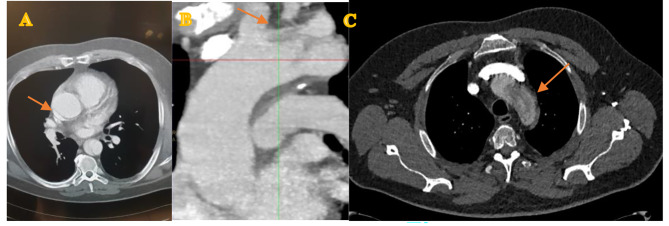 Figure 1
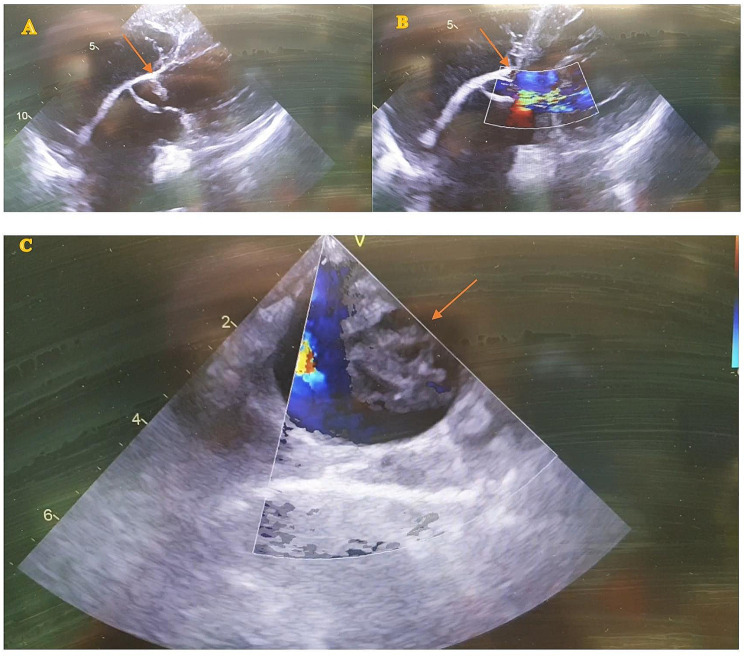 Figure 2
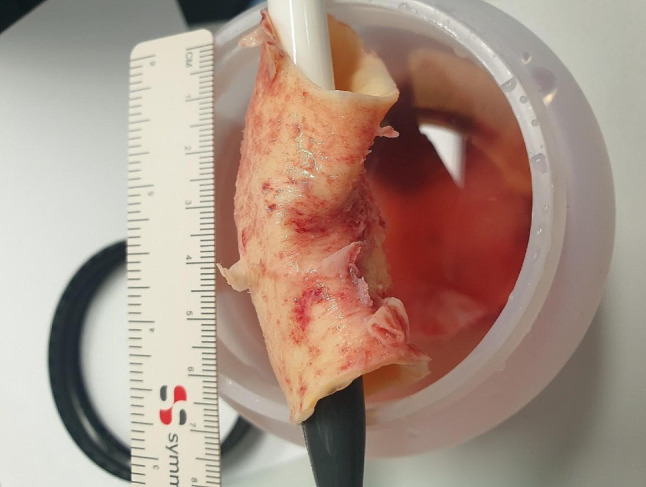 Figure 3
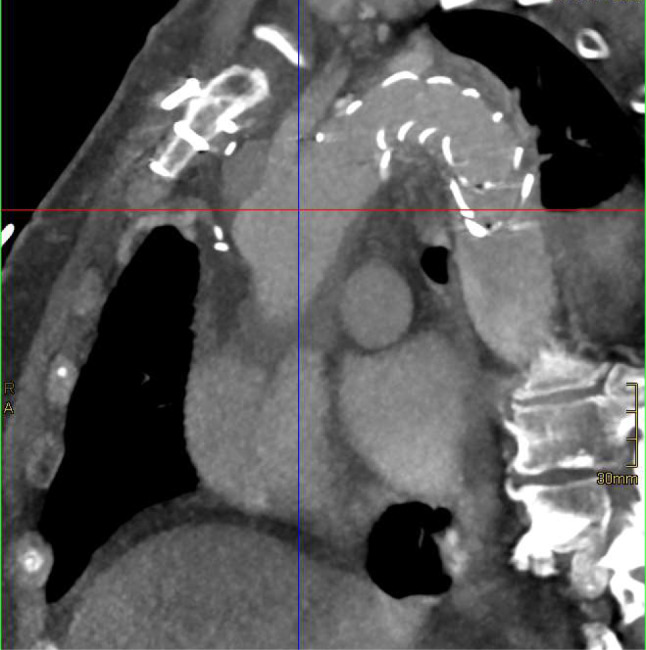 Figure 4
Peer Reviews
No public reviews on file for this paper yet. If you reviewed it on a platform where reviews are public (OpenReview, ICLR, NeurIPS, ICML), you can paste yours below so the community can read it here.
Videos
No videos yet. Explain this paper in a talk, walkthrough, or lecture? Add one.
Taxonomy
TopicsAortic Disease and Treatment Approaches · Aortic aneurysm repair treatments · Infectious Aortic and Vascular Conditions