A telemonitoring intervention design for patients with poorly controlled type 2 diabetes: protocol for a feasibility study
Sisse H. Laursen, Iben Engelbrecht Giese, Flemming W. Udsen, Ole K. Hejlesen, Pernille F. Barington, Morten Ohrt, Peter Vestergaard, Stine Hangaard

TL;DR
This study will test two telemonitoring designs for people with poorly controlled type 2 diabetes to determine which is more feasible for future large trials.
Contribution
The study introduces a feasibility evaluation of two telemonitoring intervention designs for type 2 diabetes.
Findings
The study will assess feasibility of telemonitoring designs including blood glucose, sleep, mental health, and additional metrics.
Qualitative insights from participants and clinicians will inform the acceptability and cost differences of the interventions.
Results will guide the design of future large-scale trials on telemonitoring for diabetes management.
Abstract
Maintaining optimal glycemic control in type 2 diabetes (T2D) is difficult. Telemedicine has the potential to support people with poorly regulated T2D in the achievement of glycemic control, especially if the telemedicine solution includes a telemonitoring component. However, the ideal telemonitoring design for people with T2D remains unclear. Therefore, the aim of this feasibility study is to evaluate the feasibility of two telemonitoring designs for people with non-insulin-dependent T2D with a goal of identifying the optimal telemonitoring intervention for a planned future large-scale randomized controlled trial. This 3-month randomized feasibility study will be conducted in four municipalities in North Denmark starting in January 2024. There will be 15 participants from each municipality. Two different telemonitoring intervention designs will be tested. One intervention will include…
Genes, proteins, chemicals, diseases, species, mutations and cell lines named across the full text — each resolved to its canonical identifier and authoritative record.
Click any figure to enlarge with its caption.
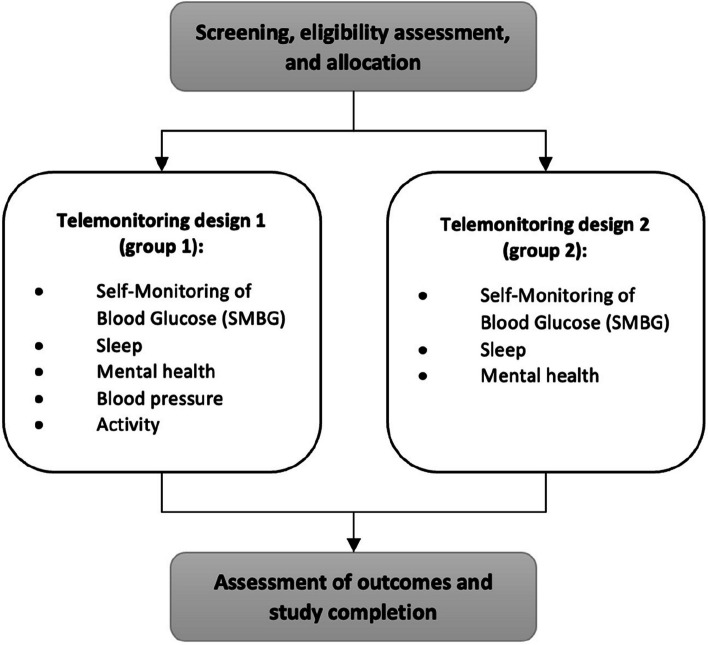 Figure 1
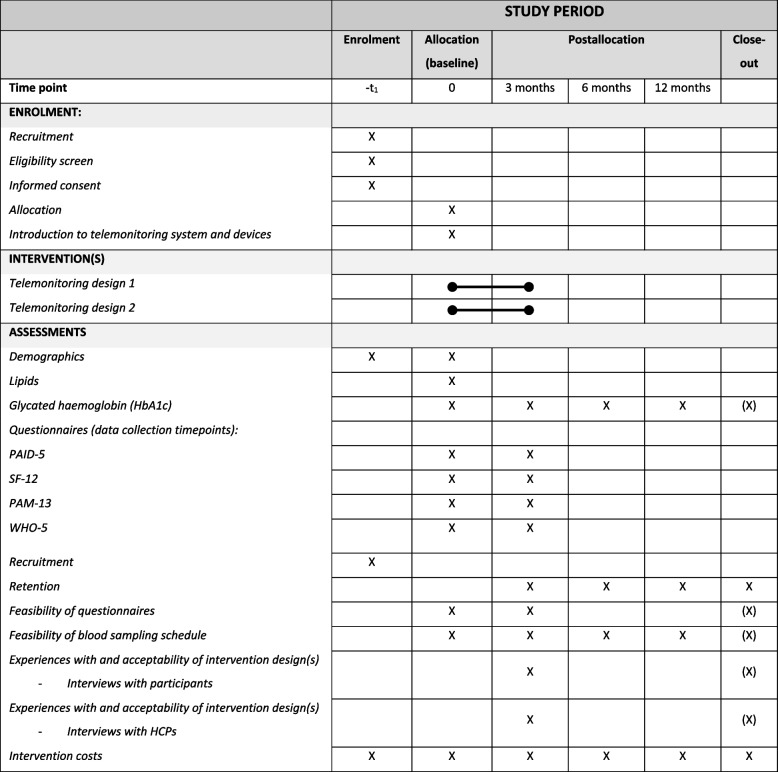 Figure 2
Peer Reviews
No public reviews on file for this paper yet. If you reviewed it on a platform where reviews are public (OpenReview, ICLR, NeurIPS, ICML), you can paste yours below so the community can read it here.
Videos
No videos yet. Explain this paper in a talk, walkthrough, or lecture? Add one.
Taxonomy
TopicsDiabetes Management and Education · Diabetes Management and Research · Blood Pressure and Hypertension Studies