Patient self-referral patterns in a developing country: characteristics, prevalence, and predictors
Mohammad Jahid Hasan, Md. Abdur Rafi, Nahida Hannan Nishat, Ima Islam, Nusrat Afrin, Bikona Ghosh, Etminan Kabir, Samiha Zaman Akhter, Maisha Zaman Poushi, Saadi Abdullah Bin Shahnoor, Jannatul Fardous, Tamanna Tabassum, Sadia Islam, Sumiya Bent Kalam, Mehjabeen Tasnuva Aslam

TL;DR
This study examines why patients in Bangladesh bypass the healthcare referral system and go directly to tertiary hospitals, finding that lack of access and poor primary care are key factors.
Contribution
The study identifies self-referral patterns and predictors in Bangladesh's healthcare system, highlighting gaps in primary care and referral awareness.
Findings
59% of patients in Bangladesh self-refer to tertiary care hospitals, often due to inadequate treatment or facilities at lower-level clinics.
Urban, higher-income patients and those living near healthcare facilities are more likely to self-refer.
Private facilities receive a higher proportion of self-referred patients compared to government hospitals.
Abstract
Efficient healthcare delivery and access to specialized care rely heavily on a well-established healthcare sector referral system. However, the referral system faces significant challenges in developing nations like Bangladesh. This study aimed to assess self-referral prevalence among patients attending tertiary care hospitals in Bangladesh and identify the associated factors. This cross-sectional study was conducted at two tertiary care hospital, involving 822 patients visiting their outpatient or inpatient departments. A semi-structured questionnaire was used for data collection. The patients’ mode of referral (self-referral or institutional referral) was considered the outcome variable. Approximately 58% of the participants were unaware of the referral system. Of all, 59% (485 out of 822) of patients visiting tertiary care hospitals were self-referred, while 41% were referred by…
Genes, proteins, chemicals, diseases, species, mutations and cell lines named across the full text — each resolved to its canonical identifier and authoritative record.
Click any figure to enlarge with its caption.
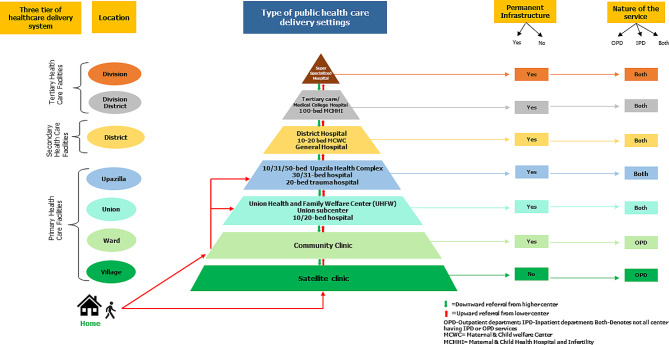 Figure 1
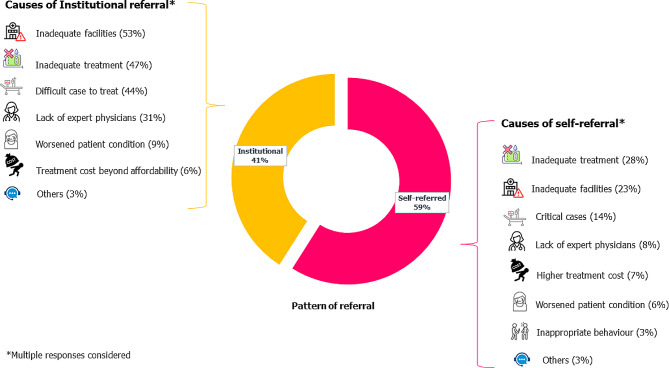 Figure 2
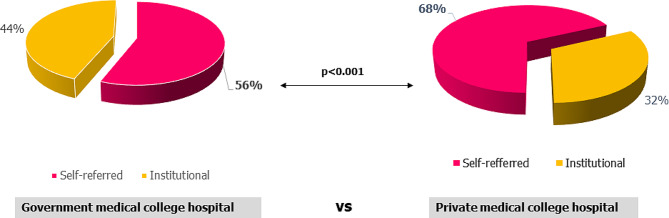 Figure 3
Peer Reviews
No public reviews on file for this paper yet. If you reviewed it on a platform where reviews are public (OpenReview, ICLR, NeurIPS, ICML), you can paste yours below so the community can read it here.
Videos
No videos yet. Explain this paper in a talk, walkthrough, or lecture? Add one.
Taxonomy
TopicsFinance, Taxation, and Governance · Organizational Management and Innovation · Business, Education, Mathematics Research