Prevention of persistent pain with lidocaine infusions in breast cancer surgery (PLAN): study protocol for a multicenter randomized controlled trial
James S. Khan, Ian Gilron, P. J. Devereaux, Hance Clarke, Nour Ayach, George Tomlinson, May Lynn Quan, Karim S. Ladha, Stephen Choi, Allana Munro, Richard Brull, David W. Lim, Sinziana Avramescu, Philippe Richebé, Nicole Hodgson, James Paul, Daniel I. McIsaac, Simone Derzi

TL;DR
This study tests if lidocaine infusions during breast cancer surgery can prevent long-term pain, which could improve patients' quality of life and reduce healthcare costs.
Contribution
The study introduces a multicenter trial to evaluate lidocaine infusion as a potential standard intervention for preventing post-mastectomy pain syndrome.
Findings
The trial will assess lidocaine's effect on persistent pain incidence at 3 months post-surgery.
Secondary outcomes include opioid use, emotional and physical health, and cost-effectiveness over 12 months.
If successful, lidocaine infusion could become a standard, low-cost intervention for breast cancer surgery patients.
Abstract
Persistent pain is a common yet debilitating complication after breast cancer surgery. Given the pervasive effects of this pain disorder on the patient and healthcare system, post-mastectomy pain syndrome (PMPS) is becoming a larger population health problem, especially as the prognosis and survivorship of breast cancer increases. Interventions that prevent persistent pain after breast surgery are needed to improve the quality of life of breast cancer survivors. An intraoperative intravenous lidocaine infusion has emerged as a potential intervention to decrease the incidence of PMPS. We aim to determine the definitive effects of this intervention in patients undergoing breast cancer surgery. PLAN will be a multicenter, parallel-group, blinded, 1:1 randomized, placebo-controlled trial of 1,602 patients undergoing breast cancer surgery. Adult patients scheduled for a lumpectomy or…
Genes, proteins, chemicals, diseases, species, mutations and cell lines named across the full text — each resolved to its canonical identifier and authoritative record.
Click any figure to enlarge with its caption.
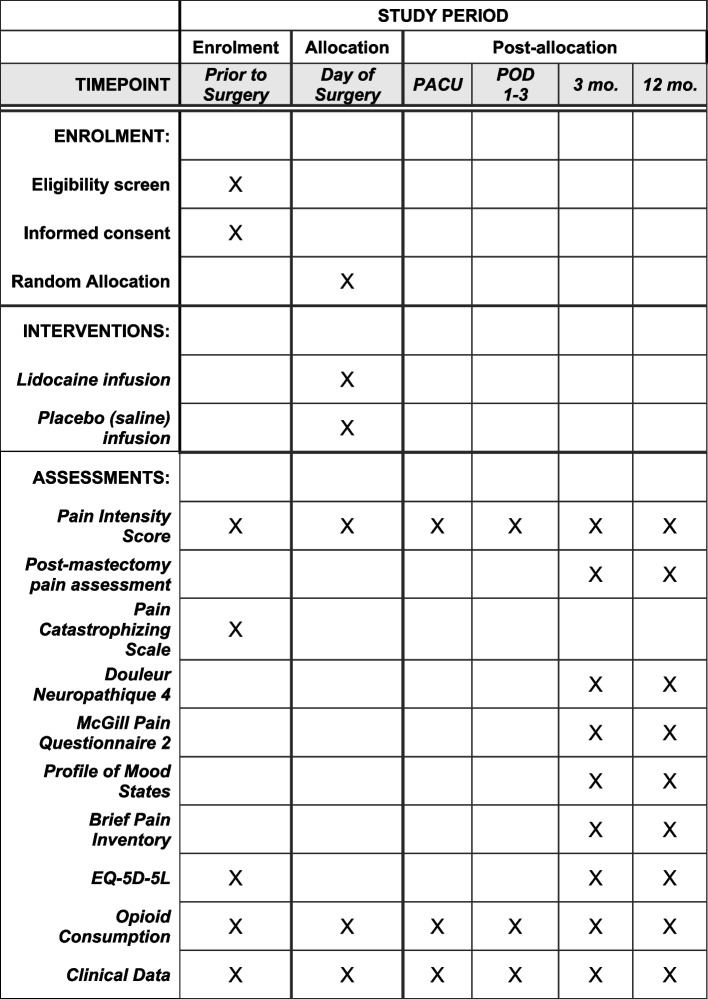 Figure 1
Peer Reviews
No public reviews on file for this paper yet. If you reviewed it on a platform where reviews are public (OpenReview, ICLR, NeurIPS, ICML), you can paste yours below so the community can read it here.
Videos
No videos yet. Explain this paper in a talk, walkthrough, or lecture? Add one.
Taxonomy
TopicsAnesthesia and Pain Management · Pediatric Pain Management Techniques · Pain Management and Opioid Use